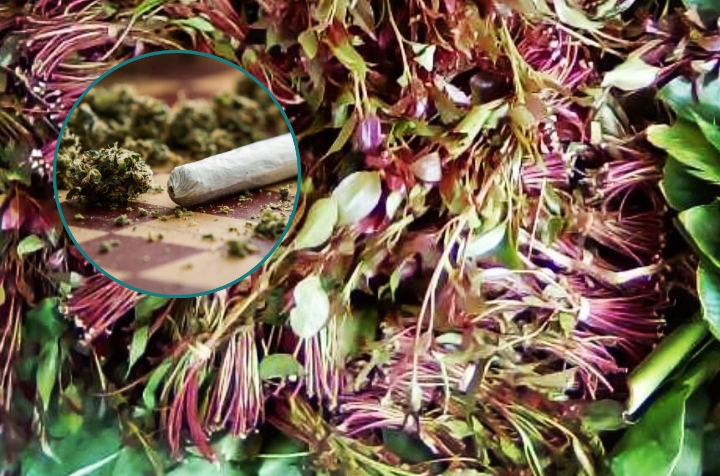
KENYA : Mandera County, Elders of Sala Town have introduced new regulations prohibiting the sale and consumption of khat in a bid to address social and economic concerns linked to khat use.
Under the new rules, men who chew khat will not be allowed to marry local women, Funeral prayers will also be denied to khat users who do not observe their daily five Islamic prayers.
Additionally, khat cannot be sold or consumed within Sala town, following the strict regulations announced by the elders.
Prior to issuing the ban, the elders carried out a four-month awareness campaign to educate the community about the effects of khat and other drugs.
The new restrictions extend beyond khat to include other substances such as cannabis and tobacco.
At a press conference announcing the ban, elders emphasised that khat has negatively impacted the community, particularly the youth and school students.
The elders cited multiple reasons for implementing the ban. The increasing number of students and young people using khat was a major concern.
Additionally, women in the community had raised complaints about their husbands' use of khat, stating that it led to financial neglect and family instability.
They stated that all residents of Sala have agreed to implement the restrictions. Those who refuse to comply will face social consequences, including being excluded from the society.
Recently, other counties in Kenya have also attempted to ban khat, citing its social and health effects.
Last year, the governors of Kilifi Mombasa, and Taita Taveta counties banned the sale and consumption of a particular variety of khat known as muguka.
The county chief's, justified the decision by pointing to the drug's impact on young people and the rising cases of addiction.
The ban, however, was met with strong opposition from khat-growing regions in Kenya. Farmers and traders argued that muguka is a legal crop and an important source of income for many families.
The backlash prompted President William Ruto's intervention, with the head of state declaring that muguka and Miraa trade is lawful and should not be restricted.
Meanwhile, The Ministry of Agriculture and Livestock Development recently announced new Khat prices.
Through the Food Authority (AFA), the Ministry, under Cabinet Secretary Mutahi Kagwe, revised the market rates after amassing views from the farmers.
The farmers submitted their views to the Miraa Pricing Formula Committee that was established to provide advice on the Miraa market forces.
"The committee reviews production data, cost, supply, and demand among other parameters to advise the sub-sector. It met on 13th February 2025," a communique from the Ministry read.
Following the meeting, the government sanctioned that a kilogram of grade one miraa cost KSh 13, 090, up from KSh 700, grade two to cost KSh KSh 700, up from KSh 350, and Alele to be sold at KSh 100, up from KSh 500.
The miraa industry is valued at Ksh. 13 billion, with an annual production of 32,000 metric tonnes, involving 107,000 farmers from Meru County.