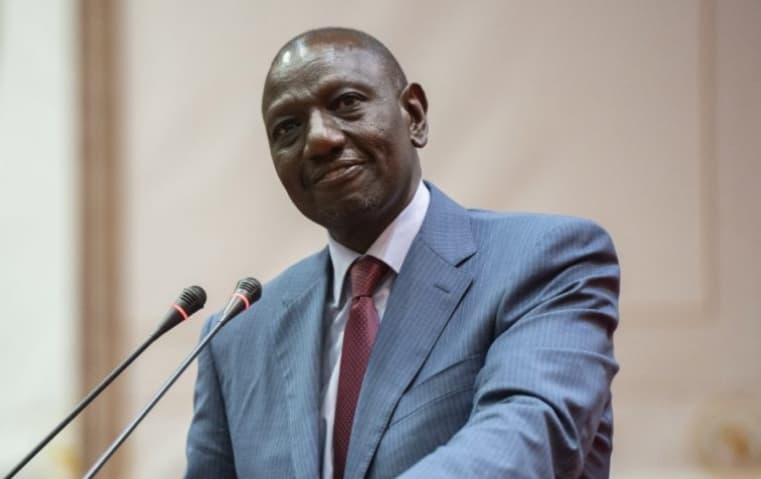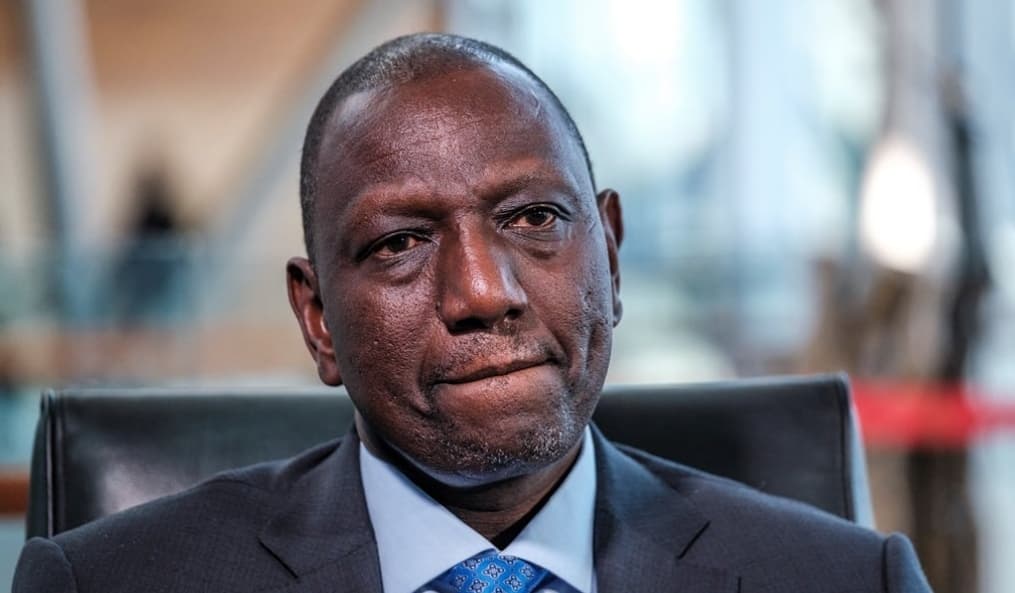
KENYA : President William Ruto has refuted claims that the government spent Sh104 billion on procuring the Social Health Authority (SHA) system.
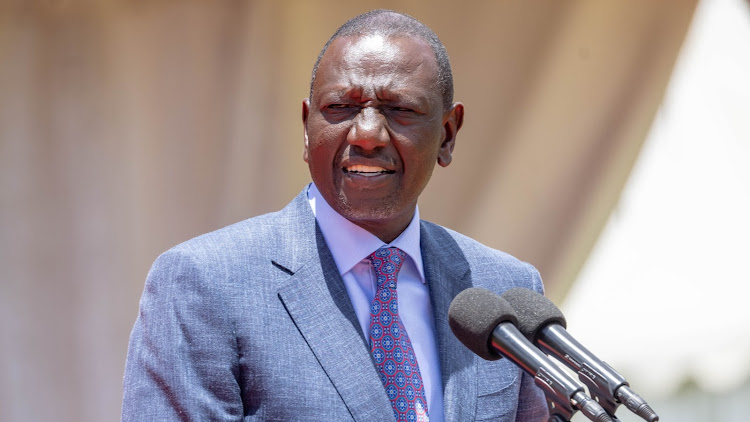
Speaking on Tuesday, March 4, 2025, in Malava, Kakamega, the President explained that SHA is managed by a consortium of technology companies tasked with preventing fraudulent claims, a problem that plagued the National Health Insurance Fund (NHIF).
Ruto, said the government will not fund the system apart from a fee-for-service arrangement.
The President claimed that those opposing SHA are brokers who benefited from NHIF fraud and are now spreading falsehoods about the new system.
"Those complaining are people who have been stealing from us, they don't want a system that works, because they want to continue stealing from us," he stated.
According to him, nearly 40 percent of NHIF funds were lost to fraud, something he vowed would not happen under his leadership.
"Because we want to sort out the problem of fraud of the past. Money that was collected by NHIF was stolen by fraudsters through fraudulent claims, which claimed almost 40% of the money that was being raised by NHIF. That will not happen as long as I'm president," Ruto explained.
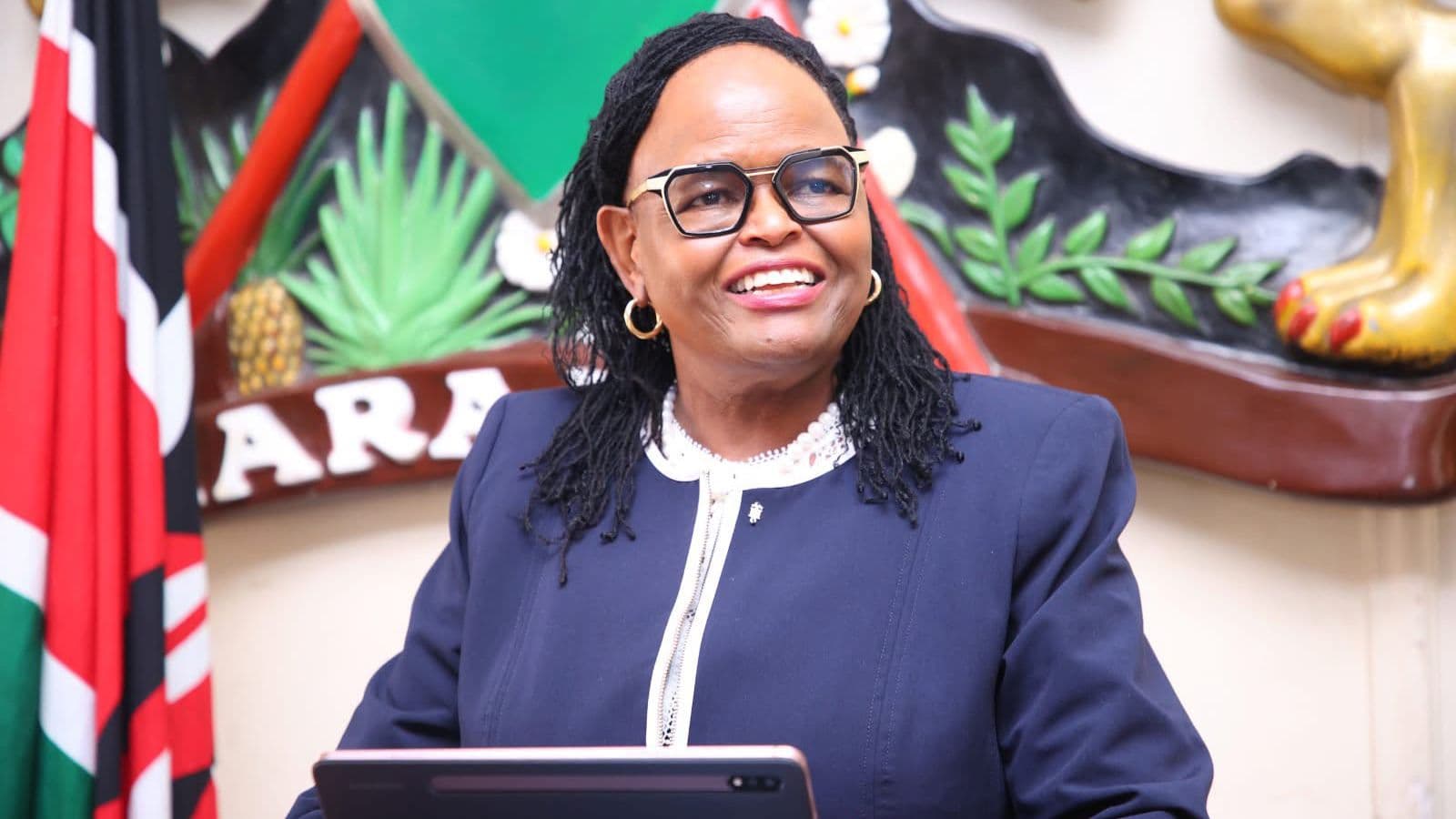
His remarks come after a report by Auditor General Nancy Gathungu for the financial year 2023-2024 detailed major legal violations in the system procurement, including unbudgeted and non-competitive procurement, an undefined scope of work, lack of payment agreements, and unfavourable contract clauses.
In her report, Gathungu revealed that the procurement of the Healthcare Information Technology Digitisation system at a cost of Sh104.9 billion was initiated without adhering to proper procurement guidelines.
She raised concerns over the absence of a thorough review of contractual clauses, which has significant implications for government control and ownership of the system.
One clause, for instance, explicitly restricts the government from accessing or controlling the system.
"The State Department procured the Healthcare Information Technology Digitisation system of Sh104 billion. However, a review of tender documents, contract agreements, and financial proposals indicated the following unsatisfactory matters," reads the report.
"The procuring entity shall ensure neither the procuring entity nor the government health agencies nor the procuring entity authorised users shall access all or any part of the system to build a product or service which competes with the system or undertake similar functionalities to the system or attempt to do so," Gathungu cited from the contract.
Additionally, state officials were faulted for ceding all intellectual property rights of the system to a private entity. The contract further stipulates that any dispute must be settled under the London Court of International Arbitration, rather than Kenya's Public Procurement Administrative Review Board, as required by law.
"Since the procurement was done under the Public Procurement and Asset Disposal Act of 2015, disputes should be referred to the Public Procurement Administrative Review Board," Gathungu said.
The report also disclosed that the Sh104 billion system purchase was not part of the approved procurement plan or the medium-term budgetary expenditure framework.
“This was contrary to Section 53 (7) of the Public Procurement and Asset Disposal Act, 2015, which states that multi-year procurement plans must align with the medium-term budgetary expenditure framework,” reads the report.
Further, Gathungu said the procurement was not subjected to a competitive process, violating Article 227(1) of the Constitution, which mandates that public procurement be fair, equitable, transparent, competitive, and cost-effective.
The government allocated Sh7 billion for installing the SHA system in public health facilities and training healthcare workers. However, the Auditor General found that the number of healthcare workers and health facilities involved was not specified in the contract.
"In addition, the contract price includes training, support, and customer education costs of Sh7.02 billion, but the number of healthcare workers to be trained and the mode of training were not disclosed in the contract agreement," reads the report.
The report further revealed that before rolling out SHA and imposing membership fees, no public participation was conducted.