Nairobi, April 12 : President William Ruto's implementation of the electronic travel authorisation (ETA), was meant to lead to the rise in tourist numbers and boost tourism revenue for the East African Country.
While eTA did that partly, it has emerged that the country's outsourcing of International Tech service provider's for systems continues to be a costly venture, with contracted firms milking the country
The eTA system, screens travelers before arrival and was being managed through a public-private partnership with Travizory Border Security SA and Konvergence Network Solutions.
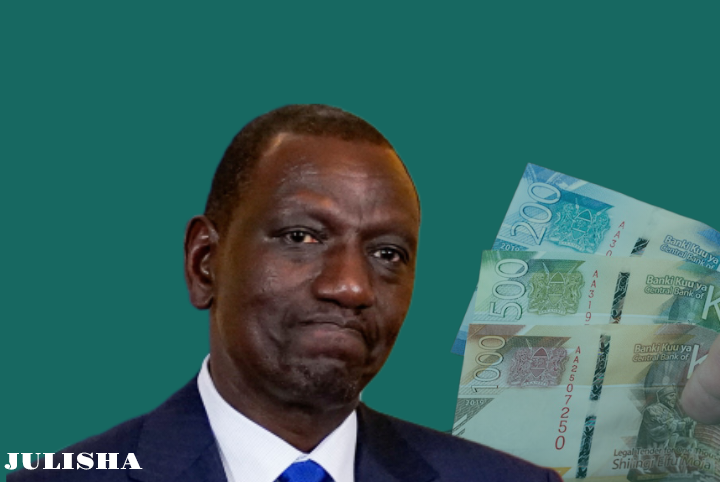
Interior CS Kipchumba Murkomen, speaking in Parliament, revealed the provider earned Sh1.5 billion from the system, which generated Sh6.5 billion by February 25, 2025. For each standard ETA costing $30, the provider received $8.5, and $15 for the $160 US multiple ETA.
“For the standard ETA, which cost $30, the service provider was paid $8.5, while for the US multiple ETA, which costs $160, the service provider was paid $15,” Murkomen said.
“As of February 25, 2025, the total number of ETAs applied was 1,596,799, generating $50,568,810 out of which the service provider is entitled to $12,255,013.50.” he added.
Despite the government collecting Ksh6.5 billion from the Electronic Travel Authorisation system, it has emerged that the money was first sent to Swiss bank accounts controlled by the contracted firm, Travizory Border Security SA.
The firm, as Murkomen stated, had already earned Ksh1.5 billion from the deal. However, this was before a fallout led to the cancellation of the contract and the Kenyan Government seeking services of an alterative firm.
The firm which implemented the roll-out of the system, Travizory, is now threatening to sue the Government of Kenya, and withhold Ksh1.07 billion still in their accounts.
The government has since replaced the system with a locally-hosted solution under e-Citizen using Pesaflow, but the Swiss company claims the new platform copied their system.
Interior CS Kipchumba Murkomen defended the move as a pilot project, highlighting increased tourism revenue from eTA-related growth.
“According to the Kenya Tourism Board annual report, 2024, Kenya’s tourism sector reported record growth, with 2.4 million international visitors, a 15 per cent increase from 2023 and inbound tourism earnings rising by 19.79 per cent to Sh452.2 billion,” Murkomen told Members of Parliament.
“This is an independent and objective appraisal of the positive impact of ETA on the tourism sector among other factors that influenced the rise in numbers of tourists and corresponding increases in business earnings.” he added.
However, MPs raised concerns over transparency, control, and rising dependency on outsourced tech platforms.
This follows a recent revelation made by the Auditor General, Nancy Gathungu, in regards to Kenya's new health insurance, the Social Health Authority (SHA) System.

Ms Gathungu, in her report for the financial year 2023-2024 detailed major legal violations in the system procurement, including unbudgeted and non-competitive procurement, an undefined scope of work, lack of payment agreements, and unfavourable contract clauses.
Gathungu revealed that the procurement of the Healthcare Information Technology Digitisation system at a cost of Sh104.9 billion was initiated without adhering to proper procurement guidelines.
She raised concerns over the absence of a thorough review of contractual clauses, which has significant implications for government control and ownership of the system.
One clause, for instance, explicitly restricts the government from accessing or controlling the system.
"The State Department procured the Healthcare Information Technology Digitisation system of Sh104 billion. However, a review of tender documents, contract agreements, and financial proposals indicated the following unsatisfactory matters," reads the report.
"The procuring entity shall ensure neither the procuring entity nor the government health agencies nor the procuring entity authorised users shall access all or any part of the system to build a product or service which competes with the system or undertake similar functionalities to the system or attempt to do so," Gathungu cited from the contract.
Additionally, state officials were faulted for ceding all intellectual property rights of the system to a private entity. The contract further stipulates that any dispute must be settled under the London Court of International Arbitration, rather than Kenya's Public Procurement Administrative Review Board, as required by law.
"Since the procurement was done under the Public Procurement and Asset Disposal Act of 2015, disputes should be referred to the Public Procurement Administrative Review Board," Gathungu said.
The report also disclosed that the Sh104 billion system purchase was not part of the approved procurement plan or the medium-term budgetary expenditure framework.
“This was contrary to Section 53 (7) of the Public Procurement and Asset Disposal Act, 2015, which states that multi-year procurement plans must align with the medium-term budgetary expenditure framework,” reads the report.
Further, Gathungu said the procurement was not subjected to a competitive process, violating Article 227(1) of the Constitution, which mandates that public procurement be fair, equitable, transparent, competitive, and cost-effective.
The government allocated Sh7 billion for installing the SHA system in public health facilities and training healthcare workers. However, the Auditor General found that the number of healthcare workers and health facilities involved was not specified in the contract.
"In addition, the contract price includes training, support, and customer education costs of Sh7.02 billion, but the number of healthcare workers to be trained and the mode of training were not disclosed in the contract agreement," reads the report.
The report further revealed that before rolling out SHA and imposing membership fees, no public participation was conducted.