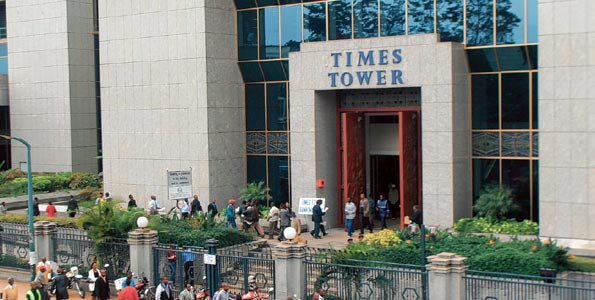
The Kenya Revenue Authority (KRA) is advocating for the reversal of a December 2023 law that exempted small businesses with annual sales below Sh5 million from the electronic tax invoice management system (eTIMS).
The Taxman, argues the exclusion has undermined tax compliance efforts and revenue collection.
The exemption was intended to remove burdensome compliance requirements that had effectively locked small suppliers out of contracts with larger businesses.
KRA now maintains this policy change has created a significant obstacle to widening the tax net and tracing economic transactions in the informal sector, with only 41 percent of targeted non-VAT registered taxpayers currently onboarded to the system.
Rispah Simiyu, Commissioner for Large and Medium Taxpayers at KRA, expressed frustration with the legislative setback, noting that despite offering "multiple simplified solutions" for small businesses to comply, the exemption has confined smaller enterprises to transacting exclusively with each other rather than integrating them into the formal supply chain.
The electronic invoicing system represents a cornerstone of KRA's ambitious strategy to expand its active taxpayer base from 9.67 million to 12.27 million by 2028 and increase tax collection to Sh4.59 trillion—nearly double the Sh2.41 trillion collected last year.
Before the exemption, the system helped prevent tax evasion by requiring all businesses to issue electronic invoices that simultaneously documented sales for small traders and expenses for larger firms, making it difficult for companies to inflate costs and reduce tax obligations.
With Kenya's informal sector generating 85 percent of new employment (720,900 jobs last year compared to just 122,800 in the formal sector), bringing these businesses back into the digital tax ecosystem has become a key priority for revenue authorities seeking to meet aggressive collection targets.
In other news, the Central Bank of Kenya (CBK) has issued a consultative paper seeking public input on the proposed review of the Risk-Based Credit Pricing Model (RBCPM), introduced in 2019 to address high lending rates and lack of transparency in the credit market.
The review comes five years after the model’s introduction, as CBK reassesses its effectiveness in supporting ongoing reforms in the banking sector.
The regulator now proposes the use of the Central Bank Rate (CBR) as the common reference rate for pricing loans.
Under the proposed changes, lending rates will be calculated by adding a premium—referred to as “K”—to the CBR, which reflects banks’ cost of funds.
To improve transparency, CBK will publish each bank’s “K” component on its website, the Total Cost of Credit (TCC) platform, and in two national newspapers.
The CBK said the move aims to create a market-driven, fair, and transparent credit pricing framework, enabling borrowers to better compare loan costs across banks.
The public and stakeholders are invited to submit their feedback on the consultative paper, which is part of CBK’s wider strategy to enhance financial inclusion and market discipline in the lending industry.
Finally, Electricity prices have increased, with Kenyans receiving less power tokens than they did at the beginning of the month.
An analysis of tokens purchased by different consumers in the last three weeks established that Kenya Power reduced the amount allocated for tokens in each purchase due to an increase in pass-down charges.
For instance, on April 3, if one bought tokens worth Ksh300, they would receive 11.9 tokens. However, if you bought a similar amount today, you will receive 11.4 tokens.
Analysis of the token details reveals that most of the pass-down charges have increased, especially in the fuel and forex charges.
Using the Ksh300 purchase on April 3, Ksh41.28 went towards the fuel charge. However, for similar token amounts bought in the last week, Ksh47.19 went towards the fuel charge, representing a spike of Ksh5.91.
Fuel charge is a pass-through cost that is charged to consumers for electricity generated using fuel products.
"Fuel Charge Cost is the added cost or rebates to the consumers as a result of fluctuations in world prices as well as fluctuations in the quantity of oil consumed by electricity generation," Kenya Power noted in its explainer.
"The fuel cost charge lags one month behind the actual price of the fuel. This money is collected by KPLC, and all of it is passed on directly to electricity generation companies, who in turn pay fuel suppliers."
The March fuel prices were Ksh176.58 for Super Petrol, Ksh167.06 for Diesel and Ksh151.39 for Kerosene.
On the other hand, forex costs increased by Ksh1.93 for a Ksh300 token purchase in the last three weeks.
"The foreign exchange component is related to the fluctuation of hard currencies against the Kenyan shilling for expenditure related to the power sector, e.g., project loan repayments," Kenya Power added in the explainer.
The increase in electricity prices comes at a time when many Kenyans are facing challenges in meeting their basic needs, given the high cost of living.
This has seen the government undertake various reforms to lower the cost of power. For instance, on April 17, President William Ruto assented to the Excise Duty (Amendment) Bill, 2025, which removed the 25% duty on imported fully assembled electric transformers.
The move is aimed at reducing the costs of electricity connections and also reducing the cost of power in the long run.