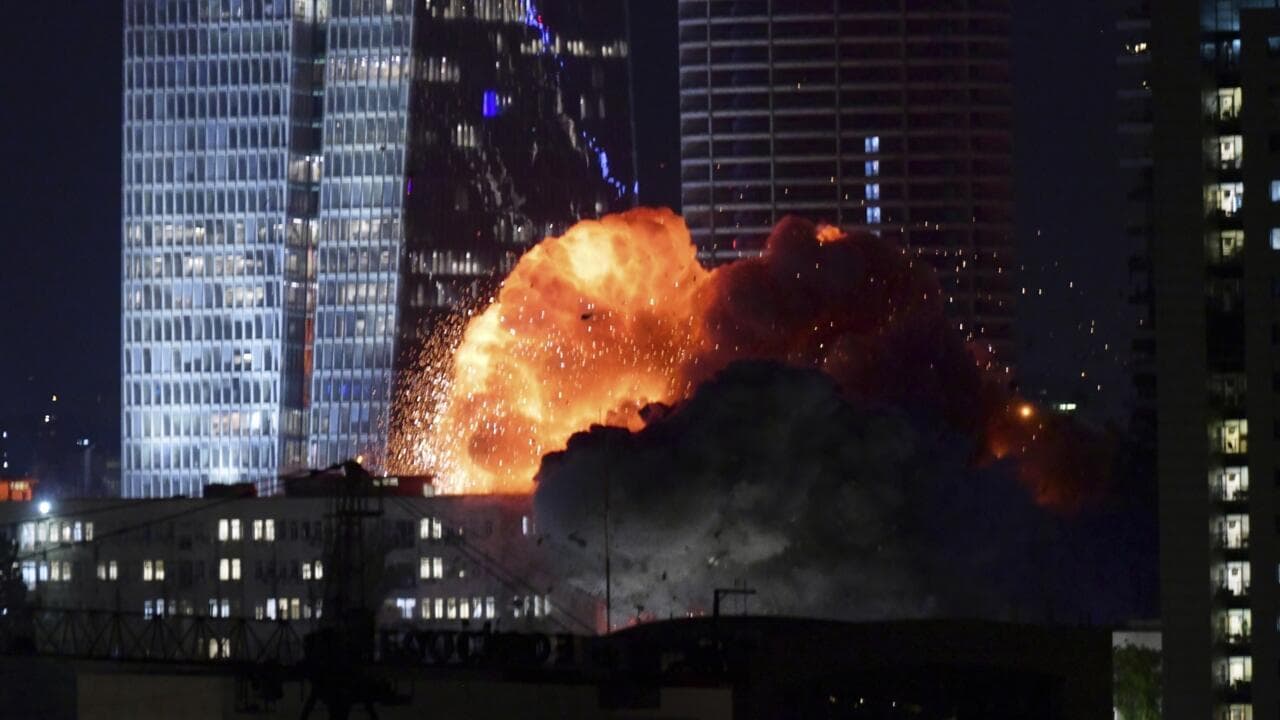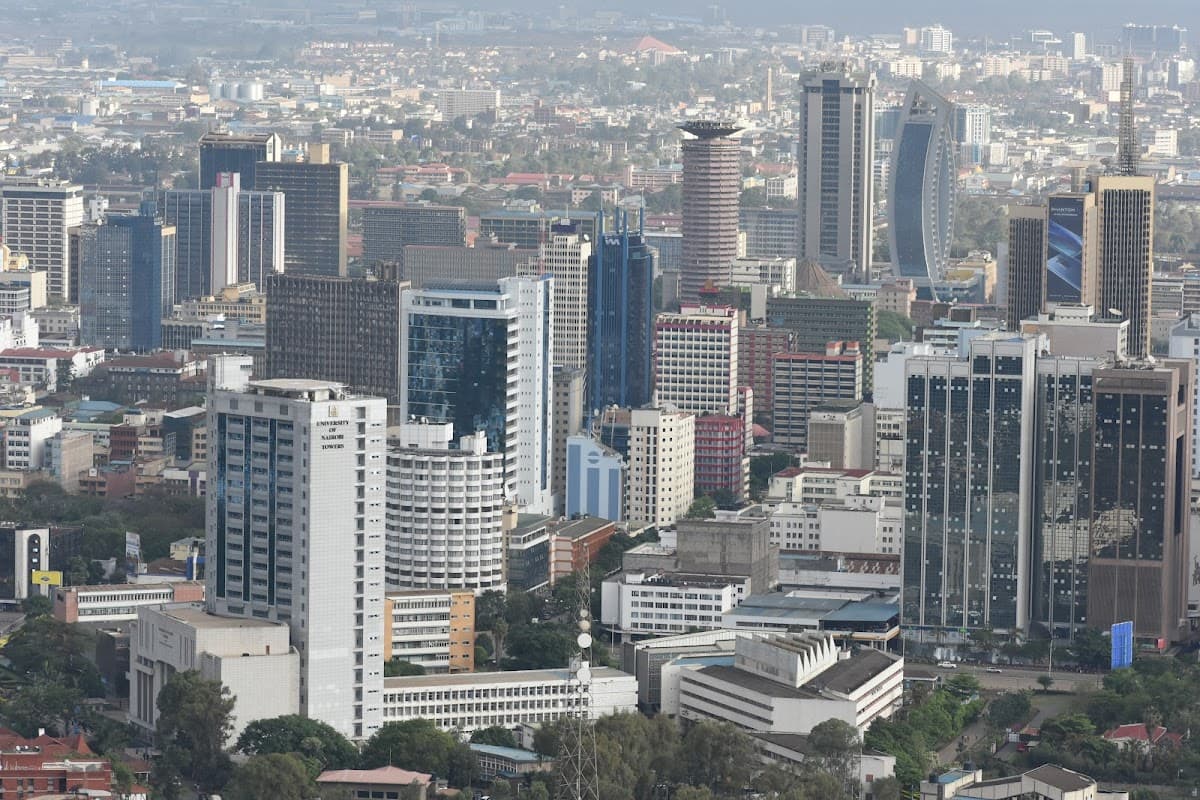
Protesters on Tuesday, June 17, gathered in the streets of Nairobi, amid growing public fury over the death of 31-year-old teacher Albert Ojwang while in police custody.
Ojwang was arrested in Homa Bay County on June 6 over alleged defamation of Deputy Inspector-General of Police Eliud Lagat. He was transported more than 350 kilometres to Nairobi’s Central Police Station, where he was found dead two days later.
Lagat has so far stepped aside from his position to pave the way for investigations into the death of Ojwang.
The DIG, whose name has featured prominently in the ongoing probe, voluntarily relinquished his duties amid mounting public pressure and calls from senior figures, for his arrest and prosecution.
In a statement on Monday, June 16, Lagat said; “In the good and conscious thought of my role and responsibilities as the Deputy Inspector General of Kenya Police Service, and, in view of the ongoing investigations on the unfortunate incident of the death of Mr. Albert Ojwang’, I have today opted to step aside from the office of the Deputy Inspector General – Kenya Police Service pending completion of investigations.”
Police had by 9.00 am begun deploying around key flashpoints, including the area surrounding the National Archives. Officers were also seen patrolling major streets across the city, bracing for possible demonstrations.
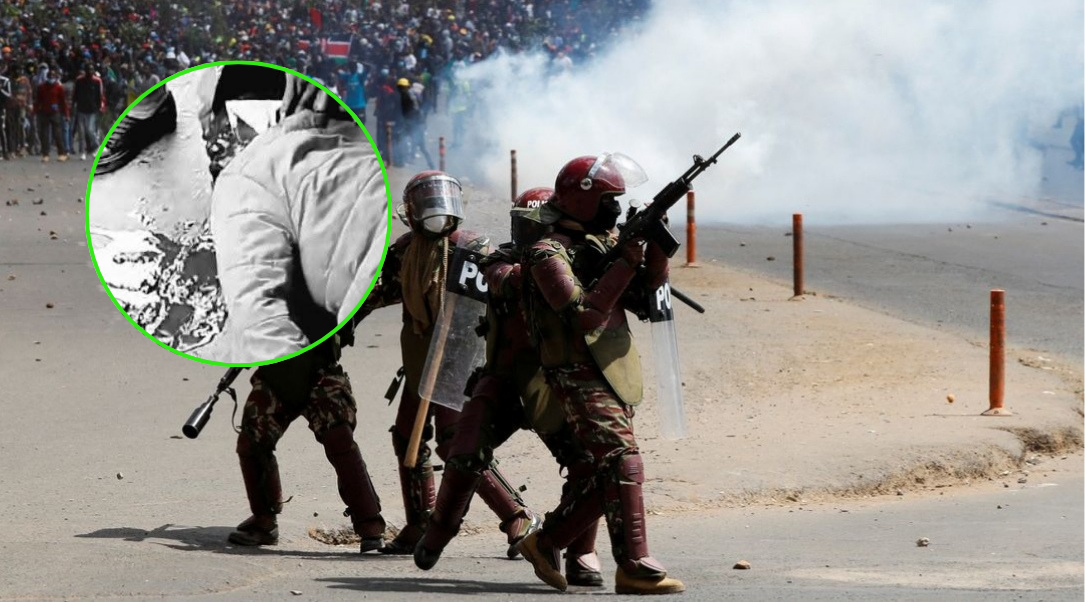
An ugly confrontation between police, protesters, and a seemingly hired group of youths riding motorcycles ensued on University Way in Nairobi. Before police dispersed crowds of protesters who were marching in the streets of the city, especially University Way, a group of youths arrived to fight off protesters, robbing them of their phones.
Police lobbed teargas at activists gathering around the Nation Centre on Kimathi Street in Nairobi CBD, to call out extrajudicial killings and demand accountability for victims and their families.
In a tragic turn of events,a young protester has this afternoon been shot dead near Platinum Plaza in Nairobi CBD.
Witnesses who spoke to Julisha.co.ke say the victim was unarmed when Police officers roughed him up, before firing and striking him in the head at close range.
The incident sparked panic and fury as crowds chanted "Stop killing us!" while officers fired teargas to disperse them. The victim, who was yet to be identified at the time of this publication, reportedly died on the spot.
The National Police Service were yet to issue a statement on the incident at the time of this publication.
The recent killing in Kenya of a young man in police detention highlights a string of systemic failures to hold the country’s security officers accountable for their actions. Despite public outrage and protests, Kenyan police officers continue to use inhumane, brutal and sometimes fatal methods with little consequence.
At least 20 people have died while in police custody in the past four months, the Independent Policing Oversight Authority (IPOA) revealed recently.
IPOA Chairperson Issack Hassan said the deaths highlight a worrying trend of abuse and brutality within police cells.
First, Kenya’s police institution was established as a colonial instrument of oppression. Police reforms since independence in 1963 have had little impact in changing this. Instead, successive governments have used the police to suppress dissent. This has cemented a culture of violence and police impunity. This was seen during former president Daniel arap Moi’s repressive regime, the post-2007 election violence and recent crackdowns on public protests protected under the constitution.
The reaction to mass mobilisation in June 2024 was violent. This was because the state sees public demonstrations as a threat to its authority.
Second, police brutality thrives in environments where wrongdoing goes unpunished. Kenya’s police force lacks good internal control mechanisms. A culture of silence and solidarity – the “blue code” – deters whistleblowing. Advancements and rewards are sometimes determined by political allegiances rather than professionalism.
Third, many police officers work in toxic conditions marked by poor pay, limited resources and long shifts. These contribute to feelings of frustration and aggression. The situation is worsened by institutionalised corruption where police officers extort money from citizens and demand bribes. This has contributed to diminished ethical standards.
Kenya has several formal avenues for holding police accountable. But all are deeply flawed.
Independent Policing Oversight Authority: This was established in 2011 in light of the post-election violence of 2007-08. Its job was to independently investigate police misconduct. However, underfunding and understaffing has led to delayed investigations.
There has also been a lack of cooperation from the police. They often fail to provide evidence or deliberately provide misleading information to impede investigations.
The authority also has limited enforcement power. It has recommended thousands of prosecutions of rogue officers. However, it has seen low conviction rates given the slow processes at the judiciary and Office of the Director of Public Prosecutions.
Internal Affairs Unit: This is a critical oversight body. It’s mandated to provide accountability and professional discipline within the police service. It’s tasked with investigating public complaints and complaints from within the police service against police officers.
The unit can recommend to the National Police Service Commission disciplinary action – such as prosecution or dismissal – against officers it finds guilty. It also monitors police officers to ensure that ethical conduct and professional standards are maintained.
However, the unit faces perceptions of a lack of independence and as an internal cover-up tool. In many instances, cases of police misconduct are simply punished by a transfer to another station.
Judiciary and Office of the Director of Public Prosecutions: Cases take years to move through the judicial system. Convictions are rare. The public prosecutions office has faced accusations of bias, which it exhibits through its reluctance to prosecute high-profile police killings.
The time it takes to conclude police misconduct cases allows impunity to thrive. Deliberately poor investigations carried out by the police (who are also suspects) have led to collapsed cases.
Firstly, there’s an institutional resistance to reform. Powerful factions in the police and government benefit from the current system. Whenever there is an attempt at enforcing accountability, these senior officials take advantage of bureaucratic delays, and harass investigators and whistleblowers.
In extreme cases, they enforce the disappearance of witnesses.
Secondly, a lack of political will creates a favourable environment to circumvent constitutional frameworks. This ultimately weakens any chances of accountability. At best, police in Kenya are used to defend political interests and suppress dissent.
This emboldens powerful political players who want the police to be controllable. This dissuades them from instituting actual reforms and establishing a humane policing service.
Until those in leadership positions genuinely prioritise independent institutions and justice over transient political gains, significant police reform is unlikely to be realised.
The Independent Policing Oversight Authority Act needs to be amended to enhance autonomy. The current system is easy for the president to manipulate because he gets to appoint the authority’s commissioners.
There’s also a need to provide the authority with equipment. This includes ballistics analysis, digital forensics and crime scene reconstruction capabilities to combat police cover-ups.
The Office of the Director of Public Prosecutions must also be required to respond to the authority’s recommendations within 30 days. Currently, cases can take years to complete. There have been instances when rogue police have used this window to eliminate witnesses or tamper with evidence.
There must be a move away from paramilitary-style drills and procedures in training. Instead, officers need to practise de-escalation, communication and problem-solving tactics with the public. What exists within Kenya now is a paramilitary service not a police service.
Additionally, the police service commission needs to reward professionalism and not cronyism.
Ending police impunity in Kenya requires a multi-pronged approach. This involves judicial independence, vigorous prosecution, meaningful oversight, legislative changes and public engagement.