Kenya is strengthening its health products and technologies (HPT) supply chain with a renewed focus on self-reliance, sustainability, and efficiency in response to rising costs of medicines and the growing demand for healthcare.
At a high-level forum themed “A Shift Towards Self-Reliance and Sustainability in Health Products and Technologies Supply Chain in Response to the Evolving Funding Environment,” Principal Secretary for Medical Services Dr. Ouma Oluga outlined reforms aimed at securing the country’s health systems.
The reforms focus on three priorities: strengthening procurement, warehousing, and last-mile delivery systems; restructuring the Kenya Medical Supplies Authority (KEMSA) to improve efficiency in distribution and logistics; and reducing the cost of health products by expanding local pharmaceutical and medical technologies manufacturing.
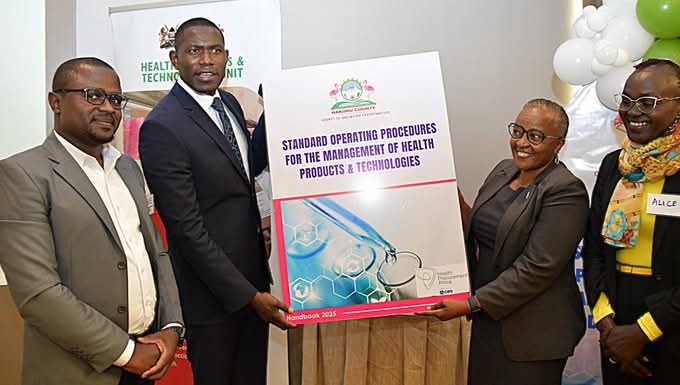
A major highlight of the forum was the launch of Standard Operating Procedures (SOPs) for Health Products and Technologies, developed to streamline processes, strengthen accountability, and improve efficiency across the supply chain.
The launch was led by Dr. Oluga, together with John Karani, Chair of the Kenya Institute of Supplies Management, and Dr. Tom Menge, Acting Head of the HPTs Directorate.
The Ministry of Health is also rolling out digital supply chain systems through the Digital Health Agency to improve forecasting, accountability, and timely replenishment.
The government is exploring public, private partnerships in warehousing and distribution while pursuing pooled procurement to secure stronger bargaining power and reduce costs. Expanding local manufacturing remains central to reducing import dependency and stimulating economic growth.
The forum brought together representatives from the Department of Health Products and Technologies, the Council of Governors, county governments, regulatory bodies, and development partners including the World Bank, PATH, ThinkWell, Africa Resource Centre, CIPS/HPA, InSupply, MEDS, and KEMSA.