Kenya National Highways Authority (KeNHA) has proposed a toll rate of Sh8 per kilometre for passenger vehicles on the planned Rironi–Mau Summit Highway, a 175-kilometre dual carriageway linking Nairobi to Nakuru and the Mau Summit.
This means, Kenyans using the upcoming Nairobi–Nakuru dual carriageway will pay up to Ksh1,400 in toll fees for a one-way trip once the project is completed. A return journey will cost Ksh2,800.
Motorists travelling between Rironi and Naivasha (58 kilometers) will pay Ksh464 for a one-way trip and Ksh928 for a two-way journey.
The toll charges would take effect when the highway opens in 2028, under a Sh200 billion public–private partnership (PPP) aimed at alleviating congestion and improving regional connectivity.
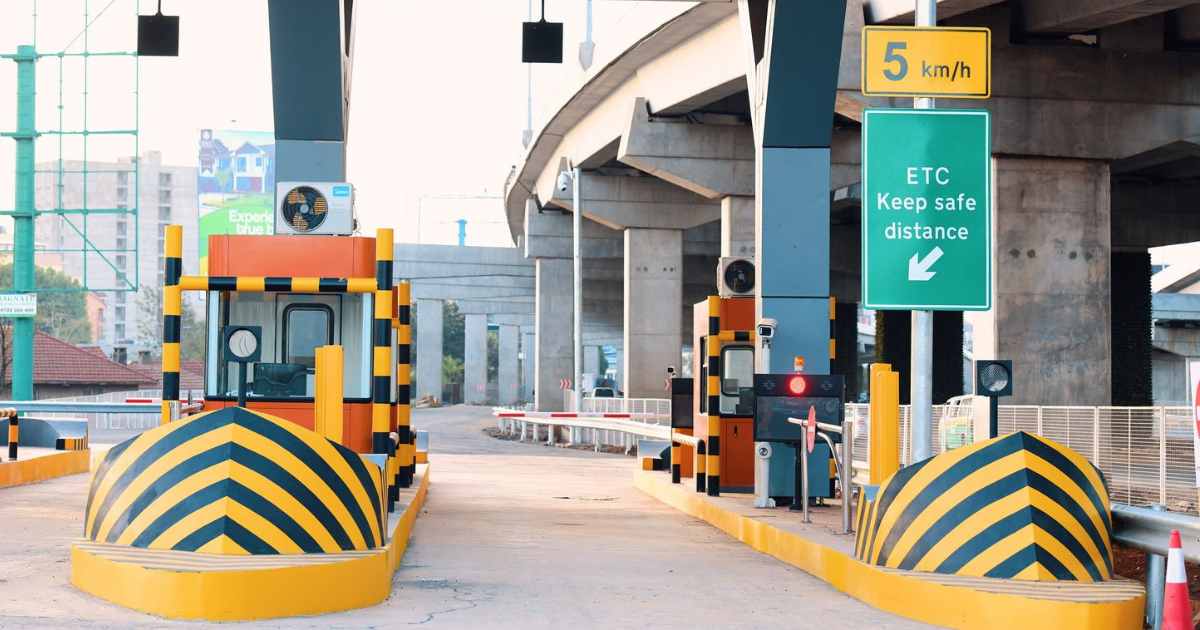
The proposed tariff, outlined in KeNHA’s project disclosure and PPP brief, is set to increase by one per cent annually in line with the draft National Tolling Policy (2024). The expressway will operate an open tolling system, where motorists pay based on the distance travelled at eight toll stations along the corridor.
The rate applies to passenger vehicles (Class 1), including small cars and four-wheelers, while heavier vehicles such as trucks and buses will pay higher charges under different classifications.
The toll structure is part of the project’s financial model, approved by the Public–Private Partnerships Directorate and the National Treasury, ensuring cost recovery and long-term maintenance viability.
The Rironi–Mau Summit project is being developed by a consortium comprising China Road & Bridge Corporation (CRBC) and the National Social Security Fund (NSSF) Board of Trustees, following its recommendation as the preferred proponent in October 2025.
"Based on comparative assessment, the Evaluation Committee concluded that China Road & Bridge Corporation (CRBC) and National Social Security Fund Trustees (NSSF) align with the Contracting Authority’s Output Specifications and PPP Act Cap 430 requirements, with a proposed toll rate of Sh8 per kilometre and a 1 per cent escalation rate per annum. Accordingly, CRBC and NSSF are recommended as the Preferred Proponent," stated KeNHA.
According to KeNHA, the upgraded highway, part of the Northern Corridor and the Trans-African Highway network, will reduce travel time, improve road safety, and strengthen regional trade and tourism.
The new PPP replaces a previous French-led concession, terminated by the government in 2023 over cost concerns. Kenya paid about Sh6.2 billion in compensation following the cancellation.
While the PPP project is designed to improve mobility and regional trade, the highway’s estimated cost of Sh200 billion works out to over Sh1 billion per kilometre.
Construction is expected to begin this year and is earmarked for completion targeted in June 2027.
The road will then be operated by the consortium for 28 years (2028–2055) to allow investors to recoup costs through toll collection.
The plan includes six toll stations along the Nairobi–Nakuru–Mau Summit (A8) section and two more on the Nairobi–Mai Mahiu–Naivasha (A8 South) route.
KeNHA says the project aims to ease congestion on the busy corridor connecting Nairobi to Western Kenya and regional markets while maintaining toll rates lower than those on the Nairobi Expressway.
As detailed in the project brief, the operator will also include an electronic system for the payment of toll fees to enable ease. This is the model currently being used for the Nairobi Expressway, which was also constructed by China Road and Bridge Corporation (CRBC).
"The proponent brings proven expertise in toll road development and operation, including advanced traffic management systems, electronic toll collection, and sustainable construction practices," read the project brief in part.
"The proponent will also bring cutting-edge solutions that will not only result in high-quality and durable road infrastructure but also drive operational efficiency and long-term performance."