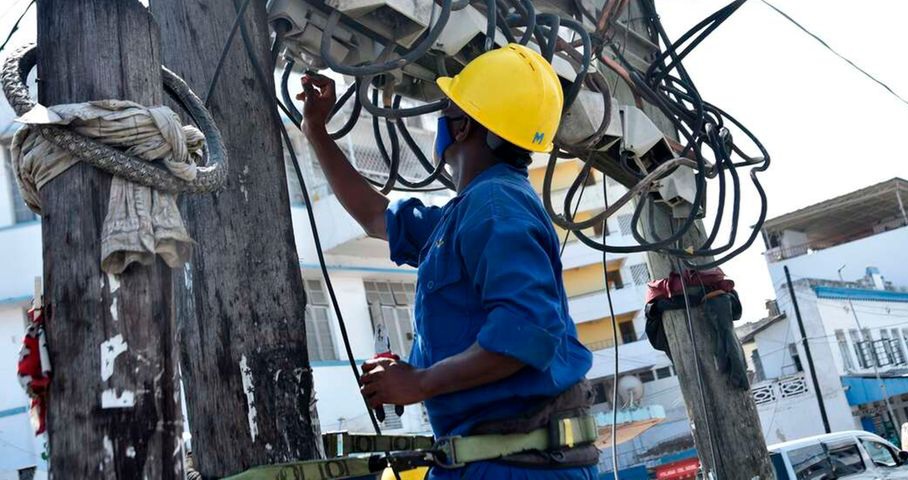
Kenya Power and Lightening Company (KPLC) has announced planned power outages affecting residents and businesses in the North Rift, Mount Kenya, and Western regions on Saturday, November 15, 2025, as part of scheduled maintenance works.
In a statement on Friday, November 14, the utility company confirmed that parts of Nandi, Nyeri, and Kakamega counties will experience temporary interruptions as engineers carry out essential maintenance to enhance the reliability of the electricity supply.
In Nandi County, power will be suspended in the Kiborgok area from 9:00 a.m. to 6:00 p.m. The affected locations include Kiborgok Girls, Fr Kuhn, Koibem, and neighbouring customers.
In Nyeri County, outages will hit multiple areas from 9:00 a.m. to 5:00 p.m.
Affected areas include Chaka, Endarasha, Mweiga, and Gitunduti Market, with specific locations such as Brookside Chaka, YATU Crusher, Roben Aberdare, Kimenju Farm, Kirinyaga Construction Yard, Kiawara, Ruirie, Lamuria, Bellevue, Kabendera, Kariminu, Tanyai, Nairutia, Mugunda, Ngobit, Kariguini, Mahiga Meru.
Other areas include Gatuamba, Narumoru, Matopeni, Gitunduti Primary School, Kagochi Market, and Kianjiru-ini TBC, as well as Safaricom and Airtel boosters and neighbouring customers.
In Western Kenya, parts of Kakamega County, including Khayega and Ikolomani, will also experience power cuts from 9:00 a.m. to 5:00 p.m.
Specific areas affected include Shirere, Shitoto, Khayega, Ikolomani, Makhokho, Iguhu, Shisesia, Lusui, Ivonda, Isanji, Mudere, Irongo, Keveye, and surrounding customers.
Kenya Power has advised residents and businesses to make necessary arrangements and plan for the temporary disruption, stressing that the maintenance work is aimed at ensuring more reliable electricity supply in the long term.
The maintainance works, come weeks after Kenya’s electricity sector reached a critical juncture as the nation recorded unprecedented peak demand of 2,411.98 megawatts (MW) and the highest-ever daily energy consumption of 44,122.60 megawatt-hours (MWh) on Friday, October 24.
This milestone, while indicative of robust economic growth and expanding electricity access, has simultaneously exposed a concerning vulnerability in Kenya’s power infrastructure: dangerously thin reserve margins that threaten grid stability and the nation’s energy security.
According to the latest figures from the Energy and Petroleum Regulatory Authority (EPRA), Kenya maintains an installed capacity of 3,846.80MW. With peak demand reaching 2,411.98MW, the country operates with a reserve of approximately 434.82 MW—representing just 11.3% of installed capacity. This figure becomes even more alarming when accounting for the intermittent nature of renewable energy sources.
Excluding solar power, which is inherently unreliable during nighttime hours and constitutes 14.12% of Kenya’s installed power capacity (514.1MW), the effective operational reserve margin shrinks to approximately 480 MW during evening peak demand periods. This razor-thin cushion leaves Kenya’s grid vulnerable to cascading failures, particularly during equipment maintenance, unexpected plant outages, or periods of low renewable energy generation.
The vulnerability of Kenya’s power system has become particularly evident during the current rainy season, when frequent power blackouts have become a daily occurrence. The solar energy component, which represents 514.1MW or 14.12% of Kenya’s installed power capacity, experiences significantly reduced output during overcast conditions and extended periods of rainfall. This weather-dependent variability in solar generation has placed additional strain on other power sources to compensate for the shortfall, highlighting the critical importance of baseload power generation capacity.
The seasonal nature of this challenge underscores a fundamental issue in Kenya’s energy mix: while renewable sources provide clean and sustainable energy, their intermittency requires robust backup capacity or energy storage systems to ensure grid stability. Currently, Kenya lacks sufficient battery energy storage systems (BESS) to smooth out these fluctuations, making the grid heavily dependent on dispatchable power sources like geothermal, hydro, and thermal plants.
The surge in electricity demand represents more than just a momentary spike—it reveals a sustained and accelerating trend that poses significant planning challenges for Kenya’s energy sector. Earlier in 2025, the country recorded a peak demand of 2,316 MW on February 12, following closely on the heels of a 2,043 MW peak demand in January. The progression from 2,043 MW in January to 2,411.98 MW in October represents an increase of approximately 368 MW in just ten months—an unprecedented growth rate that has caught many energy planners off guard.
Data from Kenya Power’s National Control Centre shows that peak electricity demand has been steadily growing over the last three years, with the growth rate gaining significant momentum in 2024. Electricity demand exceeded the 2,000 MW threshold toward the end of 2021 and peaked above 2,100 MW in 2022, but remained steadily below 2,200 MW in 2023 before regaining momentum in June 2024. Projections indicate that electricity demand could rise by 6.5% annually from 2025 to 2027, placing enormous pressure on the existing infrastructure.
The record-breaking electricity demand is not merely a technical challenge—it reflects Kenya’s economic vitality and development trajectory. The correlation between electricity consumption and economic activity is well-established, and Kenya’s growing power demand signals expanding industrial production, increased commercial activity, and rising household incomes.
The government’s Vision 2030 development blueprint envisions Kenya achieving middle-income status through rapid industrialization, which requires abundant, reliable, and affordable electricity. Manufacturing, which is energy-intensive, cannot thrive without a stable power supply. Similarly, the digital economy, which the government has prioritized as a growth sector, depends on reliable electricity for data centers, telecommunications infrastructure, and technology hubs.
The Last Mile Connectivity Program has dramatically expanded electricity access, connecting over 741,185 customers to the national grid in recent years. As of 2025, approximately 78% of Kenyans have access to electricity—one of the highest rates in Africa. However, this expanded access, while socially beneficial, has contributed to the surge in peak demand, necessitating parallel investments in generation capacity.
The cost of electricity also plays a crucial role in Kenya’s competitiveness. High electricity prices can discourage industrial investment and place a burden on households. Kenya’s abundant geothermal resources offer the potential for low-cost baseload power, with generation costs significantly lower than diesel or heavy fuel oil thermal plants. KenGen is the cheapest supplier of power to the national grid, which has made electricity connectivity economically feasible for many Kenyans.