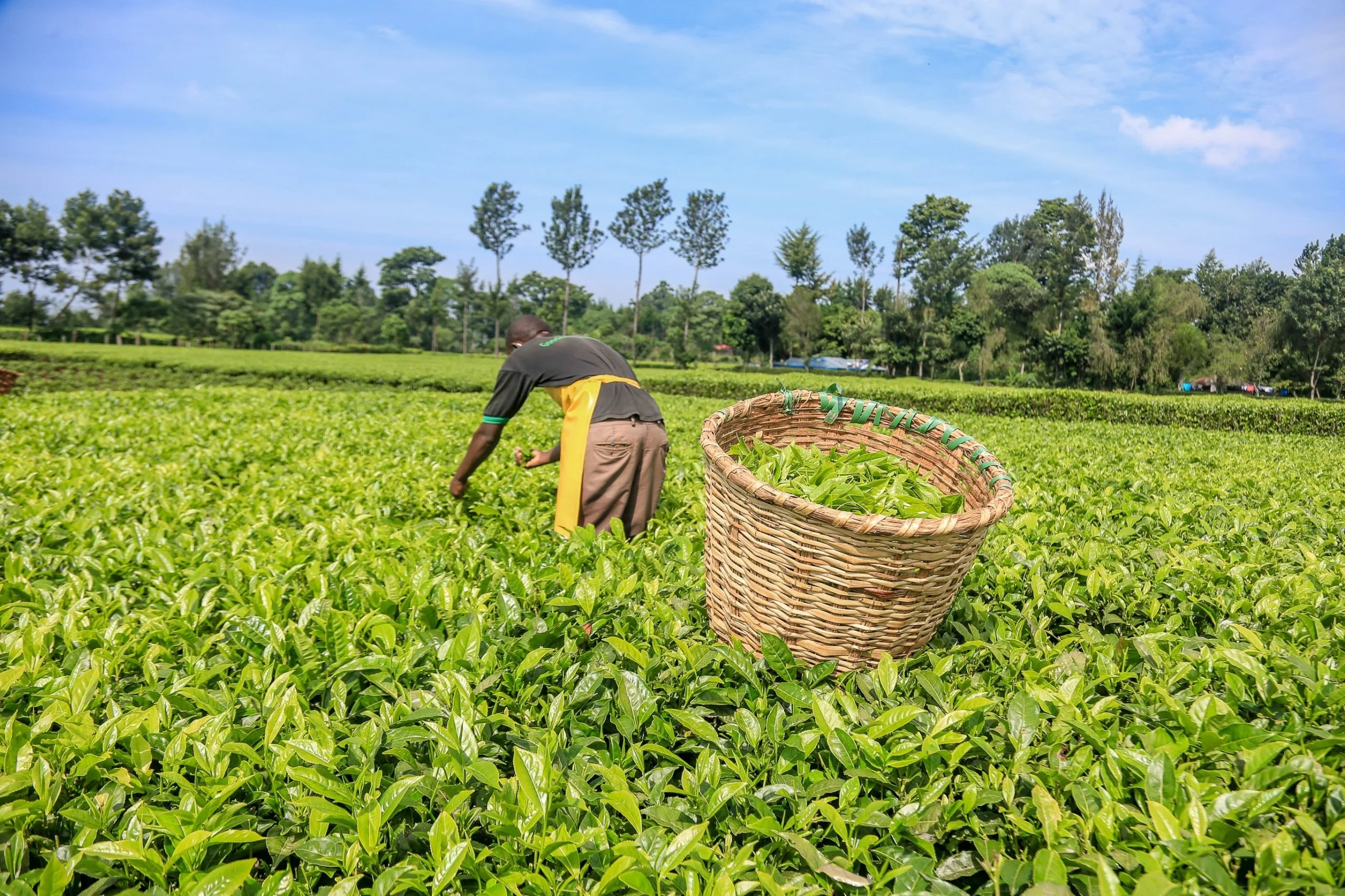
The Tea Board of Kenya has been tasked with auditing workers at select factories after findings showed some are receiving payments without owning tea farms.
The audit will specifically target employees whose earnings appear disproportionate to their farm sizes, as the government seeks to curb long-standing practices that disadvantage small-scale farmers.
Agriculture Principal Secretary Paul Ronoh issuing the directive, said, “This is our time to sort out the issues affecting small-scale tea farmers. Farmers must get their deserved rights. The time for practices seen to disadvantage farmers is ending,”
He noted that while audits have already been carried out across several tea factories, the results indicated that deeper issues persist, prompting a more targeted review.
“We have done audits across factories, and we will continue to conduct them. But we have realised there are still problems,” he said.
The new audit will focus on factory workers receiving payments without owning tea farms, or those whose earnings appear higher than what their farm sizes would yield.
“Now we have asked the Tea Board of Kenya (TBK) to conduct audits on tea factory workers who are getting money but don’t have tea farms. If you know you are getting money from tea and you don’t own a tea farm, prepare. If you are getting more pay from tea and your tea farm is small, also prepare, we will review those concerns,” Ronoh said.
He also raised concerns over fund management in some factories, where revenue meant for farmers is allegedly routed to general accounts, potentially allowing the money to be used in ways that differ from stakeholders’ expectations.
“Something else we have realised is that some tea factories channel their money to a general…bank account so that they can use the money in ways that may not align with expected usage. We have now directed that all tea factories immediately open their own accounts so that money goes directly to each factory,” he said.
Ronoh emphasised that the law requires every tea factory to maintain an independent bank account to promote transparency and accountability.
“The law requires that each tea factory must have an independent bank account where money is received and used for the intended purpose, which is to pay farmers,” he said.
This audit, comes days after a parliamentary committee launched a comprehensive review of the tea sector amid growing concerns over low bonuses and uneven pricing that have left farmers frustrated across the country.
Parliamentary probe over 'unfair bonuses'
The inquiry, ordered by the National Assembly, is examining the factors influencing tea prices and seeks to ensure farmers receive fair returns for their produce.
The National Assembly Departmental Committee on Agriculture and Livestock, chaired by Tigania West MP John Mutunga, began its work two weeks ago, with a report due to Parliament within three weeks.
Speaker Moses Wetang’ula directed the committee to adopt a thorough approach, stressing the need to examine complaints from leaders in key tea-producing regions.
“We have received multiple reports highlighting discrepancies in tea pricing and bonus allocations. This review should provide clarity and practical solutions,” Wetang’ula said.
Central to the inquiry is how tea prices are determined and why farmers in some areas receive higher bonuses than others.
The committee will study the entire tea value chain, from pre-production and harvesting to marketing, auctions, processing, retail, and export.
Particular focus will be placed on identifying inefficiencies and costs that reduce farmers’ profits.
The investigation will compare tea-growing regions east and west of the Rift Valley. Counties in the east, including Murang’a, Kiambu, Embu, Kirinyaga, Nyeri, and Tharaka Nithi, have reported consistently higher bonuses than western counties such as Kericho, Bomet, Nandi, Bungoma, Vihiga, and Trans Nzoia.
MPs want explanations for these disparities and for the higher operational costs observed in Western factories despite similar production levels.
The panel will also review the roles of the Tea Board of Kenya and the Kenya Tea Development Agency to determine whether overlapping duties, policy gaps, or regulatory challenges are hindering fair price setting.
By mapping out each stage of the tea value chain, the committee aims to pinpoint where pricing decisions are made and the factors that influence them.
This analysis will guide recommendations to strengthen the sector, close policy gaps, and enhance earnings for farmers.
Low Bonuses Alarm
The concern comes after Kenyan tea farmers received lower bonuses this year, a sharp drop in payments across the country.
The decline was not uniform. Farmers supplying factories in the East of the Rift Valley, mainly in the Mt Kenya region, received between Ksh26 and Ksh57 per kilo as second payments, known locally as bonuses.
By contrast, growers in the Rift Valley and South Nyanza faced much lower rates, ranging from Ksh10 to Ksh32 per kilo. For example, Kiru Tea Factory in Murang’a paid Ksh32 per kilo, down from Ksh51.10 last year, while Embu’s Rukuri Tea Factory paid Ksh57.50, a Ksh4 drop from 2024.
Farmers supplying Kiamokama and Rianyamwamu factories only got Ksh10 per kilo, half of last year’s Ksh20. Nyamache and Itumbe suppliers faced similar cuts, earning Ksh11 instead of Ksh20. These disparities have angered many farmers, who accuse the industry of perpetuating unfair practices.
Experts attribute the decline in earnings to both global and local factors. Kenya remains the world’s second-largest producer of black tea and the leading exporter, but its dependence on bulk sales through the Mombasa auction makes farmers vulnerable to market fluctuations.
Oversupply in competitor countries, such as India and Sri Lanka, has reduced auction prices. At the same time, economic challenges in major import markets, including Pakistan, Sudan, Ukraine, and Russia, have weakened demand.
The local currency also affects earnings. Tea is traded in US dollars, so a weaker shilling can increase local returns. However, rising costs of imported farm inputs, particularly fertiliser, have offset this benefit. The government has subsidised fertiliser, reducing prices from Ksh3,400 to Ksh2,500 per 50kg bag, providing some relief to farmers.
Climate change adds another layer of risk. Shifting rainfall patterns and longer dry seasons are already affecting production, with experts warning that Kenya’s tea yields could drop by up to 25 per cent by 2050 if current trends continue.
In an earlier response, the KTDA attributed the bonus reductions to global market conditions and currency fluctuations, noting that the Kenyan shilling strengthened from Ksh144 to Ksh129 against the US dollar in 2025.
However, regional data reveals a troubling trend: while East Rift factories such as Kiambu and Nyeri saw modest declines, West Rift areas including Kericho and Bomet experienced drastic cuts, with prices dropping by over 100 shillings per kilo.
During his State of the Nation Address, President William Ruto reported a significant rise in tea production and earnings during his tenure, noting that revenue increased from Sh138 billion in 2022 to Sh215 billion in 2024, a 56 per cent jump.
He highlighted other government interventions in the sub-sector, including lowering fertiliser costs to Sh2,500, recovering Sh2.7 billion that was nearly lost, removing taxes and enabling direct sales through a bill currently before Parliament. He added that efforts are underway to secure additional international markets and efforts to diversify to speciality teas like orthodox that fetch higher prices.
Despite this, small-scale farmers continue to decry meagre earnings from the cash crop, prompting a detailed review of financial management practices in the factories and the entire tea sector.