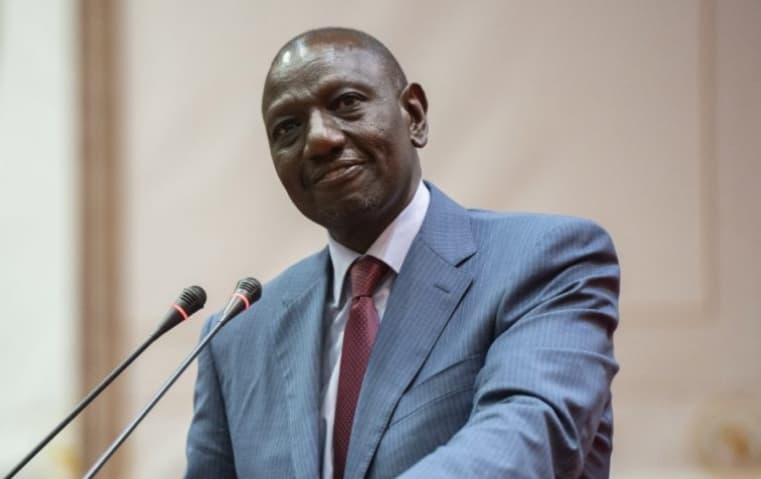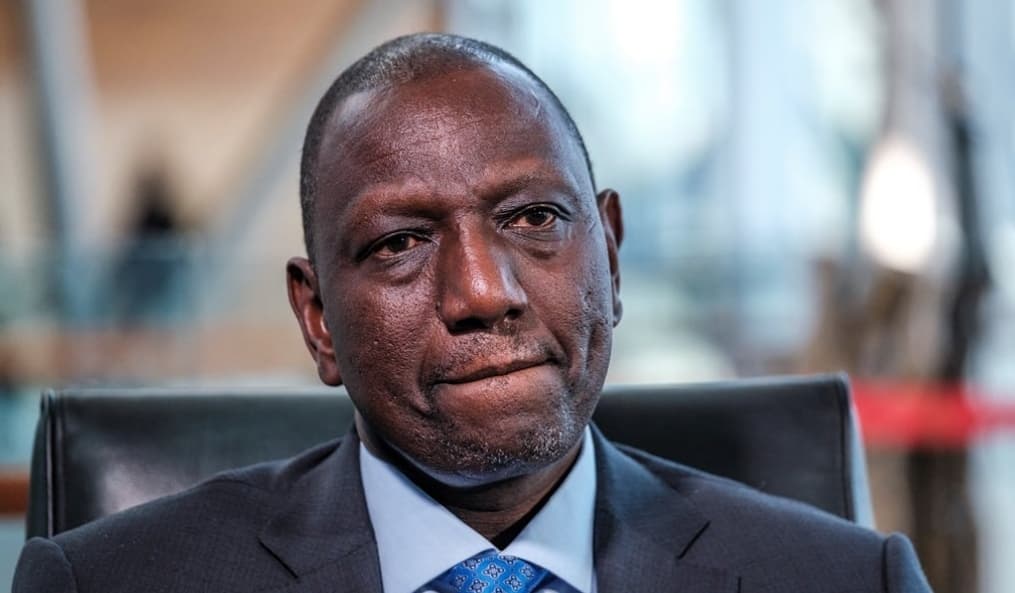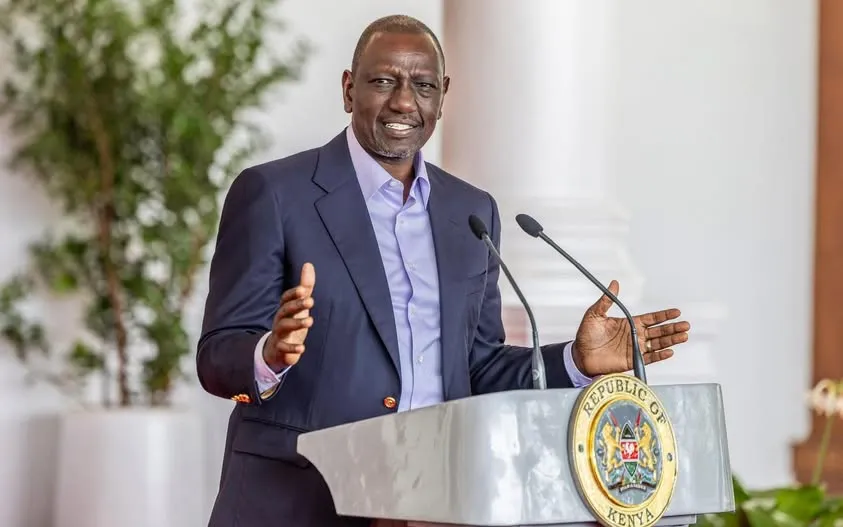
"Kenya’s journey to Singapore begins tomorrow" President William Ruto has vowed, announcing that the Cabinet is set to approve the National Infrastructure Fund (NIF), describing the move as a decisive step in the country’s push to transition from a developing economy to a First World country.
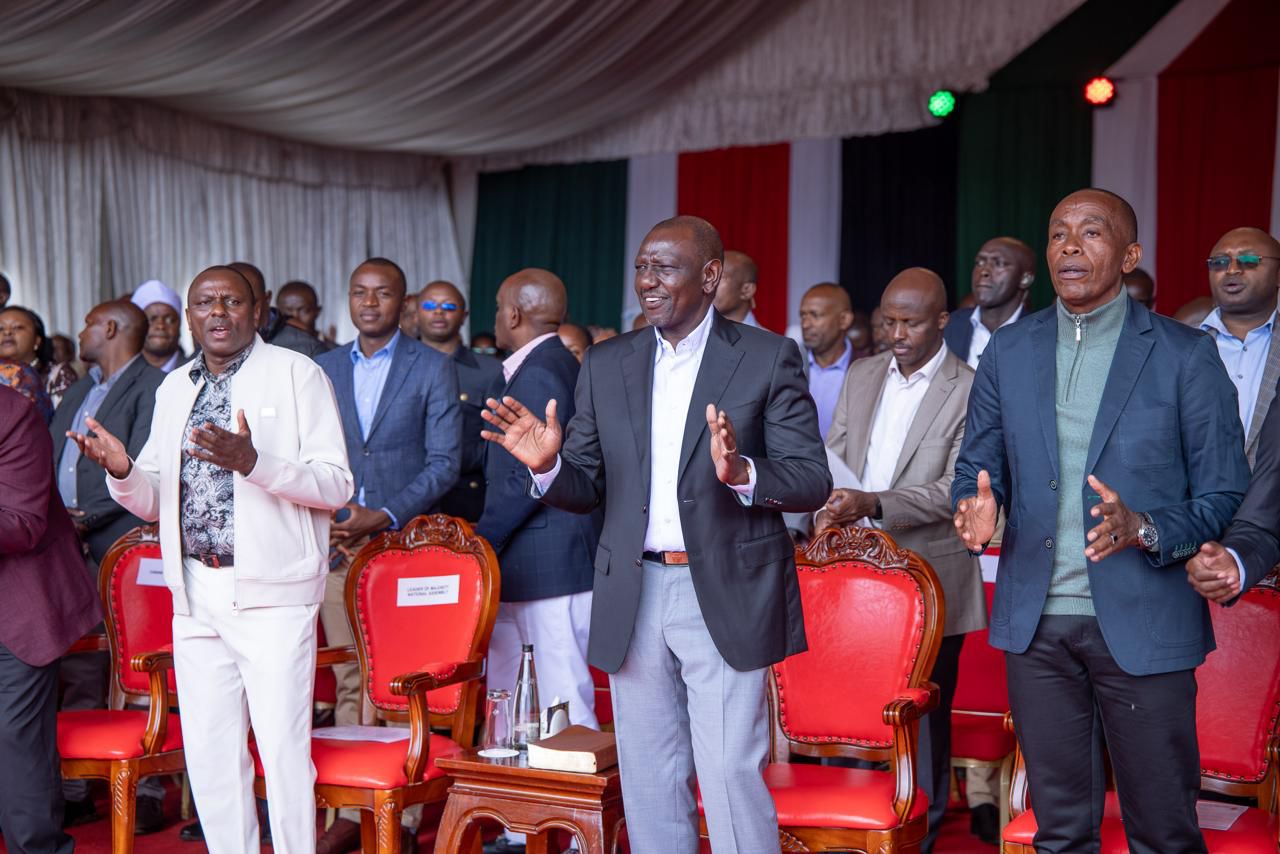
Speaking on Sunday in Kiambu during a church service at the Africa Inland Pentecostal Church Assembly (AIPCA), Gatundu North Diocese, the President said the approval of the fund will dominate the Cabinet agenda and mark the official beginning of an ambitious national transformation programme.
By establishing a dedicated infrastructure fund capitalized through domestic resources, Kenya aims to achieve greater control over its development trajectory while building institutional capacity for long-term infrastructure planning and implementation.
“Tomorrow, we will officially start the journey to transform the country into a First World country. We will begin the journey to transform the country from a Third World to a First World tomorrow.” Ruto declared.
The National Infrastructure Fund will be responsible for mobilising up to Sh5 trillion needed to finance large-scale development projects critical to economic growth.
According to President Ruto, the infrastructure fund will help the government systematically tackle persistent funding gaps that have stalled numerous critical development projects across multiple sectors, leaving partially completed roads, unfinished water systems, and delayed power generation facilities that represent wasted resources and unfulfilled promises to citizens.
The President candidly acknowledged that raising sufficient funds for major infrastructure projects through conventional mechanisms—primarily external borrowing from multilateral development banks, bilateral creditors, and commercial bond markets—has become increasingly difficult as Kenya’s debt burden has grown and as global financial conditions have tightened with rising interest rates.
This funding challenge has prompted his administration to explore innovative local financing mechanisms that can mobilize domestic capital for infrastructure investment, reducing vulnerability to external creditors, currency fluctuations, and the conditionalities that often accompany international lending.
He said the resources will be channelled into infrastructure, industrialisation and other productive sectors aimed at accelerating development and improving the quality of life for Kenyans.
“We are not joking, my friends. This country must be transformed by all means possible. We are very late. We are behind schedule in kicking out hunger and poverty. This country can be transformed. If Singapore, South Korea and Malaysia did it, why not us?” said Ruto.
The head of state reiterated his belief that Kenya can achieve rapid development similar to Singapore if it maintains discipline, stays the course on economic reforms and invests strategically in key sectors.
He stressed that transformation cannot be achieved through political rhetoric alone but through concrete development programmes and consistent policy implementation.
The President dismissed claims that his development push is driven by the 2027 General Election, saying his focus is firmly on delivery rather than politics.
“I am not doing all this because I want votes in 2027. I am past looking for votes. My mission is to change the country. If it was about votes, you elected me in 2022 and that is enough for me to deliver. Elections will come later; it is time to work. When that time comes, people should be judged according to what they have done,” Ruto said.
Political Context and Opposition Criticism
President Ruto’s infrastructure announcements came amid sharp criticism of opposition parties, which he accused of fueling negative politics and premature campaign activities that distract from development priorities. “Kenya was left behind by countries like Singapore because of bad politics. My government has done a lot in the last two years, but we can do more. Do not be lured into early campaigns by people who have no agenda,” the President asserted, drawing explicit connection between political stability and economic development outcomes.
The comparison to Singapore—which transformed from post-colonial poverty to developed economy status within decades through focused development planning, political stability, and pragmatic economic policies—serves as aspirational benchmark while implying that Kenya possesses similar potential constrained primarily by political dysfunction rather than fundamental economic obstacles.
President Ruto dismissed political slogans targeting his administration, including chants that have featured in opposition rallies and social media campaigns, characterizing opposition criticism as substance-free rhetoric lacking constructive policy alternatives. "Those who keep talking, insulting others and not serving the people should be sent home very fast" he said.
This political framing positions the administration as focused on tangible development delivery while portraying opponents as engaged in destructive criticism without presenting viable alternative programs. However, opposition figures would likely counter that criticism of government policies, accountability demands, and electoral competition constitute essential democratic functions rather than mere distraction from development.
Conclusion: Financing Kenya’s Development Ambitions
The proposed national infrastructure fund represents ambitious attempt to address Kenya’s infrastructure financing challenge through domestic resource mobilization rather than continued accumulation of external debt. Success will depend on multiple factors including securing adequate initial capitalization, establishing robust governance preventing political interference and corruption, developing professional project selection and management capabilities, and maintaining political consensus across administrations.
If implemented effectively with strong institutional safeguards and professional management, the infrastructure fund could transform Kenya’s development trajectory by ensuring predictable, adequate financing for priority projects, completing the backlog of stalled infrastructure, and positioning Kenya for the accelerated economic growth that quality infrastructure enables. However, if mismanaged through poor project selection, inadequate oversight, or corruption, the fund risks becoming another mechanism for resource misallocation rather than solution to Kenya’s infrastructure deficit.
The coming months will reveal whether this infrastructure fund vision translates into concrete institutional framework with necessary legislative backing, adequate capitalization, and implementation capacity—or whether it joins the long list of announced but never fully realized development initiatives that have characterized Kenya’s uneven progress toward its infrastructure and economic development aspirations.