The Kenyan government has finalized a landmark KSh 40.4 billion ($311 million) Public-Private Partnership agreement to strengthen the nation’s electricity transmission network, marking a strategic pivot after President William Ruto cancelled controversial deals with India’s Adani Group in November 2024 due to corruption concerns and intense public backlash.
The deal between the Kenya Electricity Transmission Company Limited (KETRACO) and a consortium comprising Africa50 and PowerGrid Corporation of India marks a critical milestone in Kenya’s efforts to modernize energy infrastructure through innovative financing while maintaining fiscal discipline and transparency.
Strategic Partnership Details and Approval Process
The consortium brings together Africa50, a pan-African infrastructure investment platform backed by 33 African governments including Kenya as a shareholder with a paid-up capital of $25.6 million, the African Development Bank Group, and other continental institutions. PowerGrid Corporation of India, one of the world’s largest transmission utilities responsible for transmitting approximately 50 percent of India’s electricity, provides technical and operational expertise critical to the project’s success.
The project was initiated as a Privately Initiated Proposal (PIP) in 2022 and approved under Section 61 of Kenya’s PPP Act, 2021. It received comprehensive approvals from the PPP Committee, KETRACO’s Board, the Energy and Petroleum Regulatory Authority (EPRA), and the Office of the Attorney General before culminating in the December 15 signing ceremony. This rigorous approval process contrasts sharply with the opacity that characterized the cancelled Adani Group agreements.
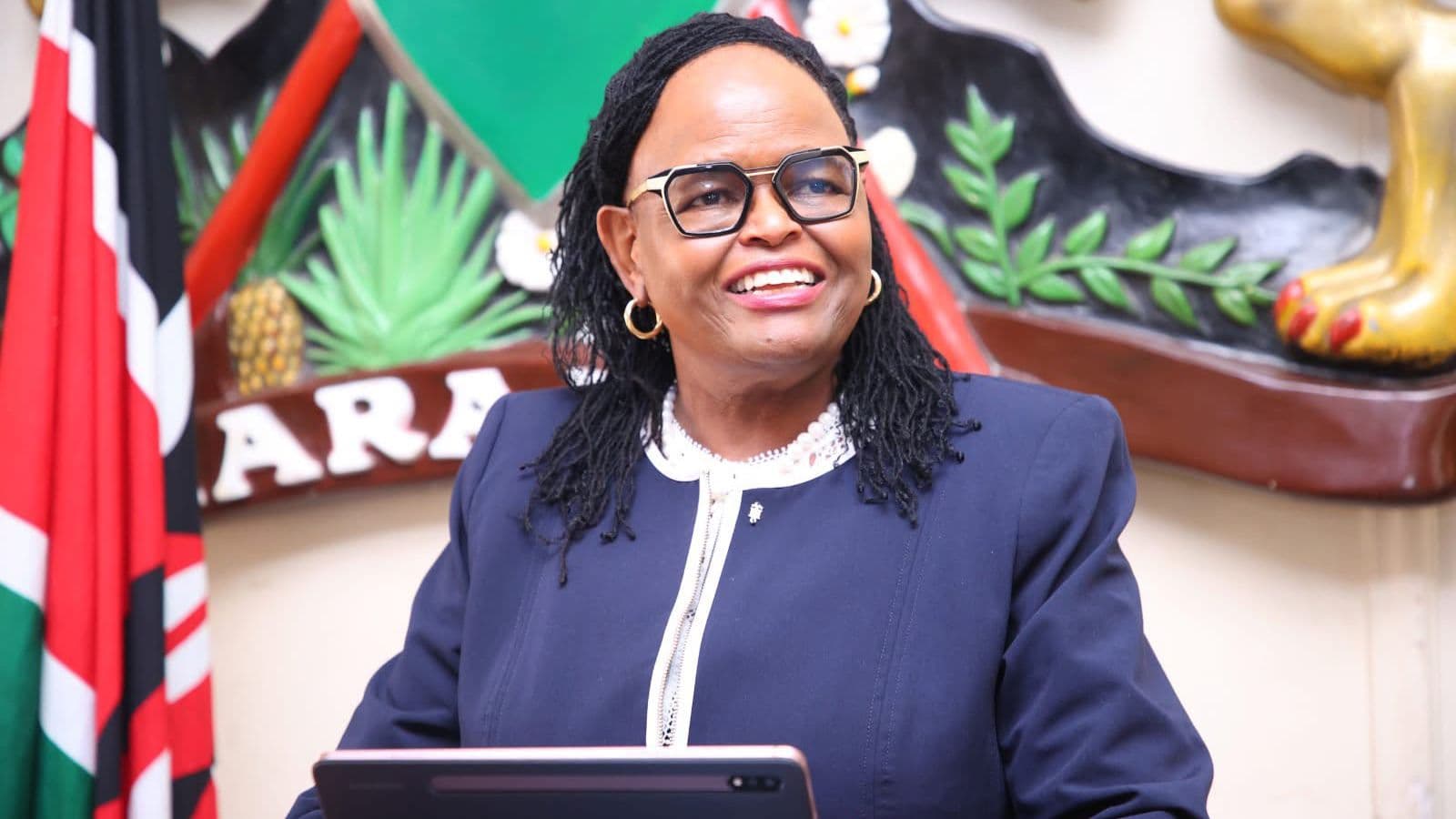
Reading remarks on behalf of Treasury Cabinet Secretary John Mbadi, Principal Secretary Kiptoo emphasized that the project reaffirms the government’s commitment to accelerating economic development through strategic investments in energy infrastructure anchored on sound policy and disciplined planning. He noted that the project would strengthen Kenya’s transmission backbone, which is critical for national resilience, regional development, and sustained economic expansion.
“Through PPPs, the Government attracts capital and technical expertise while safeguarding fiscal discipline and national priorities,” Kiptoo stated during the signing ceremony. The event was also attended by Principal Secretaries Bonface Makokha of Economic Planning, Cyrell Odede of Public Investment and Asset Management, Alex Wachira of Energy, and Director General of the Public Private Partnership Directorate Kepha Seda.
Infrastructure Scope and Technical Specifications
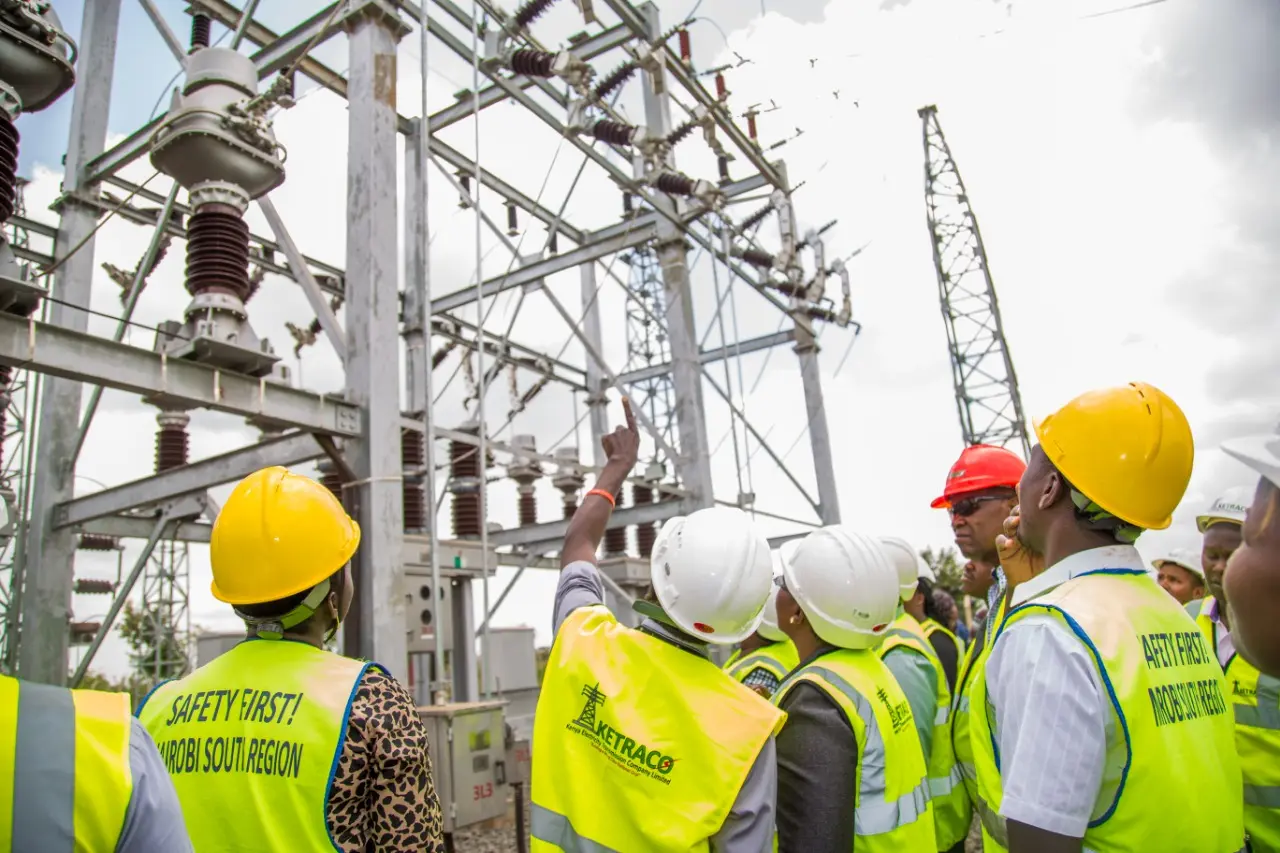
The KSh 40.4 billion project, which will be fully financed, implemented, operated, and maintained by the private sector, involves construction of two high-voltage transmission corridors and associated substations designed to address critical bottlenecks in Kenya’s electricity distribution system.
The first corridor is the 400 kV Lessos–Loosuk transmission line, which will traverse Samburu, Baringo, Nandi, and Elgeyo Marakwet counties, with substations at Lessos and Loosuk. This line will provide an alternative evacuation route for up to 300 megawatts of geothermal power from the Baringo–Silali resource area, significantly enhancing grid stability by reducing pressure on the existing Loiyangalani–Suswa line. The corridor will also facilitate evacuation of wind power from the Lake Turkana Wind Power project, one of Africa’s largest renewable energy installations.
The second corridor is the 220 kV Kibos-Kakamega-Musaga transmission line, which will serve Kisumu, Vihiga, and Kakamega counties, with substations at Kibos, Kakamega, and Musaga. This infrastructure is expected to dramatically improve high-voltage power supply to Kakamega and significantly reduce technical losses and load shedding that have plagued Western Kenya, enhancing electricity reliability for households, businesses, and industrial operations in the region.
According to the National Treasury, the project will establish new routes to enhance system stability, reduce technical losses and load shedding, and facilitate the integration of renewable energy sources into the national grid—objectives aligned with Kenya’s Least Cost Power Development Plan and KETRACO’s Transmission Master Plan.
Operational Framework and Asset Management
Under the agreement, Africa50 and PowerGrid will establish a dedicated project company to manage the infrastructure over a 30-year concession period, undertaking the entire lifecycle from construction through operation. KETRACO will make performance-based availability payments to ensure the private consortium maintains service standards and infrastructure quality throughout the concession period.
An independent expert jointly appointed by both KETRACO and the consortium will oversee project delivery, ensuring compliance with technical specifications, environmental standards, and contractual obligations. This independent oversight mechanism addresses concerns about accountability that emerged during the Adani controversy.
At the end of the concession period, all transmission assets will revert to KETRACO in good condition and free of encumbrances, ensuring long-term national ownership of critical infrastructure. The project company will undertake financing, design, construction, and operation responsibilities, allowing KETRACO to expand transmission capacity without immediate capital expenditure from government coffers.
Addressing Kenya’s Transmission Infrastructure Gap
KETRACO Acting Managing Director Eng. Kipkemoi Kibias revealed that the company plans to develop an additional 8,000 kilometers of transmission lines over the next 20 years, requiring approximately $5 billion in investment. Limited public funding has necessitated increased private sector participation to bridge this massive financing gap and deliver critical infrastructure essential for Kenya’s economic transformation.
“This PPP reflects our commitment to innovative financing solutions to bridge the transmission financing gap and deliver critical infrastructure,” Kibias stated. The shift to Public-Private Partnerships was driven by increasing constraints in public financing and the urgent need to modernize the national grid to meet rapidly growing electricity demand driven by population growth, urbanization, and industrialization.
Kenya’s electricity demand has been growing steadily, driven by expanding economic activity, increased connectivity rates, and government initiatives to achieve universal electricity access. However, inadequate transmission infrastructure has created bottlenecks that result in power supply interruptions, technical losses estimated at substantial percentages of generated electricity, and inability to efficiently evacuate renewable energy from generation sites to consumption centers.
The government has emphasized that PPP frameworks enable Kenya to leverage private sector capital, technology, and management expertise while maintaining public oversight and ensuring infrastructure serves national development objectives. The approach allows government to focus limited public resources on social sectors like health and education while partnering with experienced operators for infrastructure development.
The Adani Shadow: Context of Cancellation
The current deal emerges against the backdrop of intense controversy surrounding KETRACO’s earlier engagement with India’s Adani Group. KETRACO had awarded a separate transmission project to Adani Energy Solutions in October 2024, valued at approximately KSh 96 billion ($736 million) under a 30-year Public-Private Partnership for construction of transmission lines including the 400kV, 206km Gilgil-Thika-Malaa-Konza corridor and associated substations.
However, President Ruto cancelled the Adani agreements in November 2024 during his State of the Nation address, citing “new information provided by our investigative agencies and partner nations” following US federal indictments against Adani Group founder Gautam Adani. US prosecutors charged Adani and seven others with agreeing to pay approximately $265 million in bribes to Indian government officials to secure solar energy contracts, along with securities fraud and conspiracy charges.
The Adani transmission deal, signed in October 2024 despite widespread public criticism, had faced immediate legal challenges from the Law Society of Kenya over lack of transparency and inadequate public participation. The High Court issued conservatory orders just weeks after signing, suspending implementation and barring Adani from entering new agreements or furthering existing deals.
The Kenyan government now faces a potential KSh 7.3 billion liability following the Adani contract cancellation, according to the Treasury’s PPP Directorate. The government is pursuing a “mutual separation agreement” rather than formal termination to minimize financial fallout, with legal experts estimating formal termination could cost taxpayers at least KSh 5 billion in compensation.
The Adani controversy highlighted critical deficiencies in Kenya’s procurement processes and raised fundamental questions about transparency, due diligence, and public participation in major infrastructure deals. The episode generated substantial political pressure for more rigorous vetting procedures and greater transparency in future PPP agreements.
Lessons from KETRACO’s Troubled History
The current deal occurs against a backdrop of serious operational and financial management challenges at KETRACO documented in successive Auditor-General reports. An audit for the financial year ending June 30, 2023, revealed that taxpayers lost over KSh 6.9 billion in unwarranted expenditures due to project delays and poor planning at the state-owned entity.
Auditor General Nancy Gathungu highlighted numerous instances of avoidable costs, including a KSh 417 million fine for delayed commissioning of the Kenya-Ethiopia power-sharing project and KSh 85 million in storage costs for transformers for a terminated project. KETRACO also faces a KSh 4.5 billion arbitration award to Spanish contractor Instalaciones Inabensa for wrongful contract termination.
A 2020 audit report flagged four key projects worth KSh 24 billion that were significantly behind schedule, contributing to transmission bottlenecks and undermining Kenya’s ability to integrate new generation capacity. Parliament has subjected KETRACO to intense scrutiny over ballooning liabilities nearing KSh 13 billion and significant delays in compensating landowners for wayleaves, which further stalls critical infrastructure projects.
These systemic issues create a high-risk environment for large-scale projects and have burdened the Kenyan public with financial consequences of failed contracts and inefficient management. The new PPP framework, with private sector financing and performance-based payments, is designed to mitigate some of these risks by transferring construction and operational risks to experienced private partners.
However, questions remain about KETRACO’s institutional capacity to effectively manage complex PPP arrangements, conduct adequate oversight, and ensure private partners deliver quality infrastructure on schedule. The organization’s history of project delays and cost overruns underscores the importance of robust contract management and independent technical oversight.