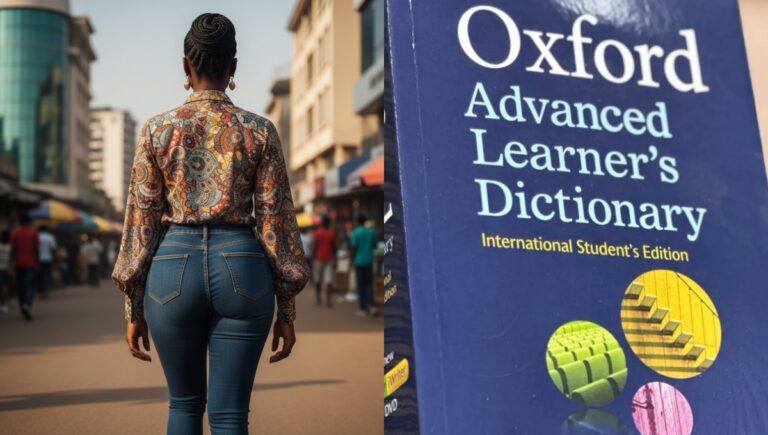
The Oxford English Dictionary (OED) has expanded its lexicon with the addition of new African Words and expressions in its latest update, published in December 2025 and carried into 2026 - 'Nyash' has made the list.
The update announced by the OED features widely used African terms connected to food, music, everyday speech, markets and pop culture, highlighting the increasing global influence of African languages on English.
According to the OED, the December 2025 update introduced more than 500 new words, phrases and senses, while also revising over 1,000 existing entries as part of its quarterly review process.
Author and OED Head of Pronunciations, Catherine Sangster, said the update marked an important development in how pronunciations are documented across different varieties of English.
“With this update we introduce a new model for the transcription of Maltese English pronunciations; this is the nineteenth World English pronunciation model in our collection. We also celebrate a decade of OED having spoken pronunciations, which were first added in December 2015,” Sangster said.
She explained that the dictionary has further expanded its pronunciation features, including the use of multiple audio files where necessary, adding that new pronunciations were also recorded for several West African English entries included in the update.
Among the recently added words is "Nyash", which the OED describes as a person's buttocks, particularly a woman's, referring to the bottom or backside.
This term, widely used in casual conversations, music, and social media, encapsulates the playful and expressive nature of slang. It has gained traction beyond Across African borders, appearing in Afrobeats lyrics and online memes, symbolising body positivity and humour in everyday discourse.
Also in the list is a Nigeria expression "abeg" which the OED notes can function as an interjection or adverb “to express a range of emotions, such as surprise, exasperation, disbelief, etc”.
Another addition is amala, a staple Nigerian food, defined as “in Nigerian cookery: a kind of dough made of yam, cassava, or unripe plantain flour, typically formed into a ball and served as an accompaniment to other dishes”.
The update also formally recognises Afrobeats, described as “originally: a style of popular music incorporating elements of West African music and of jazz, soul, and funk”.
Other Nigerian and West African expressions added include Ghana Must Go, biko, Mammy Market, and Moi Moi, words commonly used in everyday conversations and cultural contexts across Nigeria and Ghana.
Additional African words introduced in the update are abrokyire, Adowa, ampesi, benachin, bichir, domoda, dumboy, hiplife, kpanlogo, light soup, nawetan, obroni, poda-poda and yassa.
The latest expansion builds on a similar development when the OED added Several african words and expressions to its dictionary.
As English changes, adding words from Africa makes the language feel more inclusive. It gives everyone a more equal seat at the table. For Africans everywhere, seeing their own slang and expressions recognized is a huge point of pride. It shows that their way of speaking actually matters.
But not everyone sees it the same way. Some people worry about cultural appropriation, which is when people use these words without actually understanding the culture behind them, which can water down the original meaning. Others consider inclusion to be a positive step as it acts like a bridge between different cultures, helping us understand each other better.