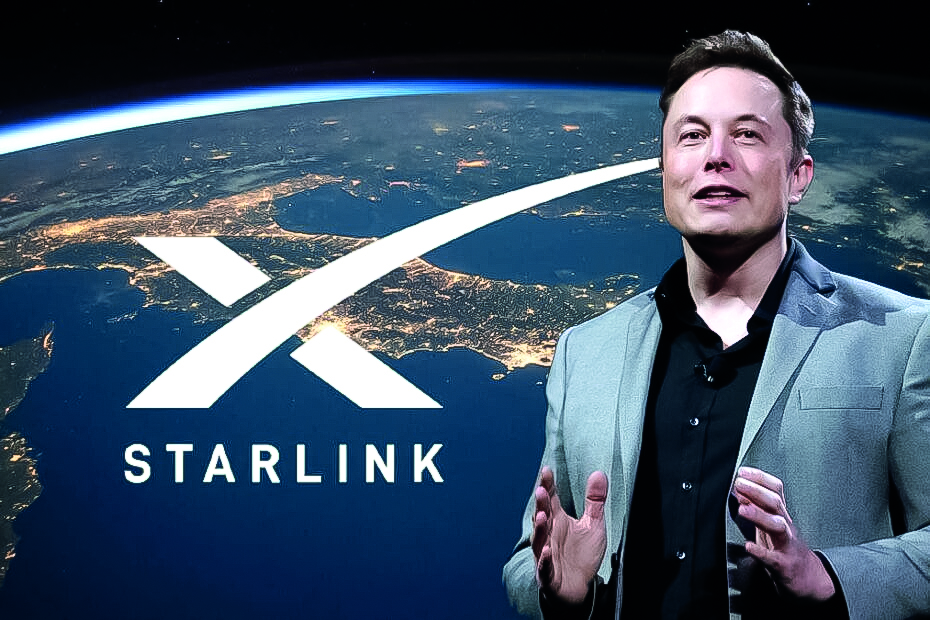
SpaceX has fresh approval from the Federal Communications Commission to add thousands more satellites to its Starlink broadband network. The ruling paves the way for increased global broadband coverage, gives operators more flexibility to operate in multiple spectrum bands, and will enable direct-to-cell services outside of the U.S., with a supplementary service within U.S. borders.
What the New FCC Authorization Allows for Starlink
Under the FCC order, the new constellation will be able to operate on 5 frequencies, advancing a distributed multi-band design for capacity, resiliency, and interference rejection. The agency also specified that Starlink’s second-generation satellites are able to provide direct-to-cell connectivity outside the United States, while enabling additional, carrier-partnered coverage within the country — key for marrying satellite links to everyman smartphones.
On the same day, reports emerged that even though SpaceX had applied for another 15,000 satellites, the FCC was not giving authority to 14,988 of those requested Gen2 sats until further notice.
That phased approach is the regulator’s latest indication it will continue to prioritize interference protections, orbital safety, and cross-operator coordination despite the projections for rapidly expanding megaconstellations.
A Bigger Constellation and Tighter Timelines
According to the order, SpaceX must launch 50% of the satellites authorized by this new grant within six years of today’s date, and all of them within nine years. Achieving those milestones and getting to those launches are going to take a regular cadence of launches. At around 3,750 satellites by the first deadline, that suggests an average of ~100 satellites per month — equivalent to four to five Falcon 9s a month at normal batch sizes. Given SpaceX’s present launch rhythm, that seems doable, particularly as Starship matures into a higher-capacity deployment system.
The Gen2 system also includes laser inter-satellite links and enhanced beamforming, which allows the company to rely less on sparse ground infrastructure and open up lower-latency paths across oceans where fiber-connected backhaul is absent. For end users, that means more reliable performance during busy hours and more consistent service in locations where terrestrial networks are either scarce or too expensive.
Competitive and regulatory context for satellite internet
With that approval, SpaceX now widens its lead in the low Earth orbit broadband business where it already flies thousands of satellites — more than any other operator. The move also increases the pressure on rivals like Amazon’s Project Kuiper, which has gotten FCC approval for 3,236 satellites, and Eutelsat OneWeb, which targets enterprise and government customers. At the international level, coordination through the International Telecommunication Union is still crucial as operators compete for spectrum and orbital slots.
The FCC has been more consistently linking approvals to specific protections in recent years. Since taking on a 5-year post-mission deorbit rule for low Earth orbit satellites, U.S. regulators have pushed constellations to speed end-of-life disposal and limit orbital clutter. Look for tough reporting on maneuvering and collision avoidance and the constellation’s failure rate as it grows.
Space safety and astronomy problems as constellations grow
Scaling to 15,000 satellites naturally amplifies concerns about debris risk and sky brightness. Space situational awareness companies are already tracking regular conjunction warnings between major constellations, and operators routinely conduct automatic avoidance maneuvers. Company disclosures and independent tracking suggest thousands of such maneuvers each year for Starlink alone — a number that will probably grow as the orbital environment becomes more crowded.
On the astronomy side of things, SpaceX has tried out sunshades, low-reflectivity coatings, and software scheduling to reduce the impact on observations. The IAU and the National Science Foundation call for further cooperation to defend future surveys. As Gen2 grows, the performance and robustness of these mitigations will be an area of focus for observatories and policymakers.

Why direct-to-cell service is a big deal for users
Direct-to-cell resolves the lack of standard phone coverage in dead zones, enabling texting first on demand and expanding to voice and data as standards mature. The FCC’s decision to allow service outside the U.S., with supplemental coverage in-country, follows global 3GPP Rel. 17 non-terrestrial network standards and complements terrestrial carriers’ footprints. The approach reflects a broader industry trend: AST SpaceMobile has made satellite-to-smartphone voice and 5G data calls with mobile partners, and Lynk Global has launched texting services in some markets. SpaceX’s scale and launch pace will put it in a position to bring direct-to-cell to mainstream users rapidly once spectrum, roaming, and device integration swirl around the drain.
For governments and businesses, the ramifications are profound as well. Maritime operators, airlines, first responders, and rural communities could benefit from the redundancy and reach that terrestrial networks cannot provide. With regulatory guardrails tightening and interoperability increasing, satellite and cellular networks are well on their way to ceasing to be competitors and starting the complete shift into complementary layers in a robust global communications tapestry..

Bottom line: The FCC’s latest green light enables SpaceX to scale — but it also sets a new standard for how satellite operators will share spectrum and look after space traffic as they grow. In a few years, we will know whether megaconstellations can bring ubiquitous connectivity without turning the orbits near Earth into garbage dumps and making the night sky unusable for science.