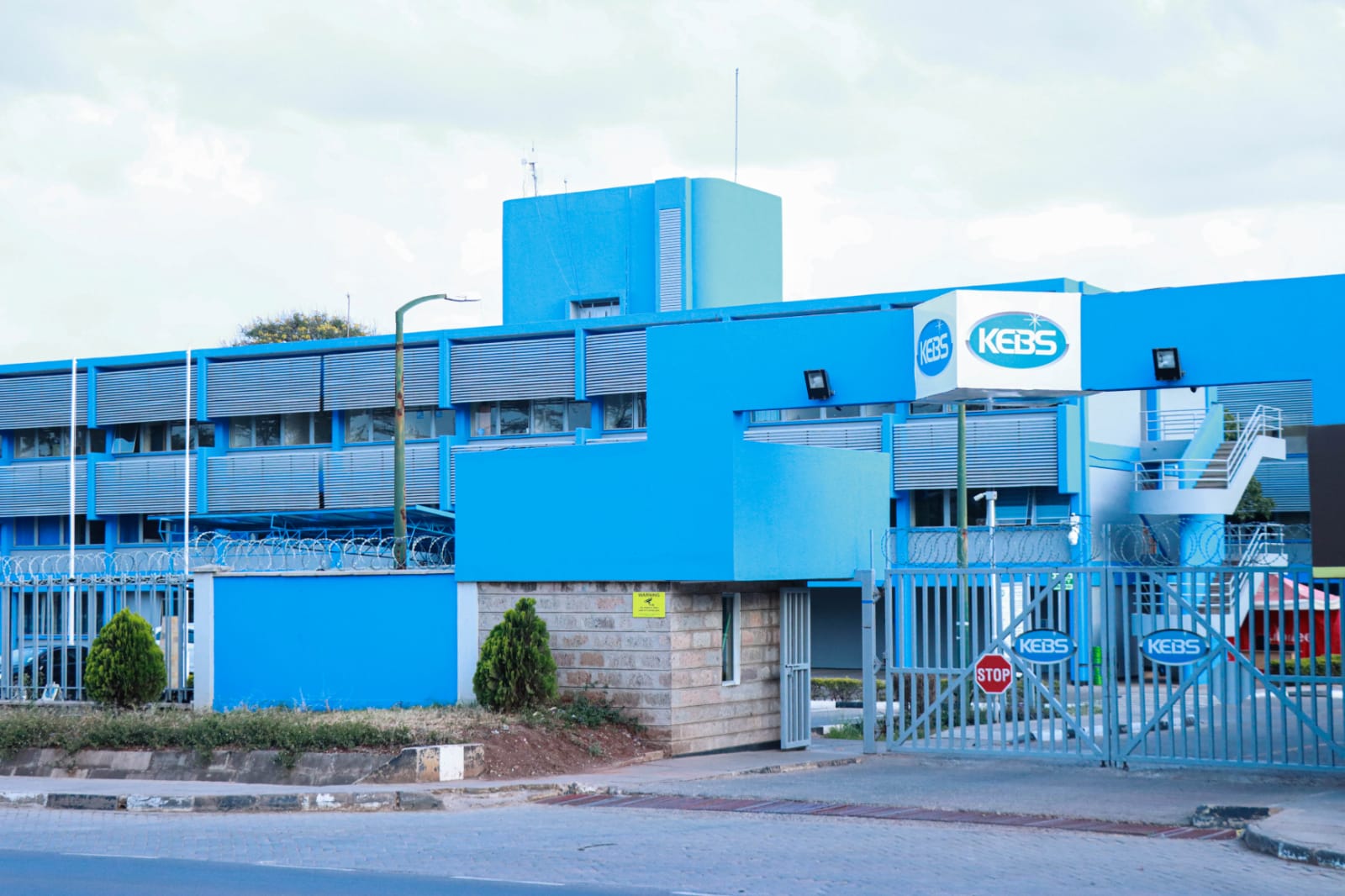
A new standards levy imposed by the Kenya Bureau of Standards (KEBS) last year on manufacturers will continue facing suspension after the High Court declined to lift conservatory orders, keeping the matter pending a hearing later this month.
The agency had argued that the levy was crucial for funding its operations and safeguarding consumers, but the court ruled the suspension should remain until January 27.
In its decision, the court rejected an application by the KEBS seeking to overturn orders that froze the levy, which had come into effect in August last year.
The agency maintained that the suspension had created a regulatory vacuum because the gazette notice introducing the levy also revoked an earlier one, leaving the agency without a legal framework to collect the payments.
The standards body warned that the continued freeze would undermine its ability to carry out its mandate, arguing that the lack of funding would have far-reaching implications for consumer protection.
“By denying the first respondent financial resources to execute its mandate, the conservatory orders sought violate the right of consumers to access quality goods and protection of their health and safety as guaranteed by the Constitution,” KEBS said in court papers.
Despite the submissions, the High Court directed that the status quo be maintained, meaning the suspension of the levy will remain in force until the substantive case is heard on January 27.
KEBS had gazetted the Standards (Standards Levy) Order, 2025, notifying manufacturers that they would be required to remit 0.2 per cent of their monthly turnover to the agency. Under the rules, the levy is recoverable at source, with payments to be made through the Kenya Revenue Authority iTax system on or before the 20th day of the following month.
While the levy remains calculated at 0.2 per cent of monthly turnover, the order specifies that VAT, excise duty and discounts are excluded from the computation. The revised framework, however, significantly raises the annual levy cap from Sh400,000 to Sh4 million for the first five years.
The case was filed by the Green Thinking Action Party, which told the court that the levy would cripple manufacturers’ operations. The party further argued that the increase was introduced in violation of the Constitution and in a manner that was discriminatory, unreasonable and unfair.
In response, KEBS insisted that failure to collect the standards levy would weaken the country’s quality assurance systems. The agency warned that prolonged non-collection would destroy Kenya’s quality infrastructure and expose consumers to catastrophic effects resulting from the circulation of substandard products.