Moody’s Ratings has upgraded Kenya’s sovereign credit rating, lifting the country’s long-term local and foreign currency issuer ratings to B3 from Caa1 and revising the outlook to stable.
Credit rating firm Moody’s Ratings has upgraded Kenya’s sovereign credit rating, a move that signals strengthened access to credit after reduced near-term default risks and improved funding flexibility.
Moody’s lifted Kenya’s local and foreign currency long-term issuer ratings, as well as its foreign currency senior unsecured debt ratings, to B3 from Caa1, citing stronger external buffers and smoother refinancing prospects.
The agency has also revised the outlook to stable from positive, signalling confidence that recent gains in external liquidity and financing conditions will be sustained.
Notably, the country’s external liquidity is noted to have strengthened markedly over the past year, underpinned by reserve accumulation and improved balance-of-payments dynamics.
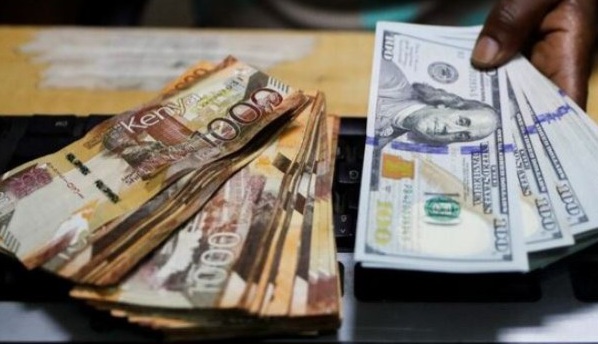
International reserves rose to $12.2 billion (Sh1.6 trillion) at the end of 2025, equivalent to 5.3 months of import cover, up from $9.2 billion (Sh1.2 trillion) a year earlier, supported by stronger inflows, higher remittances and export growth.
Moody’s also points to Kenya’s return to international capital markets as a key factor easing refinancing pressures.
In 2025, the government issued $3 billion (Sh387.1 billion) in eurobonds and used part of the proceeds to buy back $1.2 billion (Sh154.8 billion) of bonds maturing between 2026 and 2028, pushing the next large external maturity to 2030 and smoothing the debt repayment profile.
Improved domestic financing conditions have further bolstered the government’s ability to meet sizeable fiscal needs locally.
Lower yields, oversubscribed bond auctions and strong investor demand have reduced immediate reliance on external borrowing, with Treasury bill yields falling below eight per cent in December 2025 from 9.9 per cent a year earlier.
However, Moody’s cautions that Kenya’s credit profile remains constrained by weak debt affordability and limited progress on fiscal consolidation.
Large fiscal deficits, projected to remain close to six per cent of GDP and heavy reliance on domestic borrowing continue to expose the country to shifts in financing conditions, while interest payments absorb more than 30 per cent of government revenue.
Reflecting these mixed dynamics, the agency says the stable outlook assumes recent improvements will hold, supported by Kenya’s diversified economy and solid medium-term growth potential.
“The stable outlook reflects our expectation that Kenya will sustain the recent improvements in external liquidity and funding flexibility,” Moody’s said.
Concurrently, Moody’s raised Kenya’s local-currency ceiling to Ba3 from B1 and the foreign-currency ceiling to B1 from B2, citing reduced external imbalances and an open capital account.
Nonetheless, political risks, policy predictability challenges and high borrowing costs remain key constraints on faster credit improvement.
Moody’s decision to lift Kenya’s credit rating from Caa1 to B3 is an important signal about the country’s economic direction, but for the ordinary Kenyan, its significance lies less in financial jargon and more in reduced pressure on the economy.
At its core, the upgrade sends a clear message: Kenya is less likely to default on its debts in the near term.
This matters because when a country edges toward default, the costs are often passed down to citizens through higher taxes, inflation, job losses and cuts to essential services.
Avoiding that scenario helps protect livelihoods.
Moody’s points to stronger foreign-exchange reserves, a more stable shilling and improved access to financing.
In simple terms, the country now has more dollars in reserve, fewer moments of panic around debt repayments, and more room to plan rather than firefight.
This helps stabilise prices, safeguard critical imports such as fuel and medicine, and reduce sudden economic shocks that tend to hit low-income households hardest.
The upgrade also reassures investors, both local and foreign, that Kenya is not on the brink, helping to protect jobs and keep businesses operating.
For the ‘mama mboga’, the 'boda boda' rider and small business owners, this does not translate into instant relief, but it lowers the risk of the economy deteriorating sharply overnight.
Politically, Moody’s is clear that this is not a reward for prosperity, but recognition of crisis management.
The upgrade offers the government credibility, but not a blank cheque. It marks a step back from the edge, buying Kenya time to stabilise.
The report also highlighted environmental, social and governance risks weighing on Kenya’s credit profile, including climate-related vulnerabilities, high poverty levels, unemployment, and weak governance indicators.
The institution observed that Kenya's fiscal health is still not out of the woods, given the increasing needs and limited funding. It said Kenya had a lot to do to strengthen its fiscal wellness; the high levels of poverty indicate Kenya has yet to make it.
Among the measures it recommended were strengthening the country's financial policy effectiveness, curbing corruption and improving the implementation of the rule of law.