Kenya has launched an aggressive campaign to secure over Sh258 billion ($2 billion) in new investment commitments across critical economic sectors by March 2026, leveraging the upcoming Kenya International Investment Conference as the primary platform for deal-making.
The Ministry of Investment, Trade and Industry, through the Kenya Investment Authority (KenInvest), will host the three-day conference from March 25-27, 2026, coinciding with the COMESA Investment Forum in what represents one of the most comprehensive investment mobilization efforts in recent Kenyan history.
Investment Promotion Principal Secretary Abubakar Hassan Abubakar unveiled the ambitious targets during an official launch event in Nairobi on January 29, 2026, outlining how the conference will serve as a critical mechanism for translating government reforms into tangible capital inflows. The initiative comes as Kenya seeks to position itself as the premier investment destination in Africa while addressing persistent challenges in its business environment.
Unlike previous iterations of KIICO, the 2026 edition features a carefully structured three-day format designed to maximize engagement across different investment categories and regional integration frameworks. The first day, March 25, will focus exclusively on Kenya International Investment Conference activities, showcasing national strategic projects and facilitating discussions between government officials and potential investors on sector-specific opportunities.
March 26 transitions to the 2nd COMESA Investment Forum, which will highlight regional trade integration and cross-border investment opportunities within the Common Market for Eastern and Southern Africa bloc. This regional dimension acknowledges Kenya’s strategic position as the current chair of COMESA, having assumed the rotating chairmanship from Burundi in October 2025.
The conference concludes on March 27 with the Africa Green Industrialization Initiative (AGII) Forum, emphasizing sustainable manufacturing practices and Kenya’s transition toward a net-zero economy. This final component reflects growing international pressure for climate-conscious development and positions Kenya to attract green investment capital increasingly available from European and multilateral sources.
Priority Sectors and Investment Targets
The Sh258 billion investment target represents a significant scaling of Kenya’s foreign direct investment ambitions, focusing on four core sectors identified as critical to national development objectives. Agriculture leads the priority list, given its role as the backbone of Kenya’s economy and employer of approximately 40% of the total population. The government seeks investments in agricultural modernization, value chain integration, and agro-processing facilities that can reduce post-harvest losses while increasing export competitiveness.
Manufacturing constitutes the second major focus area, aligned with Kenya’s industrialization agenda and efforts to reduce import dependency. Special emphasis will be placed on textile and apparel production, food processing, pharmaceutical manufacturing, and construction materials—sectors where Kenya has demonstrated comparative advantages or critical import substitution opportunities. The Special Economic Zones framework provides significant tax incentives for manufacturing investors, including exemptions from customs duty, excise duty, VAT, and reduced corporate tax rates.
Renewable energy represents the third priority sector, building on Kenya’s successful geothermal, wind, and solar power programs. The country already generates approximately 90% of its electricity from renewable sources and seeks additional private sector participation to meet growing demand while maintaining its clean energy profile. Infrastructure projects supporting the renewable energy transition, including transmission lines and storage facilities, will be prominently featured at the conference.
Information and Communication Technology (ICT) rounds out the priority sectors, reflecting Kenya’s ambition to become a regional technology hub. Recent reforms including the removal of the 30% local equity requirement for ICT investments and zero-rating of VAT on exported services have already attracted significant interest from international technology firms.
Policy Reforms and Business Environment Improvements
Principal Secretary Abubakar emphasized that KIICO 2026 will provide an essential platform for government to articulate its investment reforms and policy measures designed to improve the business operating environment. Key among these reforms are streamlined VAT refund processes, which have historically represented a major pain point for investors facing lengthy delays in recovering value-added tax on inputs and capital expenditures.
The government has committed to processing VAT refunds within six months or allowing taxpayers to offset refund claims against future tax liabilities, addressing complaints from businesses about cash flow disruptions caused by accumulated refund arrears. Implementation of this reform accelerated through 2024 and 2025, with the conference providing an opportunity to showcase improved processing times to prospective investors.
Transfer pricing regulations, another frequent concern for multinational corporations, will also feature prominently in policy discussions. Kenya has worked to align its transfer pricing framework with international standards while providing greater clarity on documentation requirements and advance pricing agreement procedures that allow companies to gain certainty about tax treatment before making investment commitments.
Land lease arrangements constitute yet another reform area receiving attention. The government has streamlined processes for obtaining land titles and leases, particularly within designated investment zones and industrial parks. Delays in securing land tenure have historically deterred some investors, making improvements in this area critical to Kenya’s competitiveness against alternative African destinations.
The conference agenda includes detailed presentations on the alignment of Export Processing Zones (EPZ) and Special Economic Zones, addressing regulatory confusion that previously resulted from operating two parallel frameworks with different incentive structures. The harmonization effort aims to create a unified investment zone regime with consistent tax treatment and operational requirements.
Strategic Positioning and International Outreach
KIICO 2026 builds on extensive international outreach conducted throughout 2025 to generate investor interest and pipeline projects for the March conference. President William Ruto personally led investment promotion efforts in New York during the 80th United Nations General Assembly in September 2025, where he outlined Kenya’s economic fundamentals to American investors and invited them to participate in KIICO 2026.
During that New York investment forum, President Ruto highlighted Kenya’s macroeconomic stability, noting that inflation remained at 3.8%, foreign exchange reserves had doubled over three years, and the Nairobi Securities Exchange had become Africa’s top-performing stock market in 2024. These indicators formed part of the administration’s narrative emphasizing predictability and stability as core pillars of Kenya’s investment proposition.
The President also referenced specific regulatory reforms including the elimination of local content requirements in ICT, zero-rating of VAT on exported services, and the planned establishment of a fully digital One-Stop Centre for investors by mid-2026. This digital platform will consolidate investment applications, licensing, and compliance requirements into a single interface, dramatically reducing the bureaucratic burden that has historically frustrated investors navigating Kenya’s regulatory environment.
Similar outreach occurred with European Union delegations, Korean business delegations, and other bilateral partners throughout 2025, with Kenya formally inviting participants to the March 2026 conference during these high-level engagements. The cumulative effect of these preparatory activities is expected to generate a substantial pipeline of projects ready for announcement or signing during KIICO 2026.
Deal Pipeline and Execution Targets
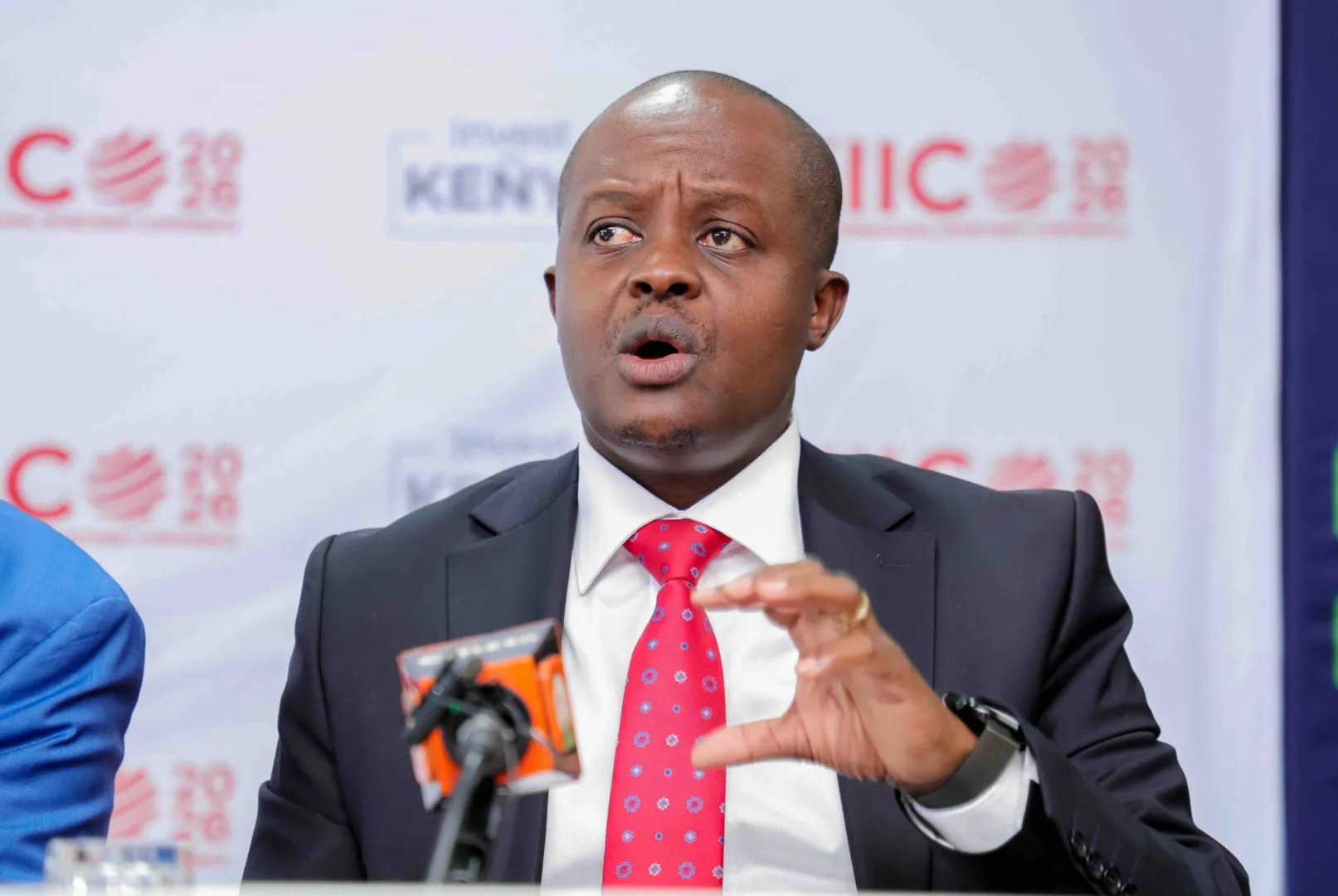
KenInvest Chief Executive Officer John Mwendwa emphasized that KIICO 2026 represents far more than a promotional forum—it is designed as a practical platform for converting sectoral opportunities into binding investment commitments. The conference structure includes dedicated sessions for investor-government one-on-one meetings, project site visits, and deal negotiation spaces that facilitate moving from expressions of interest to signed agreements.
Internal planning documents reviewed by conference organizers indicate that 20+ deals in the KenInvest pipeline are being actively prepared for potential signing during the conference, with an additional target of announcing five high-level strategic investments during plenary sessions attended by government leadership. These high-profile announcements serve both practical purposes—creating momentum for additional deals—and symbolic functions, demonstrating government commitment to investment facilitation.
Mwendwa stressed the importance of project bankability in the screening process: “Our focus is on converting more sectoral opportunities into investment commitments. KIICO 2026 brings together investors to explore commercially viable projects that expand production, create jobs, and accelerate economic growth.” This emphasis on commercial viability reflects lessons learned from previous investment conferences where memoranda of understanding failed to translate into actual capital deployment.
The conference organizing team has reportedly conducted extensive feasibility validation, risk assessment, and reward profiling for projects identified for investor matchmaking, ensuring that opportunities presented to investors rest on solid technical and financial foundations. This due diligence work differentiates KIICO from purely promotional events and increases the likelihood that announced deals will actually proceed to implementation.
Private Sector Partnership and Financial Sector Support
Beyond government agencies, KIICO 2026 has secured substantial private sector participation from major financial institutions and industrial developers who recognize the conference as an opportunity to identify investment opportunities and potential clients. KCB Bank Kenya, the country’s largest commercial bank by assets, has positioned itself as a key partner in investment facilitation, offering specialized banking solutions designed for foreign investors establishing or expanding operations.
David Nyamu, KCB’s General Manager for Sovereign and Public Sector, explained that the partnership with KenInvest aims to “strengthen the investment facilitation process, ensuring investors have access not only to opportunities, but also to responsive banking solutions, local market insight, and reliable financial partners as they establish or grow operations in Kenya.” This comprehensive support package addresses a critical need for investors who often struggle with banking relationships when entering new markets.
KCB’s involvement extends beyond traditional corporate banking to include project finance structuring, foreign exchange risk management, trade finance for import-export operations, and connections to regional banking networks across East Africa through KCB’s subsidiaries in Uganda, Tanzania, Rwanda, and Burundi. This regional presence is particularly valuable for investors seeking to use Kenya as a hub for broader African operations.
ARISE IIP Kenya, a major industrial infrastructure developer, represents another significant private sector participant. CEO George Olaka characterized Kenya as being at “an inflection point” where the opportunity involves not merely attracting capital but channeling it into productive uses that strengthen value chains and create employment. ARISE’s commitment to developing the 2,000-acre Vipingo SEZ, for which President Ruto presided over the groundbreaking ceremony, exemplifies large-scale private infrastructure investment supporting the broader industrialization agenda.
Olaka emphasized ARISE’s long-term perspective: “Our growing presence in the country reflects our confidence in that opportunity and our commitment to work alongside government to build the infrastructure and ecosystems that make industrialisation investable.” This partnership approach between government policy-making and private sector implementation represents the conference’s underlying philosophy.
Regional Integration and COMESA Dimensions
The integration of the COMESA Investment Forum into KIICO 2026 reflects Kenya’s strategic recognition that its market attractiveness extends beyond national borders to encompass regional market access. As the current chair of COMESA, Kenya holds responsibility for advancing the bloc’s integration agenda, which includes reducing non-tariff barriers, harmonizing standards, and facilitating cross-border investment flows.
COMESA comprises 21 member states spanning from Tunisia in North Africa to Eswatini in Southern Africa, representing a combined population exceeding 600 million people and a combined GDP approaching $1 trillion. For investors, this regional dimension transforms Kenya from a market of 55 million people into a potential gateway to a much larger economic community, particularly given implementation of the COMESA-EAC-SADC Tripartite Free Trade Area that creates Africa’s largest integrated market.
Deputy President Kithure Kindiki, speaking at the 18th COMESA Business Forum in October 2025, emphasized Kenya’s intention to use its chairmanship to champion “a new era of regional integration that uses digitalisation to deepen value chains for sustainable and inclusive growth.” This digital focus reflects recognition that modernizing customs systems, implementing electronic certificates of origin, and establishing smart border concepts can dramatically reduce transaction costs that currently inhibit intra-African trade.
Kenya’s own trade performance within COMESA provides concrete evidence of regional market potential. According to government data, Kenya’s exports to COMESA countries increased from $1.56 billion in 2020 to $2.64 billion in 2023, demonstrating growing commercial relationships despite persistent challenges. Top exports include petroleum products, iron and steel products, manufactured goods, food and beverages, and chemicals—all sectors where Kenya has developed regional production capacity.
The COMESA Medium-Term Strategic Plan targets raising intra-regional exports to 25% of total exports by 2026, up from a baseline of 10% in 2021, creating substantial opportunities for companies establishing operations in Kenya to serve regional demand. The Investment Forum component of KIICO will showcase specific cross-border investment opportunities and facilitate connections between Kenyan businesses and investors from other COMESA member states.
Infrastructure and Connectivity Advantages
Kenya’s appeal as an investment destination rests substantially on infrastructure advantages that differentiate it from regional competitors. The country serves as East Africa’s primary logistics hub, anchored by the Port of Mombasa, which handles cargo for Kenya, Uganda, Rwanda, Burundi, eastern Democratic Republic of Congo, South Sudan, and northern Tanzania. Recent expansion and modernization of port facilities have increased container handling capacity while reducing clearance times.
The Standard Gauge Railway connecting Mombasa to Nairobi and onward to Naivasha provides efficient freight transport for manufactured goods and agricultural products, reducing transportation costs compared to road haulage. Additional railway extensions under development will eventually connect Kenya’s rail network to Uganda and potentially beyond, creating rail-based trade corridors across East Africa.
Jomo Kenyatta International Airport in Nairobi functions as a major aviation hub with direct connections to Europe, Asia, the Middle East, and cities across Africa. Kenya Airways and other carriers provide extensive air cargo services essential for time-sensitive exports such as cut flowers and fresh vegetables—sectors where Kenya has achieved global market leadership. Passenger connectivity also facilitates business travel and tourism, complementary sectors to core industrial development.
Telecommunications infrastructure in Kenya ranks among Africa’s most advanced, with near-universal mobile phone coverage, extensive fiber optic networks, and competitive pricing for data and internet services. This digital infrastructure foundation supports ICT sector development while also enabling automation and Industry 4.0 adoption in manufacturing operations. Kenya’s mobile money systems, led by M-Pesa, have revolutionized financial services accessibility and provide efficient payment platforms for businesses and consumers alike.
Electricity generation capacity has expanded significantly, with Kenya achieving approximately 90% renewable energy in its electricity mix through geothermal, hydroelectric, and wind power development. This clean energy profile appeals to corporations with sustainability commitments while competitive electricity tariffs (particularly within SEZs) reduce manufacturing operating costs.
Persistent Challenges and Investor Concerns
Despite government efforts to improve the investment climate, significant challenges persist that KIICO 2026 must address to achieve its ambitious targets. Bureaucratic delays in obtaining necessary business licenses remain a frustration for U.S. and other foreign companies operating in Kenya, according to the 2025 Investment Climate Statement published by the U.S. State Department. While policy reforms may be announced, implementation often lags behind stated timelines.
Corruption concerns continue to affect business confidence, with Transparency International ranking Kenya 121st out of 180 countries in its 2024 Global Corruption Perceptions Index. Although this represents slight improvement over 2023, Kenya’s score remains below regional and global averages, indicating ongoing challenges in governance and regulatory enforcement. Investors frequently cite unpredictable regulatory interpretations and demands for informal payments as obstacles to smooth business operations.
Tax policy uncertainty has emerged as another concern, with the government implementing contradictory reforms—some business-friendly, others extractive—creating confusion about long-term fiscal stability. The 2024 Business Laws Amendment Act’s limitation of SEZ incentives to 10 years, for example, reduced the attractiveness of zones for investors with longer-term horizons, even as other reforms improved the business environment.
VAT refund implementation, despite announced improvements, has continued experiencing delays during 2024, with many businesses still waiting months or years for refunds of legitimately claimed input tax. Until refund processing achieves the promised six-month turnaround consistently, investor skepticism about government commitments will persist.
Infrastructure gaps outside major urban centers also constrain investment in agriculture and manufacturing, with inadequate roads, unreliable electricity in some regions, and limited access to water supplies in arid and semi-arid areas. While Kenya’s major corridors enjoy good infrastructure, penetration to county levels varies significantly, affecting the viability of certain investment projects.
KIICO 2026 represents a critical juncture in Kenya’s investment promotion strategy, bringing together multiple threads of policy reform, regional integration, and private sector mobilization into a single intensive platform for deal-making and relationship-building. The Sh258 billion target reflects both ambition and pragmatism—substantial enough to materially impact Kenya’s economic trajectory if achieved, yet potentially within reach given the pipeline development work conducted throughout 2025.
Success will depend on the government’s ability to convincingly demonstrate that regulatory improvements have translated into operational reality, that corruption concerns are being addressed through systemic reforms rather than rhetoric, and that Kenya offers competitive advantages—whether through SEZ incentives, regional market access, infrastructure quality, or workforce capabilities—that justify choosing Kenya over alternative African destinations.