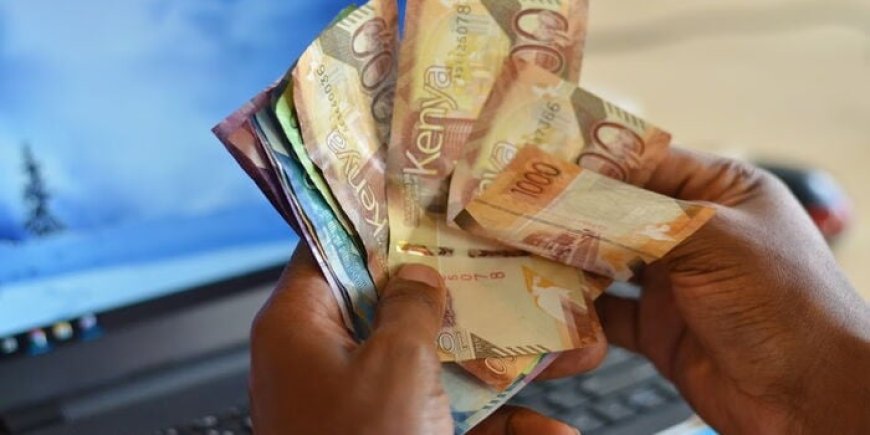
The government is exploring ways to lower taxes on income to reduce the financial strain on ordinary Kenyans, Treasury Cs John Mbadi has announced. Part of reforms include a downward review of Pay As You Earn (PAYE) tax bands to raise the minimum taxable personal income from the current Ksh24,000 to Ksh30,000, in a bold attempt to boost Kenya’s economy.
As part of the fiscal reforms, the government also plans to reduce financial pressure on salaried workers earning below Sh50,000 per month.
The National Treasury says the move will allow more money to remain in workers’ pockets, boosting demand and easing the strain caused by rising living costs.
Treasury Cabinet Secretary John Mbadi announced the plan on Sunday, during the Budget and Privatisation Public Engagement Forum at Kiambu National Polytechnic. He said the government will eliminate taxes for individuals earning below Sh30,000 and lower rates for those earning up to Sh50,000.
“Those salaried Kenyans, we have 3.5 million Kenyans earning a salary. They are carrying the burden on almost everybody. It is not fair. We have decided that I am taking a proposal amendment to Bunge. I am not even waiting for the Finance Bill. Anybody earning below 30,000 in this country should pay zero tax. Zero,” Mbadi said.
“And anyone earning below 50,000 in this country, we are going to reduce tax. And this is what the government has decided. We have sat down with the President, and we have agreed. We want to give you something in your pocket so that you can spur demand in the economy.”
Mbadi pointed to an economic slowdown as a key reason for the move, citing reduced consumer spending.
“Because we have looked at the economy, and we can see the economy choking. Because people don’t have money in their pockets to buy from you. Hakuna mtu ananunua mboga. Badala ya kununua mboga ya sasa hivi mtu anakuja kununua mboga four leaves,” he said.
Bankers Push For Lower PAYE Tax
The announcement comes days after the banking industry proposed a downward review. The industry says it is confident this will boost disposable income, empower workers, support Micro, Small, and Medium Enterprises (MSMEs), and increase revenue collection by the government through increased consumption and investment.
In a 10-point proposal when the National Treasury invited comments on tax policies to inform the Finance Bill 2026, the Kenya Bankers Association (KBA), argued that lowering the tax bands will widen the tax base, increase revenue to the government while encouraging savings and investment in businesses.
KBA proposes income below Ksh 30,000 be exempt from PAYE, income between Ksh 30,001 and Ksh 50,000 be taxed at 15%, income from Ksh 50,001 to Ksh 100,000 at 20%, income between Ksh 100,001 and Ksh 400,000 at 25%, and income above Ksh 400,000 at 30%.
“The purchasing power of salaried Kenyans has fallen significantly in recent years. Adjusting PAYE bands is a practical step to restore household income, stimulate spending, and support businesses,” said KBA CEO Mr Raimond Molenje, who added that when workers take home more pay, they spend more, save more, and invest more, in turn strengthening the economy, improving loan repayment, and ultimately growing government revenue.
The proposal also recommends easing Withholding Tax and Withholding VAT remittance timelines, allowing remittance by the 5th day of the month following deduction. KBA noted that this measure would reduce compliance costs, improve cash flow for businesses, and encourage formalisation and adoption of digital payments.
“According to the Total Tax Contribution report, on average, three fulltime employees were engaged in tax compliance functions, at an estimated annual cost of KES13.5 million per bank. Beyond regular staffing, each bank surveyed incurred an additional KES1.9 milion on average to hire extra personnel dedicated specifically to tax compliance. For those that engaged external consultants, the average annual cost stood at KES3.8 million. These figures underscore the substantial internal and external resources now directed toward managing tax obligations. This in our view is contrary to the design of a fair tax code which should not impose punitive compliance burdens on taxpayers,” KBA stated.
The proposal could be a game changer for Kenya’s salaried workers by directly raising their take-home pay and easing financial stress in a high-cost environment
Currently, PAYE rates under the Finance Act 2023 are at 10% on the first Ksh 24,000; 25% on the next Ksh 8,333; 30% on the next Ksh 467,667; 32.5% on the next Ksh 300,000; and 35% on income above Ksh 800,000.
Kenya’s PAYE system currently withholds up to 30% of gross earnings for high-income earners, contributing significantly to individual financial pressures. Combined with high bank interest rates and non-payment of pending bills, many Kenyans report financial stagnation. Despite inflation reducing and an improving Kenyan Shilling against major currencies, disposable income remains constrained for the average citizen.
Additional deductions, including the 1.5% Affordable Housing Levy, 2.75% Social Health Insurance Fund contribution, and rising NSSF contributions, have significantly reduced real wages, which fell by 10.7% according to the Parliamentary Budget Office Report 2025.
The easing of PAYE rates could significantly boost disposable income for salaried employees, encouraging consumer spending and fostering economic growth. The Kenya National Bureau of Statistics (KNBS) 2025 data shows that household spending stayed the same at 3.2 per cent growth while inflation was 6.5 per cent, which made it harder to buy things. The extra money means that people can better afford education, healthcare, and savings. This could lower the number of people who default on loans by 15 per cent.
The proposed PAYE reforms align with global and regional trends, reflecting a growing recognition of the need for progressive tax structures, as several countries take similar steps to adapt their tax policies.
A World Bank report from 2025 on East African economies says that similar tax breaks in Uganda raised disposable incomes by 12 per cent, which led to a 5 per cent rise in retail spending. This could help break the cycle of poverty in Kenya, where 60 per cent of urban households live paycheck to paycheck. It would give families the freedom to invest in skills or small businesses, which would indirectly boost economic mobility.
KBA’s plan isn’t just good for the economy; it also makes sense from a business point of view, since it would lead to more government revenue through more spending and investment. According to KBA models, workers could spend an extra KES300 billion a year by raising disposable incomes. This would increase VAT collections by 8–10 per cent. The Parliamentary Budget Office agrees: wage relief in 2025 could bring in KES50 billion in indirect taxes because it would boost demand.
The Treasury will finalise these proposals for the 2026 Finance Bill, which will first go to Cabinet next week and then to Parliament during the budget session for debate and approval.
Kenya has seen growing calls for tax review, with citizens asking for changes to PAYE, housing levies, and other statutory deductions.