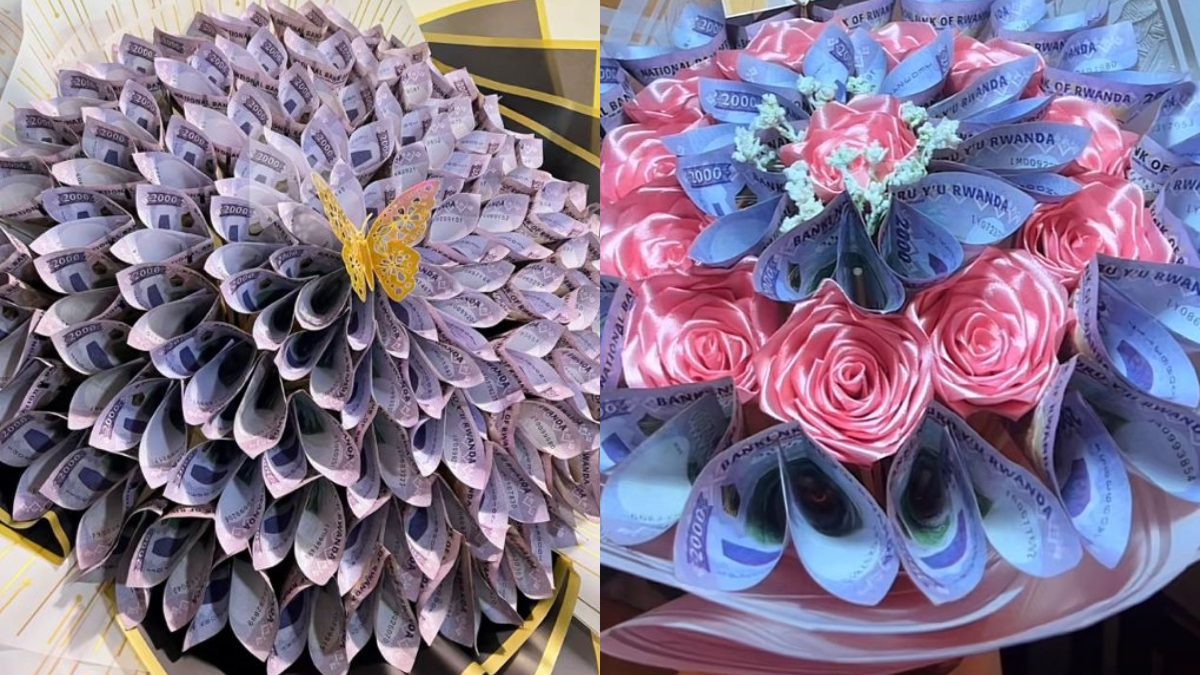
Rwanda has banned the folding, glueing, taping, pinning, clipping, and affixing of its Franc banknotes as part of gifts for social events and ceremonies, stating that such practices are damaging to currency and may lead to legal consequences.
In a statement, the National Bank of Rwanda (NBR) said such practices compromise the integrity of the banknotes, rendering them unsuitable for use in cash-handling and processing equipment, including cash counting machines and automated teller machines (ATMs), which are critical components of the national cash distribution system.
NBR is the sole authority mandated to manage the Rwandan currency.
“This damage results in the premature withdrawal and replacement of banknotes, leading to avoidable costs,” the statement signed by NBR Acting GovernorNick Barigye said.
In the statement, NBR explained that banknotes and coins are produced using durable materials and enhanced security features to ensure longevity, maintain public trust in the national currency, and support economic stability.
However, the continued use of banknotes and coins in floral arrangements, bouquets, and similar decorative creations by florists, traders, event decorators, designers, gifting stylists, and their clients, where they are folded, glued, taped, pinned, clipped, or otherwise affixed using adhesives and fastening materials as part of gifts for social events and ceremonies, leads to their getting damaged.
“NBR reminds the public that anyone who willfully defaces, mutilates, or otherwise impairs the Rwandan currency note commits an offence punishable by Law. NBR remains committed to safeguarding the integrity of the national currency in circulation and will continue to undertake public sensitisation and stakeholder engagement to protect the quality, usability, and public confidence in Rwandan Franc banknotes,” the statement added.
On Monday, the Central Bank of Kenya (CBK) issued a similar ban, saying the actions constitute misuse of currency banknotes.
In a notice on February 2, 2026, the apex bank expressed concern over the growing trend of using Kenya Shilling notes in flower arrangements, ornamental displays, and as gifts. According to the CBK, many banknotes are folded, rolled, glued, taped, stapled, or pinned during such practices. The Bank says these actions compromise the integrity of the currency and render it unfit for circulation.
“The use of adhesives, pins, staples, and similar materials damages banknotes and interferes with the efficient operation of cash-handling and processing equipment, including automated teller machines, cash counting machines, and sorting equipment,” the notice states.
CBK warns that this leads to increased rejection of banknotes during processing and forces premature withdrawal and replacement at unnecessary cost to the public and the Bank.
While acknowledging that cash gifts are acceptable, the Bank emphasised that currency should not be altered, damaged, or defaced in any way.
Banknotes should remain in a condition that allows them to circulate freely and perform their intended functions as a medium of exchange, unit of account, and store of value.
The Bank also highlighted the legal implications of defacing currency. Section 367 of the Penal Code prohibits the mutilation, defacement, or impairment of any currency note issued by lawful authority.
“Any person who willfully defaces, mutilates, or in any way impairs any currency note issued by lawful authority commits an offence under the Penal Code,” the CBK warned.
To safeguard the national currency, the Bank urged the public to adopt alternative, non-damaging methods when presenting monetary gifts.
“CBK therefore urges the public to refrain from practices that compromise the integrity of Kenya Shilling banknotes,” the notice reads.
The CBK reaffirmed its commitment to protecting the quality and usability of Kenya Shilling notes. It said public sensitisation and stakeholder engagement will continue to maintain confidence in the currency.