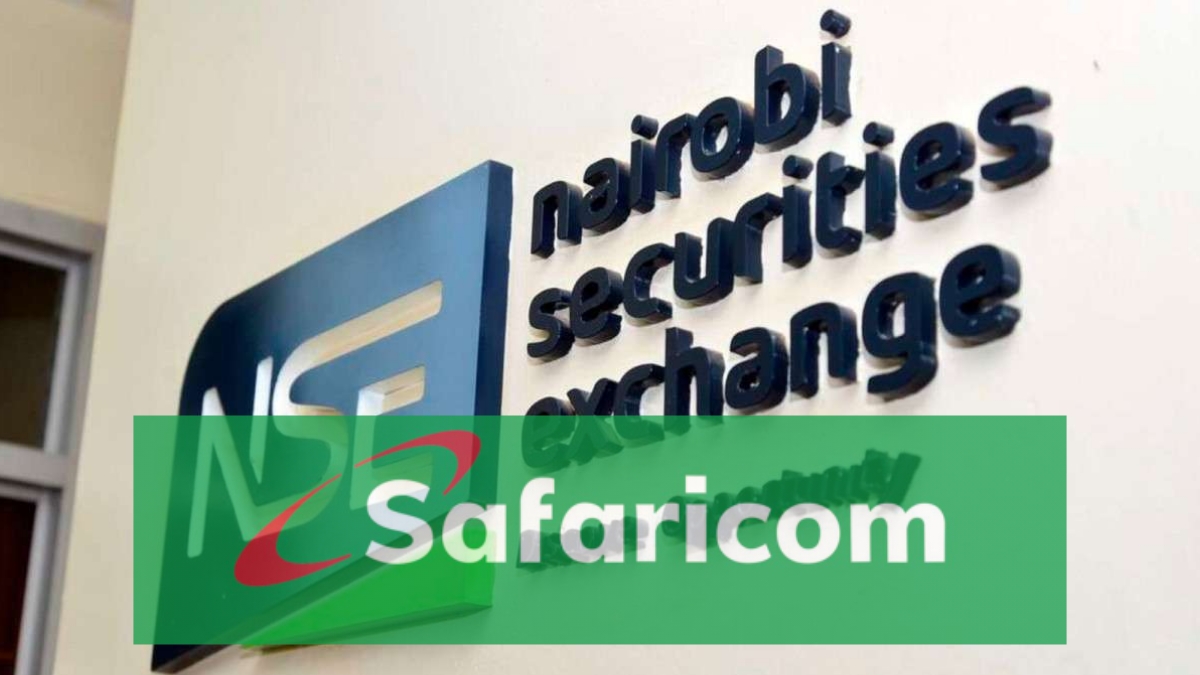
Safaricom PLC reaffirmed it's dominance in the Nairobi Securities Exchange (NSE), emerging as the top-most traded stock in the bourse during the Final Quarter of 2025, with trading activity heavily concentrated in a handful of blue-chip counters.
Trading activity at the Nairobi Securities Exchange remained heavily concentrated in a handful of blue-chip counters in the final quarter of 2025, with Safaricom once again emerging as the market’s liquidity anchor.
Safaricom recorded an average monthly turnover of KSh 4.91 billion between October and December 2025, underscoring its central role in NSE trading activity. Monthly turnover rose steadily through the quarter, from KSh 4.34 billion in October to KSh 5.01 billion in November, before peaking at KSh 5.39 billion in December.
This consistent rise in trading value reflects Safaricom’s status as the most widely held and actively traded stock in the Kenyan market. Its large free float, strong brand recognition, and inclusion in institutional portfolios make it the default entry and exit point for both domestic and foreign investors.
Banking Stocks Follow, Led by Equity Group and KCB
Behind Safaricom, the banking sector once again dominated trading activity, reinforcing its importance in Kenya’s equity ecosystem.
Equity Group Holdings recorded an average turnover of KSh 2.45 billion during the quarter, driven largely by a sharp spike in December when trading surged to KSh 4.34 billion. The late-quarter jump suggested portfolio rebalancing, positioning ahead of year-end, and renewed interest in banking stocks as macroeconomic conditions stabilized.
KCB Group followed closely, averaging KSh 2.14 billion in monthly turnover. The bank’s consistent liquidity reflects its broad shareholder base and its sensitivity to interest rate and economic outlook shifts.
EABL and the Rest of the Top Ten
East African Breweries (EABL) posted an average turnover of KSh 826.6 million over the same period, maintaining its position among the NSE’s most actively traded non-banking stocks.
Other companies rounding out the top ten by turnover included:
Kenya Power (KSh 471.25 million)
Co-operative Bank of Kenya (KSh 423.38 million)
KenGen (KSh 418.03 million)
NCBA Group (KSh 298.56 million)
BAT Kenya (KSh 297.58 million)
Standard Chartered Bank Kenya (KSh 286.13 million)
The composition of the top ten highlights a familiar pattern: liquidity remains concentrated in large, systemically important firms, particularly banks and utilities.
Market Capitalization: Safaricom Far Ahead
Safaricom’s dominance extended beyond trading activity to market capitalization. The company recorded an average market capitalization of KSh 1.17 trillion during Q4 2025, with monthly values of:
KSh 1.21 trillion in October
KSh 1.15 trillion in November
KSh 1.14 trillion in December
The slight decline through the quarter reflected modest price softening rather than any fundamental shift in the company’s market standing.
Equity Group followed with an average market capitalization of KSh 246.2 billion, while KCB averaged KSh 199.2 billion. EABL recorded a market capitalization of KSh 188.8 billion, reinforcing its position as the leading consumer goods stock on the exchange.
The Rest of the Market Cap Leaders
Other companies in the top ten by market capitalization included:
NCBA Group – KSh 140.0 billion
Co-operative Bank – KSh 132.9 billion
Absa Bank Kenya – KSh 125.9 billion
Standard Chartered Bank Kenya – KSh 111.8 billion
Stanbic Bank Kenya – KSh 76.0 billion
I&M Group – KSh 75.6 billion
The clustering of banks in the upper ranks reflects both their earnings resilience and investor preference for financial institutions with strong balance sheets and dividend histories.
Government Bond Market: Demand Far Outstrips Supply
While equities drew steady interest, the fixed-income market remained a major magnet for capital. In Q4 2025, the government targeted to raise KSh 200.0 billion through domestic borrowing. Investor response was emphatic.
Total bids amounted to KSh 415.1 billion, more than double the target, with the Central Bank of Kenya (CBK) accepting KSh 260.1 billion. This translated to an acceptance rate of 130.0%, underscoring strong appetite for government securities.
The oversubscription reflected a combination of:
Attractive yields relative to inflation
Limited alternative low-risk investment options
Strong liquidity among banks and institutional investors.
Corporate Bond Market: Small but Active
The corporate bond segment, though much smaller than the government market, remained active. As of September 30, 2025, seven issuers had bonds outstanding, including:
Batian Income Properties
EABL MTN
Real People MTN
Family Bank MTN
Kenya Mortgage Refinance Company MTN
Linzi Sukuk
Linzi Asset-Backed Security (ABS)
The total value of outstanding corporate bonds stood at KSh 70.49 billion.
Notably, Linzi ABS accounted for the largest share, with KSh 44.8 billion outstanding—highlighting growing use of asset-backed structures in Kenya’s capital markets.
Who Holds the Debt?
Investor composition in the corporate bond market reveals a heavy institutional tilt. Fund managers and nominee accounts held KSh 57.8 billion, or 82% of outstanding issuance. Investment companies accounted for 10%, while banks held 6%.
This concentration suggests that corporate bonds remain primarily an institutional product, with limited direct retail participation despite broader efforts to deepen market access.
Lessons
The Q4 2025 data offers several important insights into the state of Kenya’s capital markets.
1. Liquidity Is Deep but Concentrated
Trading activity and market capitalization remain heavily skewed toward a few dominant names. This supports liquidity but also limits breadth and resilience.
2. Banks Remain Central
The prominence of banking stocks in both turnover and market cap reflects confidence in the sector’s earnings outlook and its role in intermediating domestic liquidity.
3. Fixed Income Still Competes Strongly with Equities
Oversubscription in government bond auctions shows that many investors continue to prioritise yield certainty over equity risk, particularly in uncertain macro environments.
4. Corporate Debt Is Growing Slowly
While still small, the corporate bond market is diversifying in structure, with asset-backed and Shariah-compliant instruments gaining ground.
Conclusion
The final quarter of 2025 showed a Kenyan capital market marked by selective confidence. Investors were active, liquid, and willing to deploy capital—but only in assets perceived as stable, familiar, and well understood. Safaricom’s dominance, strong bank liquidity, and robust bond demand all point to a market that values certainty.
Strong demand in the government bond market and steady activity in corporate debt highlighted a financial system still flush with investable funds, even as investors remained selective. Together, the trends paint a picture of a market where liquidity is abundant but cautious, favouring large, familiar names in equities and fixed-income instruments with predictable cash flows.
Going into 2026, market watchers will focus on: Whether equity market breadth improves, how domestic borrowing affects yields and liquidity, the pace of corporate bond issuance and efforts to attract new listings and retail participation.