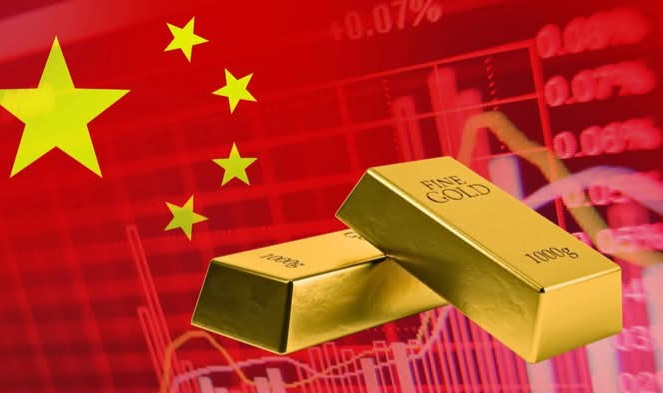
China’s central bank has kept buying gold for 15 straight months, even as the entire precious metals market took a nosedive at the end of January.
The People’s Bank of China added 40,000 troy ounces to its reserves in January. That’s the latest addition since it started its buying streak back in November 2024.
While China kept loading up, the rest of the market got crushed. Gold and silver hit record highs in January after waves of speculative bets pushed prices up too fast. Then everything fell apart. On January 30, gold dropped 10% in a single day.
Silver fell even harder, down 16%. Copper also got slammed, dropping 5.7% during the same session. That morning was one of the worst for metals in years. Prices have tried to bounce back, but the entire market is still shaky.
US hedge funds cut positions as traders get wiped out
As the crash unfolded, speculators ran for the exit. Hedge funds and big traders dumped gold fast. Bullish positions were cut by 23% in just one week.
That left net-long positions at 93,438 contracts, the lowest in over three months, based on U.S. trading data through February 3. That was the biggest drop since October.
While traders were dumping gold, central banks were still stacking. Global official purchases reached over 860 tons in 2025. That’s down from the 1,000-ton pace seen in each of the last three years, but it’s still a heavy total.
The World Gold Council expects more steady buying this year, with China clearly leading the charge.
Back on the mainland, things weren’t much calmer. Gold-backed ETFs in China saw their worst day ever for withdrawals.
On Tuesday, the four biggest ETFs (Huaan Yifu, Bosera, E Fund, and Guotai) lost about 6.8 billion yuan, which is close to $980 million. It was their second day in a row of big outflows, right after taking in record inflows earlier that same week.
As retail buyers panicked, Chinese banks started putting new rules in place. On Friday, China Construction Bank said it would raise the minimum deposit on its gold savings accounts starting Monday. The bank also told customers to be more careful and think about risk before throwing money at gold.
At the same time, Industrial and Commercial Bank of China rolled out quota limits for its Ruyi Gold Savings program, especially during the upcoming Lunar New Year holidays.
Exchanges are also stepping in, introducing new limits and restrictions aimed at cooling off the wild price swings across metal markets, not just in gold.
Still, there’s no real panic yet. In Shuibei, a major silver trading hub, dealers said more people were selling than buying over the weekend, but not in a panic. Prices for silver there are still trading above the official exchange levels, which means there’s still demand.
China investors flood metals markets amid economic slowdown
Chinese investors are rushing into metals. Prices for copper, gold, and silver have exploded. This isn’t because factories need more materials. It’s because people in China have too much cash and nowhere real to put it. Trading on Chinese futures exchanges has gone wild. Silver, aluminum, nickel, tin, and steel wire rod are seeing huge volumes.
The People’s Bank of China has been pumping money into the system for years. But now it’s harder to push that money into anything useful. In December, China’s M2 money supply grew 8.5% compared to the year before. But the economy only grew 3.9% in the last quarter of 2025. That gap shows the problem.
Retail spending is still weak. Households are cutting back. Banks issued the fewest new loans since 2018. Fixed-asset investment, which includes buildings, machines, and infrastructure, fell for the first time ever. People aren’t spending, and companies aren’t investing. So traders are betting on metals instead.
Even with some recent drops, prices for copper and gold are still near record highs. But the rally has no connection to real demand. Factories are cutting back on materials. They don’t want to pay inflated prices when consumer demand is already weak.
Still, China’s financial speculators are ignoring the drop in real-world use. They’re focused on longer-term stories. That includes the green energy transition, currency worries that make gold look safer, and AI demand for metals like tin. Plus, we are facing global shortages in copper and aluminum.
Gold-linked investment products inside China more than doubled in two years. There were over 300 by the end of 2025. Their combined value hit 243 billion yuan. That’s a big jump but still small compared to the country’s massive 180 trillion yuan financial products market.
Copper shot past $14,500 a ton last week. Then it started falling. On Friday, it dropped for the third day in a row to $12,750 on the London Metal Exchange. That’s a 3.1% drop for the week. It’s now having its worst stretch since April. Warehouses in London, Shanghai, and New York are loaded with copper, more than at any time since 2003.