The Social Health Authority (SHA) has announced that it will next month disclose the list of accredited hospitals abroad eligible to provide medical services to Kenyans, with part of the treatment costs covered under its scheme.
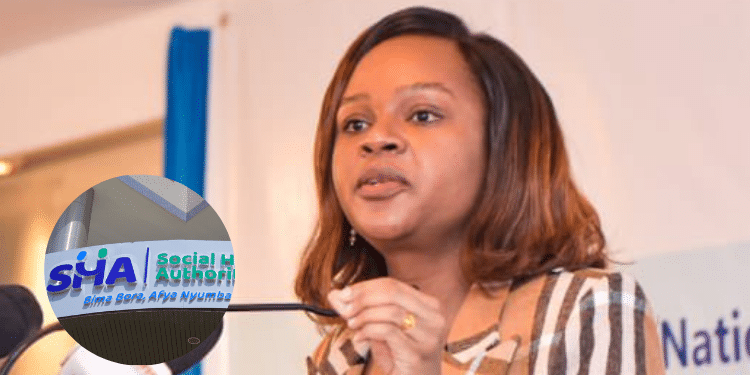
Speaking before the National Assembly Public Investments Committee on Social Services, Administration and Agriculture, SHA CEO Mercy Mwangangi said the procurement process is ongoing and expected to conclude before the end of March.
Mwangangi told the committee that the maximum amount the SHA will pay towards treatment abroad is Sh500,000. She explained that delays in accrediting hospitals followed the transition from the National Hospital Insurance Fund (NHIF) to the SHA, as the new system requires a full procurement process that was not previously followed.
“The NHIF had a different contractual agreement with the service providers, but now we have to follow the entire procurement process while contracting the facilities,” she said.
“When we complete the procurement process, we will publish the names of those facilities, whether in India, Turkey or Germany, with which SHA has contracted and has agreements with.”
Addressing concerns over fraudulent claims under the NHIF, the SHA CEO said the new process aims to prevent hospitals from submitting claims for services that were never offered. She said the authority has already invited qualified foreign hospitals to submit bids for consideration.
“This is not closed, it is open, and even those facilities that we currently have their pending bills from NHIF are allowed to bid again,” she said.
Responding to a question from Caleb Mule, MP for Machakos Town, on measures to assist Kenyans already admitted in hospitals abroad, Mwangangi said the authority cannot settle any bills until contractual agreements are finalised.
“What is it going to take to pay all their claims? Because we have relatives who are suffering in those hospitals,” Mule posed.
In response, Mwangangi said, “Without any contractual agreement under SHA with the foreign hospitals and before payment of pending bills amounting to Sh146 million owed to the facilities contracted by NHIF, we cannot pay for patients now.”
Committee chair MP Emmanuel Wangwe urged SHA to move quickly and procure hospitals for Kenyans already receiving treatment abroad.
“For Kenyans that are already out, procure those hospitals within the law because you can fall sick anytime you’re abroad,” he said.
Mwangangi described the teething problems facing SHA as normal during the transition but assured the public that the health system was being strengthened.
“SHA has so far paid Sh131 billion to hospitals. I want to assure all Kenyans we are determined to offer better healthcare in this country,” she said.
She added that the new system has detected Sh1.8 billion in fraudulent claims from some hospitals.
“I want to assure Kenyans that all their contributions to SHA are safe,” she said.
Last year, Health Cabinet Secretary Aden Duale had said the government would tighten controls on overseas medical referrals under SHA, suspending the programme until new regulations were implemented.
Under the new rules, only treatment unavailable in Kenya would be covered. Duale noted that many procedures often sought abroad, such as advanced imaging, kidney transplants, open-heart surgeries, and treatments for joint and spinal injuries, are already offered locally.
The scheme has recently been facing public backlash over fraud allegations, after it emerged Billions were lost to fraudulent claims.
The Social Health Authority, touted as the foundation of accessible universal health coverage for Kenyans, is battling a growing wave of fraud, policy backlash and delayed disbursements.
The SHA system, developed at a cost of Sh106 billion, was presented as a game-changer - promising transparency, efficiency, and an end to the fraudulent practices that had crippled NHIF. Yet similar patterns of fraud are already emerging within SHA - at a faster rate than NHIF, raising serious concerns about whether genuine reform has truly taken place.
A recent audit uncovered massive financial losses at Kenya’s Social Health Authority, revealing that more than Sh11 billion was lost through fraudulent and irregular medical claims, triggering renewed concern over accountability in public healthcare financing.
The losses were recorded within months of the rollout of SHA, which replaced the National Hospital Insurance Fund as part of reforms aimed at delivering universal health coverage.
Audit findings indicate that a large share of claims submitted by healthcare providers were either inflated, unsupported by medical records, or linked to services that were never rendered.
The audit points to widespread abuse by some hospitals and clinics, both private and public, that took advantage of weaknesses in the claims processing system.
Among the most common red flags were unusually high volumes of specialised procedures, including caesarean sections and surgeries, reported by certain facilities at levels far above national norms.
Investigators also identified cases of duplicate billing, where the same patient was claimed for multiple times, as well as claims submitted for non-existent or ghost patients.
In several instances, facilities sought reimbursement for services outside their approved accreditation, in violation of SHA regulations.
The audit further revealed serious documentation gaps, with many claims lacking mandatory supporting evidence such as treatment notes, diagnostic results, or referral records.
The scale of the losses highlights systemic weaknesses in claims verification and monitoring processes. Rapid expansion of healthcare coverage, combined with limited real-time auditing capacity, appears to have created vulnerabilities that were exploited over the seven-month period. The audit suggests that existing controls were insufficient to detect irregular billing patterns in a timely manner, allowing losses to accumulate before intervention.
The World Bank's 2023 Digital Health Implementation Guide specifically cautioned against the "big bang" approach adopted by Kenya-Kwanza, recommending instead a phased rollout with robust contingency plans. Despite clear warnings, the government proceeded with the rollout, leading to system glitches and service delivery challenges that have significantly impacted healthcare access. The future of Kenya’s ambitious universal health coverage is bleak, unless SHA fraud is efficiently tackled.