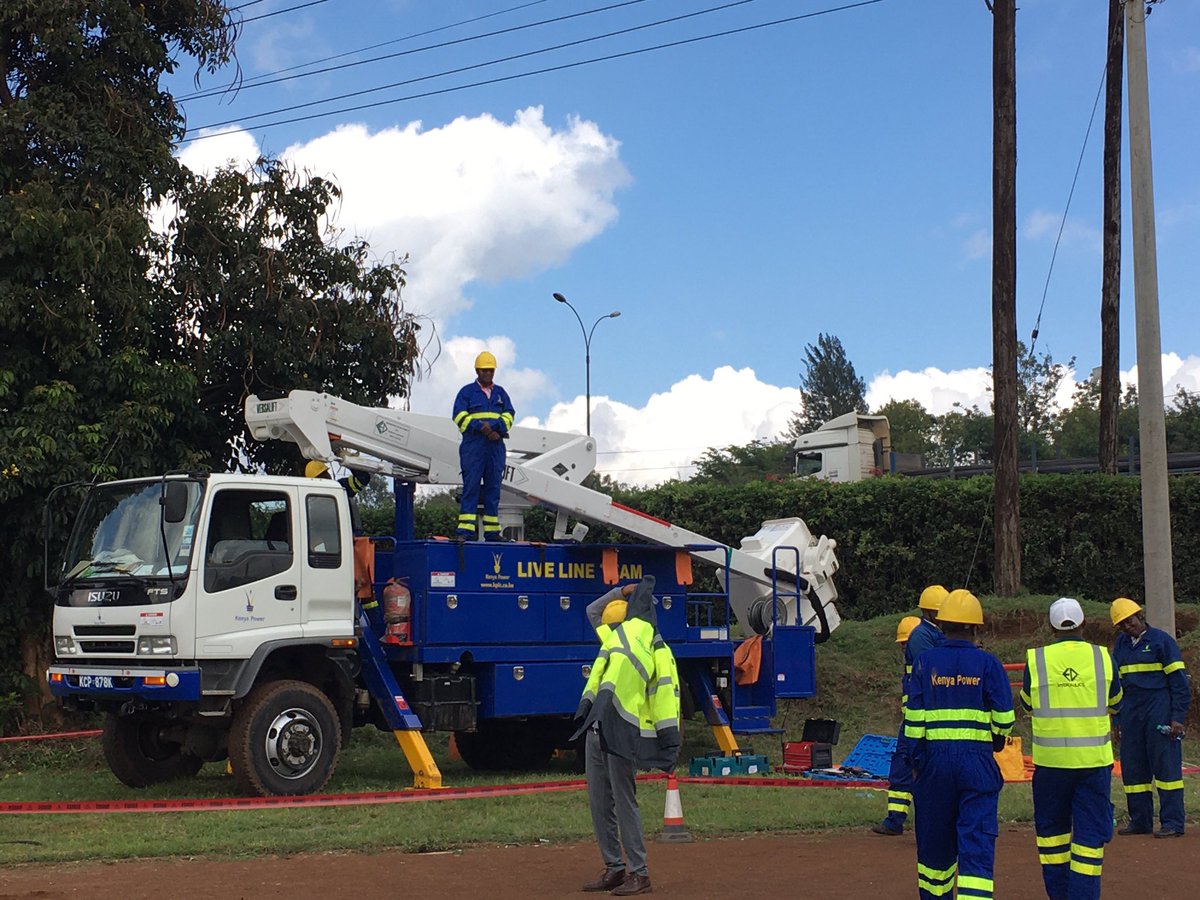
Kenya’s electricity consumption is projected to grow at a faster pace of 4.2 per cent annually between 2026 and 2030, up from the average annual growth rate of 3.7 per cent recorded between 2018 and 2024. According to the International Energy Agency (IEA), the surge will be driven by accelerating electrification efforts and initiatives to stimulate demand across industrial, residential, and transport sectors.
Last year, Kenya Power announced a critical milestone for the nation’s energy sector, recording a new all-time high in the country’s electricity peak demand, reaching 2,439.06 Megawatts (MW). This record, attained on December 4, 2025, surpassed the previous peak of 2,418.77 MW set just weeks earlier on November 18, 2025, signaling an accelerating and sustained growth in electricity uptake among both commercial and domestic consumers. This continuous upward trend is a significant indicator of Kenya’s overall economic resilience and a testament to the effectiveness of recent energy sector reforms and investments.
The growth is particularly important in the context of Kenya’s aggressive pursuit of universal access and a transition to 100% clean energy by 2030. As consumption climbs, the pressure shifts from the distribution network’s ability to handle the load to the generation sector’s capacity to secure adequate reserve margins—the buffer capacity needed to manage unexpected outages or demand spikes.
Commenting on the achievement, Kenya Power’s Managing Director & CEO, Dr. (Eng.) Joseph Siror, highlighted the positive feedback loop between improved service and economic activity: “We are delighted to witness this energy demand growth, which is a direct reflection of increased domestic and commercial activities across the country.” He emphasized that with industrial customers accounting for over half of Kenya Power’s total unit sales in the last financial year, the company’s “central role in powering industry and economic growth is clear, and the priority now shifts to the generation sector to help secure our reserve margins.”
The record demand level is not a single-factor anomaly but the culmination of strategic operational improvements and deep-seated economic shifts. Three key drivers underpinned the leap from the previous peak set in November:
1. Rapid Customer Expansion and Electrification:
Kenya Power connected 401,848 new customers in the year ended June 2025, pushing the utility’s total customer base past the 10 million milestone. This massive expansion effort, aligning with the Kenya National Electrification Strategy (KNES 2025) aim for near-universal energy access by 2030, directly contributed 203 GWh in new electricity sales. This growth is critical for improving the quality of life and fostering economic activity, especially in marginalized communities. The adoption of new technologies, such as the digitization of the electricity-connection application process, is also speeding up service delivery and facilitating this expansion.
2. Industrial Acceleration and Commercial Uptake:
The industrial sector remains the backbone of Kenya’s grid consumption. Industrial customers, defined as those using more than 15,000 units a month, are the biggest consumers of electricity, accounting for at least 53 per cent of all electricity sold by Kenya Power. The sustained demand from this sector reflects growing manufacturing and commercial activities. This trend is crucial as Kenya seeks to transition from being a consumption-driven economy to a capex-driven one, supported by initiatives like the Energy (Energy Management) Regulations 2025, which mandate comprehensive energy audits biennially for large consumers to promote efficiency.
While industrial consumption unit sales grew, Kenya Power’s overall revenue from this class dropped by 9.5 per cent in the year ended June 2025. This apparent paradox is explained by the reduced base electricity tariffs implemented under the new regulatory regime, which has seen the price per unit (kWh) decline over the three-year period starting from July 2023, aimed at easing pressure on consumers and boosting industrial competitiveness.
3. System Stabilization and Network Reinforcement:
The National Grid could not sustain this level of demand without strategic investments in stability. Kenya Power attributes the ability to handle consecutive peak records to Strategic investments in stabilizing the National Grid and the timely completion of key network reinforcement projects that have enhanced power supply reliability and redundancy. These efforts are part of the broader Integrated National Energy Plan (INEP) Framework which coordinates investments in generation, transmission, and distribution to ensure a data-driven, least-cost approach. Key projects include transmission network expansion and modernization of aging hydro infrastructure, ensuring reliable dispatch during peak periods.
The Success of Operational Efficiency Metrics
Beyond increasing capacity, Kenya Power has made significant progress in operational efficiency, a focus area critical for both financial stability and service reliability. This emphasis has directly influenced the ability of the grid to support the new peak demand.
A. System Losses Reduction:
System losses—non-technical losses (theft and unauthorized connections) and technical losses (energy dissipated in transmission and distribution)—have long plagued the utility. Total system losses improved notably from 23.16% to 21.21% in the financial year ending June 2025. This reduction, which has the potential to save consumers approximately Sh6 billion annually, was achieved through:
Accelerated rollout of smart meters and replacement of faulty meters to improve billing accuracy and accountability.
Targeted feeder upgrades and improved energy accounting practices.
Implementation of new technologies like Optical Character Recognition (OCR) systems for meter reading to boost billing accuracy.
The long-term parliamentary directive is to lower system losses further, aiming for 14.50 per cent within three years, which requires continuous investments in high-efficiency transformers, smart grid technologies, and enhanced monitoring systems.
B. Enhanced Service Reliability (SAIDI and SAIFI):
Improved operational efficiency translated into measurable improvements in key reliability indices, which are critical metrics for economic stability. High values in these indices indicate frequent or prolonged outages that severely impact industrial production and commerce.
System Average Interruption Duration Index (SAIDI): This measure, which tracks the average duration of power interruptions experienced by a customer, improved from 120.6 hours to 113 hours.
System Average Interruption Frequency Index (SAIFI): This metric, which tracks the average number of times a customer experiences an interruption, improved from 47.00 to 44.07.
The improvement in both SAIDI and SAIFI reflects the impact of grid reinforcement and upgrades, and the implementation of technologies like Advanced Metering Infrastructure (AMI) and Advanced Distribution Management Systems (ADMS) that enable faster outage detection and resolution. Sustaining this improvement is a strategic imperative for Distribution System Operators (DSOs) globally, as it is directly linked to regulatory compliance, operational efficiency, and bolstering customer trust, which is reflected in Kenya Power’s rising Customer Satisfaction Index (which rose to 72% from 69% in the review period).
Securing the Reserve Margin: The Generation Mandate
Dr. Siror’s call to shift focus to the generation sector highlights the primary challenge created by the sustained demand growth. As peak power consumption continues to set new records, the margin between supply and peak demand is thinning. On days of peak demand, the system operates with relatively small reserves, which tightens options should a large plant or major transmission line trip. This tight reserve margin necessitates urgent action in two primary areas:
1. Renewable Energy Scale-Up: Kenya is already a continental leader in green energy, with over 92% of its electricity currently produced by clean and renewable energy sources. This mix is dominated by geothermal, which accounts for 39.51% of the mix, followed by hydro at 24.21%. The country’s National Energy Policy 2025–2034 commits to achieving 85% renewables in the generation mix and near-universal energy access by 2030. To meet the rising demand and secure the reserve margin, the government’s plan involves significantly scaling up installed capacity to 5,952MW, with major increases slated for geothermal, hydro, wind, and solar. State generator KenGen plays a critical role in meeting historic peaks by ramping up its hydro and geothermal generation, ensuring grid stability through dynamic use of these base-load and flexible sources.
2. Modernizing Grid Storage and Regional Trade: To manage demand variability, which is intensified by the addition of variable sources like wind and solar, the National Energy Compact plans for the integration of Battery Energy Storage Solutions (BESS). Furthermore, regional interconnectivity is being leveraged to enhance grid resilience and energy security. The commissioning of projects like the 400 kV Kenya–Tanzania interconnector and active participation in the Eastern Africa Power Pool (EAPP) allow Kenya to trade electricity regionally, providing crucial flexibility and backup during peak hours or supply constraints.
The International Energy Agency (IEA), says the stronger growth pace through 2030 will coincide with Kenya’s broader energy targets outlined in its updated National Energy Policy 2025–2034 and the National Energy Compact, which set ambitious goals for the country’s energy sector. Renewable energy is expected to account for about 94 per cent of electricity generation by 2030.
Kenya plans to expand renewable power capacity from 3.3 GW in 2023 to around 6.3 GW, with hydropower and geothermal seeing the largest absolute increases, while solar PV and wind will experience the highest relative growth rates.
The government’s electrification drive includes connecting an additional 5.1 million households and expanding the distribution system by over 200,000 km.
Kenya also aims to strengthen its transmission network by 8,000 km and leverage regional interconnectors, scaling imported and exported power to 1,000 MW by the end of the decade.
Electric vehicle adoption is accelerating, with the number of registered EVs rising from 475 in 2022 to nearly 10,000 by October 2025, largely driven by electric two-wheelers.
Government incentives, including a reduced excise duty, VAT exemptions, and an e-mobility tariff, are expected to push the number of electric two-wheelers to 60,000 by 2030, generating an additional 415 GW of electricity demand over five years.
To maintain grid reliability amid higher renewable penetration, Kenya is also investing in energy storage systems. KenGen has already commissioned a 1.16 MWh battery energy storage system (BESS) for its modular data centre, with plans to expand utility-scale storage to 400 MWh by 2030.
The National Energy Policy also aims to provide regulatory and financing frameworks to support these projects. With these initiatives, the agency says Kenya is positioning itself for a robust energy future, combining sustainable generation, modernised transmission infrastructure, and electrification incentives that are expected to drive consumption and support economic growth.