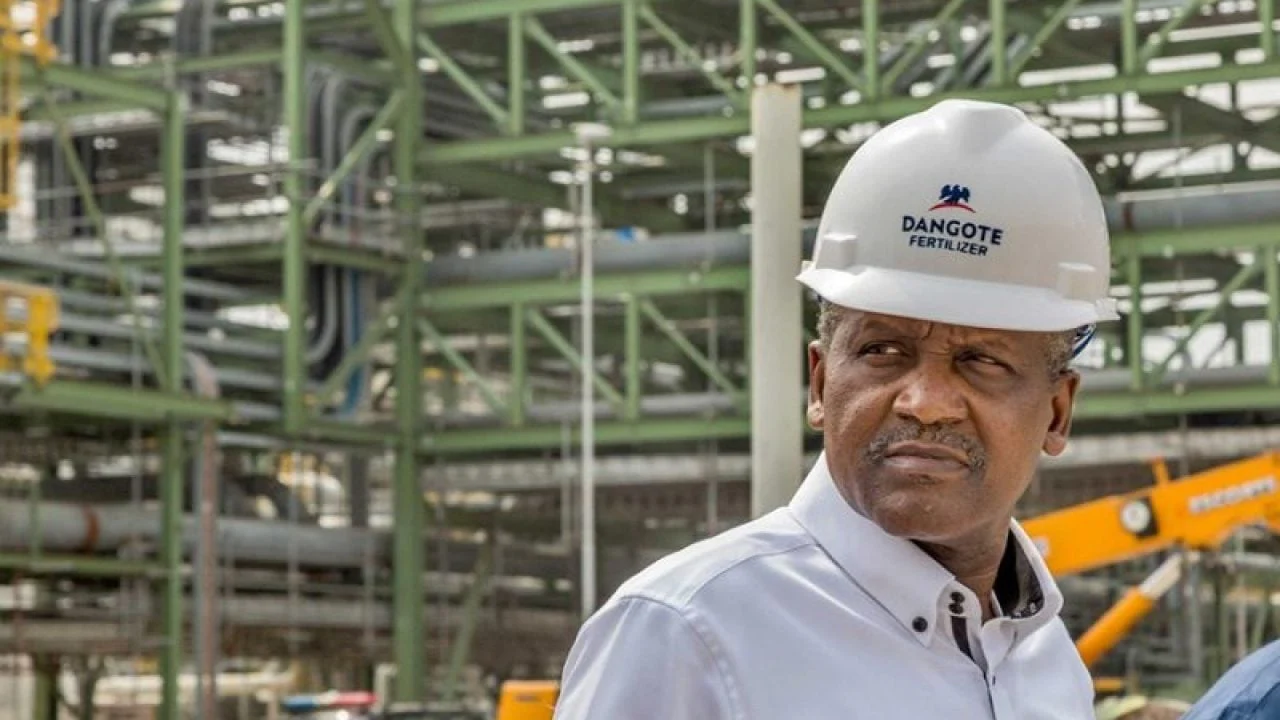
Africa's Petroleum Industry sleeping giant has fully awakened. The Dangote Petroleum Refinery, a $20 billion industrial colossus, has officially reached its full nameplate capacity of 650,000 barrels per day (bpd), a milestone that promises to rewrite the economy of Nigeria and the continent.
This achievement is not just a technical statistic; it is a geopolitical event. Located in the Lekki Free Trade Zone, the facility is now the world’s largest single-train refinery. Its successful ramp-up to full capacity marks the end of a long, skeptical wait and the beginning of a new era where Africa’s largest oil producer finally stops importing the very fuel it sits upon. Managing Director David Bird confirmed that the critical Crude Distillation Unit (CDU) and Motor Spirit (MS) block have been stabilized, allowing the plant to run at full throttle.
For decades, Nigeria has lived a paradox: swimming in crude oil while drowning in imported petrol bills. The Dangote Refinery was built to shatter this cycle. By processing 650,000 barrels daily, it can satisfy 100 per cent of Nigeria’s domestic requirement for refined products—gasoline, diesel, kerosene, and jet fuel—with a surplus left for export. This shift is expected to save the Nigerian economy billions of dollars annually in foreign exchange, stabilizing the volatile Naira.
"This milestone underscores the strength, reliability, and engineering quality that define our operations," Bird stated. The validation process, involving a grueling 72-hour performance test run, has proven that the refinery is not just a construction marvel but an operational powerhouse. It is poised to turn Nigeria from a net importer of refined petroleum into a regional energy hub.
Last month, the Dangote Petroleum Refinery made a significant commitment to Nigeria’s energy security by reaffirming its capacity to supply petroleum products far beyond the nation’s current domestic consumption levels.
In a public notice issued on January 29, 2026, the refinery announced it can deliver 75 million litres of Premium Motor Spirit (PMS), commonly known as petrol, daily—a volume that substantially exceeds Nigeria’s estimated national consumption of 50 million litres per day.
Comprehensive Product Portfolio Beyond Petrol
While the petrol supply commitment has garnered significant attention, the Dangote Refinery’s capabilities extend across multiple critical petroleum products. The facility announced it can supply 25 million litres of Automotive Gas Oil (AGO), commonly known as diesel, compared with an estimated daily demand of 14 million litres. Additionally, the refinery has the capacity to provide 20 million litres of aviation fuel daily, far exceeding the estimated maximum domestic consumption of four million litres.
“The management of Dangote Petroleum Refinery would like to reiterate our capability to supply the underlisted petroleum products of the highest international quality standard to marketers and stakeholders,” the company stated in its public notice. This comprehensive approach to petroleum product supply positions the refinery as a cornerstone of Nigeria’s energy infrastructure, capable of meeting diverse fuel needs across transportation, aviation, and industrial sectors.
The surplus capacity across all product categories provides Nigeria with critical strategic advantages. Industry analysts note that supplying above estimated consumption reduces the need for emergency imports, strengthens inventory cover, and enhances the resilience of the domestic supply chain. This buffer capacity becomes particularly valuable during periods of peak demand, such as holiday seasons, or during logistical disruptions that have historically plagued Nigeria’s fuel distribution network.
Strategic Importance for Energy Security
The availability of volumes above prevailing demand addresses one of Nigeria’s most persistent economic vulnerabilities. For decades, the paradox of being a major crude oil producer while depending heavily on imported refined products has drained foreign exchange reserves, exposed the economy to global price volatility, and created recurring fuel scarcity crises that disrupted economic activity.
According to the Nigerian Midstream and Downstream Petroleum Regulatory Authority (NMDPRA), Nigeria’s daily petrol consumption currently ranges between 45 million and 50 million litres, though actual consumption has been documented at higher levels during peak periods. Data from October 2025 showed that Nigeria consumed 56.74 million litres of petrol daily—the highest level within a one-year period—highlighting the variability in national demand.
The Dangote Refinery’s capacity to supply 75 million litres daily provides a substantial cushion above even peak consumption levels. This surplus capacity enhances market stability by ensuring continuous supply during demand spikes, reducing the vulnerability to supply chain disruptions, and minimizing the need for emergency imports that have historically placed pressure on Nigeria’s foreign exchange reserves.
“The availability of volumes above prevailing demand provides critical supply buffers, enhances market stability and reduces reliance on imports, particularly during periods of peak demand or logistical disruption,” the refinery stated in its announcement. This strategic positioning aligns with Nigeria’s broader economic goals of reducing import dependency and conserving foreign currency for productive investments rather than recurring expenditure on refined petroleum products.
Transforming Nigeria’s Petroleum Landscape
The Dangote Petroleum Refinery, located in the Lekki Free Zone on the outskirts of Lagos, represents the culmination of a $20 billion investment and years of development. The facility is the largest single-train refinery in the world, with an initial processing capacity of 650,000 barrels of crude oil per day. In October 2025, Aliko Dangote, the refinery’s founder and Africa’s richest individual, announced plans to expand capacity to 1.4 million barrels per day by 2028, which would make it the world’s largest refinery by any measure.
The refinery’s impact on Nigeria’s fuel supply has been gradually increasing. According to NMDPRA data released in January 2026, domestic petrol supply surged by approximately 64% to an average of 32 million litres per day in December 2025, compared with about 19.5 million litres per day in November 2025. This represented one of the strongest monthly improvements in local petrol supply since the refinery commenced phased operations.
The refinery has implemented 24-hour loading operations to sustain daily distribution of petroleum products nationwide. Managing Director David Bird explained that the shift to round-the-clock operations was driven by the need to meet growing market demand while improving turnaround time for tanker trucks. The facility now evacuates over 1,000 trucks daily, with production and evacuation volumes consistently exceeding 50 million litres of petrol per day.
Economic Impact and Foreign Exchange Savings
The economic implications of the Dangote Refinery’s operations extend far beyond fuel availability. By meeting domestic petroleum demand through local production, Nigeria stands to realize substantial foreign exchange savings. Before the refinery commenced significant operations, Nigeria’s refined fuel imports were as high as 500,000 barrels per day in 2023. By the first quarter of 2025, these imports had collapsed to approximately 88,000 barrels per day—a dramatic reduction that reflects the refinery’s growing contribution to domestic supply.
Industry projections suggest that Nigeria could save up to $10 billion annually in foreign exchange that would otherwise be spent on petroleum product imports. These savings provide crucial fiscal space for the government to invest in infrastructure, education, healthcare, and other productive sectors. Additionally, reduced import dependency strengthens the naira by decreasing pressure on foreign exchange reserves and reducing Nigeria’s vulnerability to international fuel price volatility and shipping cost fluctuations.
With domestic refining capacity expanding, stakeholders believe Nigeria is increasingly positioned to reduce foreign exchange exposure, improve supply security, and strengthen downstream efficiency through locally refined petroleum products. This transformation addresses a longstanding economic inefficiency that has constrained Nigeria’s development for decades.
The refinery also contributes significantly to job creation and economic multiplier effects. The facility is expected to provide 135,000 permanent jobs when fully operational, including direct employment at the refinery and indirect opportunities in transportation, logistics, security, catering, and other service sectors. The economic ripple effects extend to supporting industries and local businesses in the Lagos region and beyond.
Regional Impact Beyond Nigeria
The Dangote Refinery’s influence extends beyond Nigeria’s borders, transforming energy dynamics across West and Central Africa. The facility has already begun exporting petroleum products to regional neighbors including Senegal, Togo, Benin, and Gabon. These countries, historically dependent on imports from Europe and Asia, now benefit from geographically proximate supply sources with reduced shipping costs and delivery times.
According to Gary Clark of S&P Global Commodity Insights, “prior to the ramping up of supply at the Dangote refinery, West Africa was very much reliant on imports from Europe. But now, with Dangote coming online, we see a lot of diesel and jet fuel exported directly from the refinery, meeting West and Central African demands.” This shift strengthens regional energy security by reducing dependence on distant international suppliers and creating a more resilient regional petroleum supply chain.
The refinery has also made significant inroads into global markets. In early 2025, the United States imported 1.7 million barrels of jet fuel from Dangote in a single month—an unprecedented milestone for an African producer. Subsequently, Saudi Aramco purchased three cargoes totaling 130 million liters, demonstrating that the refinery’s products meet the quality standards of the world’s most sophisticated fuel markets.
These international sales provide hard currency revenues and validate the refinery’s technical capabilities. More importantly, they position Nigeria and Africa more broadly as participants in the global refined products value chain, rather than merely suppliers of crude oil for processing elsewhere.
Future Expansion and Long-Term Vision
The Dangote Group’s ambitions for the refinery extend well beyond current capacity. The planned expansion to 1.4 million barrels per day would transform the facility from Africa’s largest to the world’s largest refinery, surpassing the current record held by Reliance Industries’ Jamnagar complex in Gujarat, India. This expansion reflects confidence in Nigeria’s long-term petroleum demand growth and the potential for increased exports to regional and international markets.
“This expansion reflects our confidence in Nigeria’s future, our belief in Africa’s potential, and our commitment to building energy independence for our continent and the world,” Aliko Dangote stated during an October 2025 briefing announcing the expansion plans. The project includes potential addition of a vacuum distillation unit that could add vacuum gas oil, base oils, and bitumen to the refinery’s product portfolio, further diversifying its offerings and supporting operational flexibility.
Beyond petroleum products, the Dangote complex includes integrated petrochemical facilities. The site produces polypropylene, sulfur, and carbon black feedstock, with expansion plans targeting 2.4 million tonnes per year of polypropylene by 2028. This includes converting propane to propylene through catalytic dehydrogenation—demonstrating the facility’s ambitions to capture value across the petroleum and petrochemical value chains.