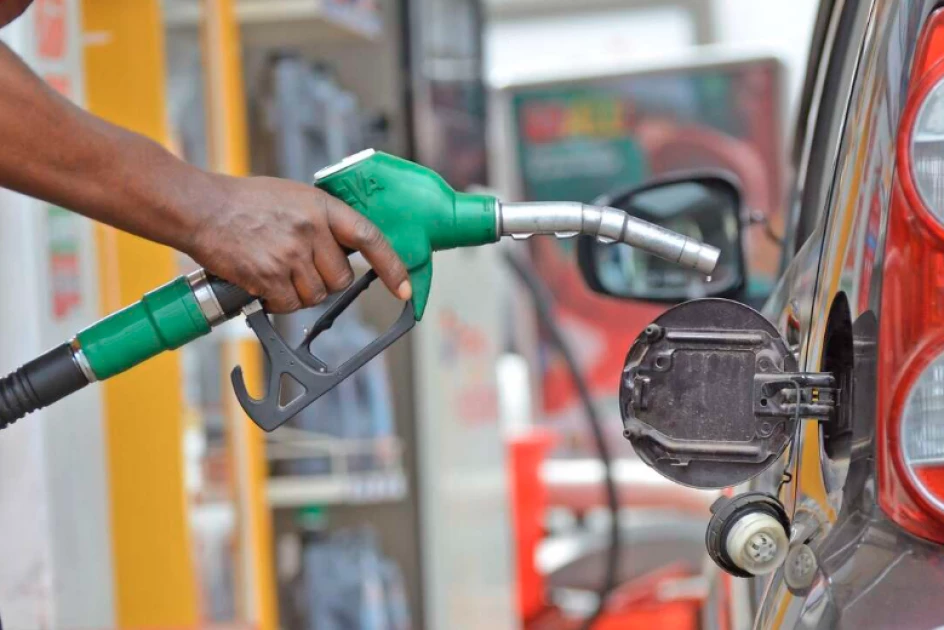
The Energy and Petroleum Regulatory Authority (EPRA) has delivered some relief to Kenyan consumers and the transport industry by announcing a reduction of fuel prices. The new price regime, which comes into effect on February 15, 2026, will hold steady through March 14, 2026.
Prices of Super Petrol, Diesel and Kerosene have decreased by Sh4.24, Sh3.93 and Sh1.00 per litre respectively. The move comes as imported petroleum costs eased, offering relief to motorists and businesses alike.
The revised rates mean Super Petrol will retail at Sh178.25 per litre, Diesel at Sh166.54 per litre, and Kerosene at Sh152.80 per litre during the period.
The regulator explained that the adjustments were made following existing legal provisions governing petroleum pricing in Kenya.
"In accordance with Section 101(y) of the Petroleum Act 2019 and Legal Notice No.192 of 2022, we have calculated the maximum retail prices of petroleum products which will be in force from February 15, 2026, to March 14, 2026," the statement read.
EPRA linked the price reductions to lower landed costs for imported fuels between December 2025 and January 2026.
"The average landed cost of imported Super Petrol decreased by 2.69 per cent from $592.24 (Sh76,400) per cubic metre in December 2025 to $576.34 (Sh74,300) per cubic metre in January 2026; Diesel decreased by 6.37 per cent from $626.75 (Sh80,900) per cubic metre to $586.80 (Sh75,700) per cubic metre while Kerosene decreased by 1.44 per cent from $607.55 (Sh78,400) per cubic metre to $598.82 (Sh77.200) per cubic metre over the same period," the statement further read.
These reductions in landing costs directly translate to lower pump prices, as Kenya imports all of its refined petroleum products and benchmarks local prices against international market trends. The pricing methodology follows EPRA’s official pump price formulae, which incorporates various cost components including transportation, storage, and regulatory margins.
The relative stability of the Kenyan shilling against the U.S. dollar during January and February 2026 played a crucial role in keeping import costs manageable. This stability contrasted sharply with earlier periods in 2025 when currency volatility significantly impacted fuel prices.
The new prices vary across different regions due to logistical and transportation costs, reflecting Kenya’s geographic and infrastructure realities.
In the port city of Mombasa, prices are slightly lower due to proximity to import facilities, while remote towns like Mandera have the highest prices due to additional transportation costs and logistical challenges in fuel distribution across Kenya’s vast territory.
The new pricing will take effect at midnight on Sunday, February 15, and will remain in force until March 14.
Kenya’s fuel pricing mechanism operates within the framework of a controversial Government-to-Government (G2G) deal with Gulf oil companies. Saudi Aramco, Abu Dhabi National Oil Company (ADNOC), and Emirates National Oil Company have been supplying Kenya with refined petroleum products since April 2023.
The G2G arrangement, initially introduced to ease pressure on foreign exchange markets, provides Kenya with a 180-day credit window for payments. However, the deal has faced criticism for creating distortions in the foreign exchange market.
Energy Cabinet Secretary Opiyo Wandayi previously cautioned that while the G2G deal cushions Kenya against supply shortages, escalating geopolitical tensions could still affect local prices through increases in Free on Board costs that impact global markets.
One significant challenge with the current G2G arrangement is the fixed premium structure, which prevents Kenyan consumers from benefiting fully when global refined fuel prices decline. This has meant that some international price reductions don’t translate proportionally to local pump price relief.
EPRA’s monthly price reviews operate under Section 101(y) of the Petroleum Act 2019 and Legal Notice No. 192 of 2022, which provides the regulatory framework for determining maximum retail prices of petroleum products. The retail fuel prices include several components:
Base landed cost of imported petroleum products
16% Value Added Tax (VAT) as provided under the Finance Act 2023
Inflation-adjusted excise duties per Legal Notice No. 194 of 2020
Transportation and distribution margins that vary by location
Retail margins for fuel station operators
Monthly Review Process
EPRA conducts these reviews monthly, analyzing global crude oil prices, exchange rates, landed costs, and various tax components to determine maximum allowable pump prices. This system aims to ensure that price adjustments reflect market realities while protecting consumers from excessive pricing. The complete methodology is detailed in EPRA’s pump price formulae documentation.
Economic Implications
Inflation Dynamics : Fuel prices play a significant role in Kenya’s inflation calculations, as the country relies heavily on diesel for transportation, power generation, and agriculture, while kerosene remains important for many households’ cooking and lighting needs. Price reduction may help moderate inflationary pressures.
Supply Chain Effects : Lower diesel prices particularly benefit Kenya’s logistics and transportation sectors, potentially reducing the cost of moving goods across the country. This could have positive downstream effects on the prices of essential commodities, though the impact may take time to materialize fully.
Business and Industrial Impact : For businesses, especially those in manufacturing and logistics, fuel cost reductions translate to meaningful savings when scaled across large operations. This could help improve business competitiveness and potentially support job creation in fuel-intensive sectors.
Looking ahead
Exchange Rate Vulnerability : Kenya’s continued reliance on imported petroleum products means that fuel prices remain vulnerable to exchange rate fluctuations. Any significant weakening of the shilling against the dollar could quickly erode the current price gains.
Global Market Risks : Ongoing geopolitical tensions in the Middle East and Eastern Europe continue to pose risks to global oil supply chains. Kenya’s energy security remains tied to these global dynamics, making price stability challenging to achieve. OPEC+ production decisions and global oil market forecasts from the IEA suggest continued volatility ahead.
Energy Transition Considerations : The government’s broader energy strategy includes increasing renewable energy adoption and potentially exploring local refining capabilities to reduce import dependence. However, these longer-term solutions require substantial investment and time to implement.
Conclusion
As Kenya continues to navigate these challenging energy market dynamics, the latest price review provides a brief respite while highlighting the need for longer-term energy security strategies that reduce dependence on volatile global markets. For now, consumers can enjoy lower fuel costs, though vigilance regarding future price movements remains essential given the numerous factors that influence Kenya’s energy costs.