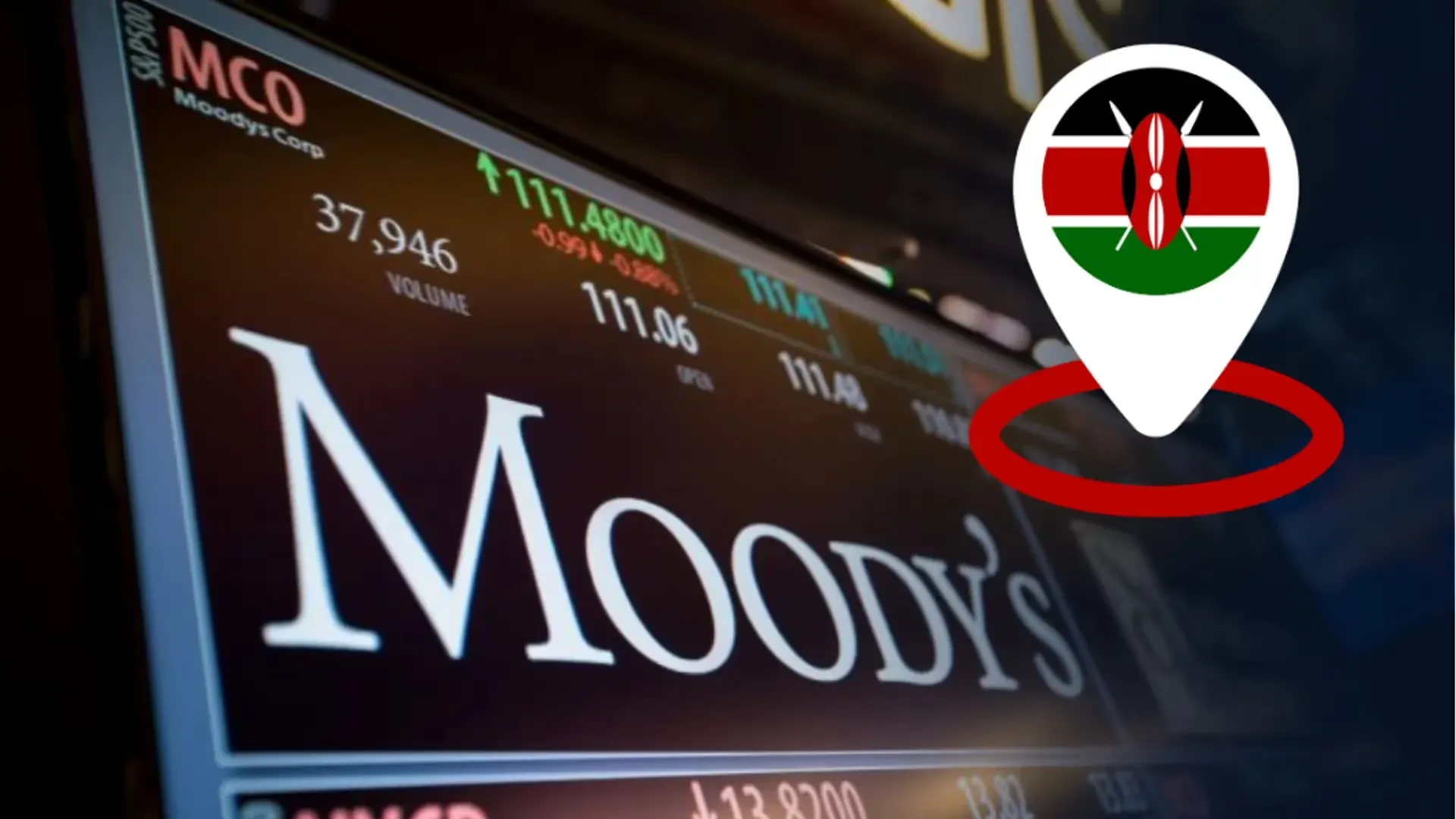
Kenya has received a cautiously positive signal from global credit markets after Moody’s Investors Service upgraded the country’s sovereign credit rating, citing stronger external liquidity, reduced near-term refinancing risks, and improved macroeconomic stability. The agency raised Kenya’s rating to B3 from Caa1 and revised the outlook to stable, indicating a lower probability of default in the near term.
The upgrade reflects a marked improvement in Kenya’s external position over the past two years, including a sharp rise in foreign exchange reserves, a narrowing current account deficit, and the government’s successful return to international bond markets. However, Moody’s was clear that the country’s longer-term fiscal challenges remain significant, with high debt levels and heavy interest costs continuing to constrain public finances.
At the heart of Moody’s decision is Kenya’s strengthened external liquidity position. According to data from the Central Bank of Kenya (CBK), foreign exchange reserves rose to about KSh 1.57 trillion (US$12.2 billion) by the end of 2025, equivalent to 5.3 months of import cover. This represents a substantial improvement from US$9.2 billion a year earlier and places reserves comfortably above commonly used adequacy benchmarks.
Moody’s noted that the buildup in reserves provides a stronger buffer against external shocks, reduces vulnerability to volatile capital flows, and enhances the government’s ability to meet external debt obligations.
Another key factor underpinning the upgrade is the dramatic improvement in Kenya’s external balance. The current account deficit narrowed to 1.3% of GDP in 2024, down from 5.2% in 2021, reflecting a structural shift in external financing dynamics. The improvement was driven by:
Higher diaspora remittances, which have become one of Kenya’s most stable sources of foreign exchange
A stronger services surplus, supported by tourism, transport, and professional services
Improved export performance, particularly in agricultural and manufactured goods
This narrowing deficit has reduced Kenya’s dependence on external borrowing to finance imports and debt repayments, easing pressure on the exchange rate and reserves.
Moody’s also highlighted Kenya’s successful return to international capital markets in 2025 as a pivotal development. The government completed two Eurobond issuances totalling US$3.0 billion, restoring access to external market funding after a prolonged period of elevated risk premiums.
Importantly, Kenya used part of the proceeds—about US$1.2 billion (KSh 154.8 billion)—to buy back Eurobonds maturing between 2026 and 2028. This liability management exercise pushed the next major Eurobond maturity out to 2030, significantly easing near-term refinancing pressure.
By smoothing the external debt maturity profile, the government reduced the risk of a funding cliff that could have strained reserves or forced costly refinancing.
In announcing the decision, Moody’s said: “The upgrade reflects our view that Kenya’s near-term default risk has declined, supported by stronger external liquidity and improved funding flexibility.”
In addition to the sovereign rating, the agency also raised Kenya’s:
Local currency ceiling to Ba3 from B1
Foreign currency ceiling to B1 from B2
These changes improve the risk perception for domestic issuers and could help lower borrowing costs for both the government and private sector over time.
While Moody’s moved to upgrade Kenya, Fitch Ratings adopted a more restrained stance. Fitch estimated gross foreign exchange reserves at KSh 1.60 trillion (US$12.4 billion) at the end of 2025 and projected coverage of about four months of current external payments in 2026, even as the current account deficit is expected to widen. Fitch acknowledged improvements in liability management, including:
Partial refinancing of the 2027 and 2028 Eurobonds
Conversion of some Chinese Exim Bank debt into renminbi, generating savings of about 0.1% of GDP per year
However, the agency stopped short of an upgrade, citing rising debt service costs, fiscal slippage, and heavy reliance on domestic borrowing.
Debt Pressures
Despite the improved external picture, Kenya’s debt affordability metrics remain stretched. Moody’s and Fitch both flagged the government’s high interest burden, with more than 30% of revenue consumed by interest payments.
Fitch projects external debt service of KSh 684.0 billion (US$5.3 billion) in FY2025/26, equivalent to 3.7% of GDP. Interest costs are expected to remain well above the median for B-rated peers—roughly double in relative terms.
Public debt stands at around 67% of GDP, meaning a large share of economic output is already committed to servicing existing obligations, limiting fiscal space for development and social spending.
Kenya’s upgrade by Moody’s marks a meaningful improvement in its near-term credit outlook, underpinned by stronger reserves, a narrower current account deficit, and reduced refinancing risk following successful Eurobond issuance. But the message from rating agencies is clear: the upgrade is not an all-clear signal. High debt levels, elevated interest costs, and persistent fiscal deficits continue to weigh on the country’s long-term credit profile.