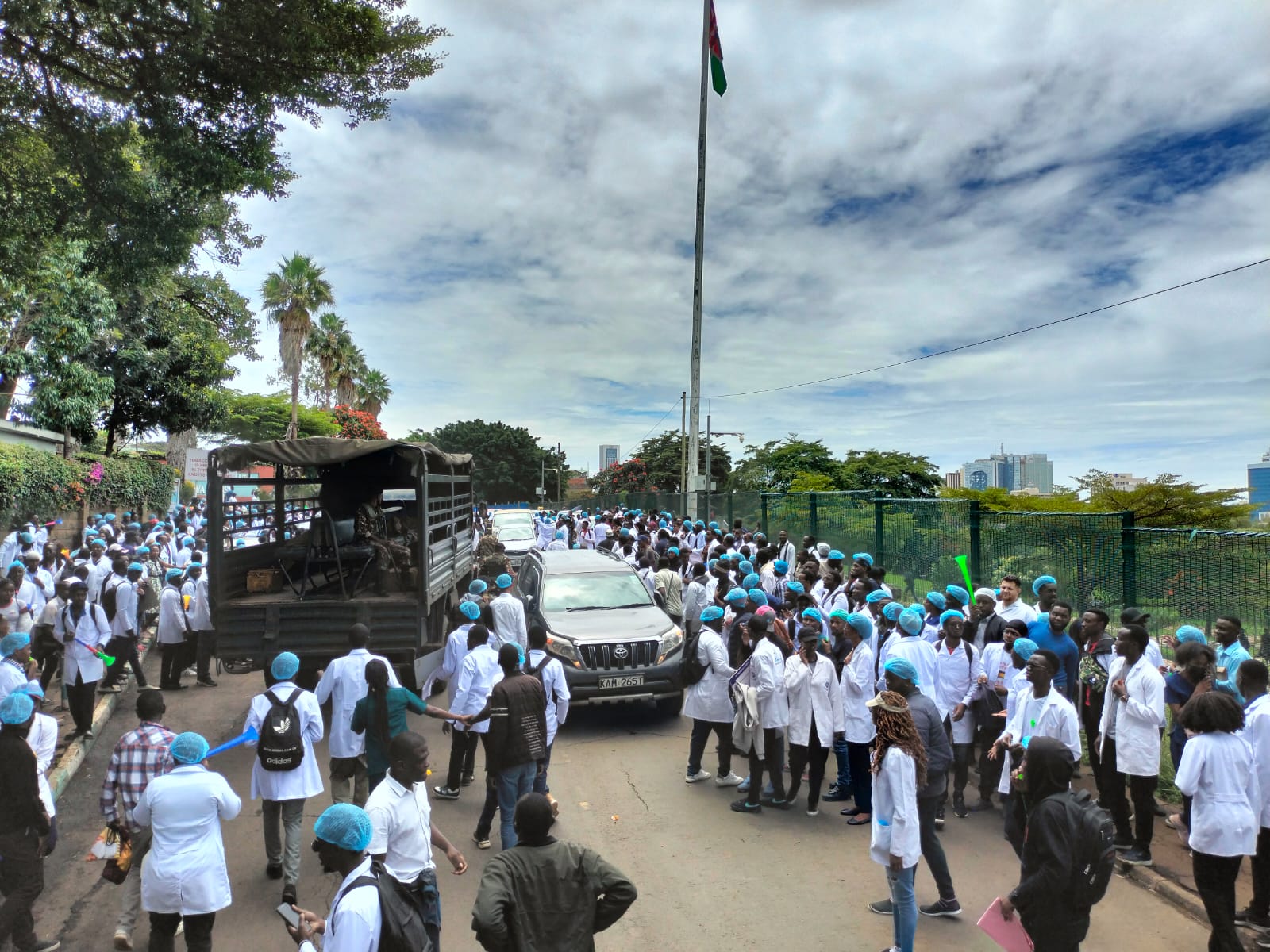
A Health crisis is unfolding in Kenya’s Capital, Nairobi City, as medics who took to the streets last month remain adamant, vowing to down tools until their demands are met.
Public hospitals in Nairobi remain largely paralysed as healthcare workers continue with their strike, insisting that their grievances be fully addressed before returning to duty.
The industrial action, now in its 29th day in Nairobi, has brought essential services across the city to a standstill, with no clear resolution in sight. While most counties have resolved disputes and resumed services, Nairobi and Marsabit counties remain affected.
Healthcare workers accuse the Nairobi County government of ignoring long-standing issues.
Over 7,000 workers, who have agreements with their employers on issues that have persisted for years, say the strike, which began for some on December 22, 2025, and for others on January 8, has yet to yield results.
Clinical officers have particularly faulted the Nairobi and Marsabit county governments for failing to implement provisions of the Collective Bargaining Agreement (CBA), which covers salaries, allowances, promotions, and working conditions.
Peterson Wachira, on Thursday, February 12, 2026, National Chairman of the Kenya Union of Clinical Officers, explained that while a nationwide 36-day strike ended after agreements were reached with most counties, Nairobi and Marsabit remain in dispute.
“We ended our nationwide strike about two weeks ago after reaching agreements with 47 county governments, but Nairobi, Marsabit, and a few national-level issues remain unresolved,” Wachira said.
He added that Baringo County has since settled its matters, allowing health workers to resume duty.
Union leaders say delays in finalising and signing parts of the CBA at the national level, particularly with the Ministry of Health, have compounded frustrations.
“A county as big as Nairobi has allowed health workers to be on strike for more than 50 days. The effort being put in does not match the needs of its residents,” Wachira said, stressing that leaders entrusted with public resources must treat health services as a priority.
Key complaints include delayed salaries, inadequate medical cover, staff shortages that increase workloads, and poor working conditions.
While return-to-work agreements were signed in Nairobi and Marsabit, several critical issues remain unresolved, prompting workers to continue protesting. According to union officials, clinical officers will only return to duty once both county and national governments fully honour their commitments.
Health facilities like Mbagathi, Kenyatta National Hospital and other referral hospitals are reported struggling to cope with the influx of untreated patients due to the work stoppage.
With services stalled, many patients have been turned away or forced to seek care in private facilities, a significant financial burden for low‑income residents.
As pressure mounts, the big question remains: Will Governor Sakaja act before the crisis spirals further out of control? For now, the people of Nairobi wait sick, unpaid, and unheard.
Doctors began their industrial action in last month and were later joined by clinical officers. Both groups insist they will not resume work until all outstanding payments are made and their grievances fully addressed.
Clinical officers say their demands include payment of salary arrears, implementation of a salary review, operationalisation of their collective bargaining agreement (CBA), and permanent employment for staff hired under the Universal Health Coverage programme.
At the national level, the delay in finalising and signing parts of the agreement with the Ministry of Health has added to the frustration. Union officials argue that until both county and national governments fulfil their commitments, clinical officers have little confidence that their concerns will be addressed without sustained pressure.
As the standoff drags on, patients especially those who rely on public hospitals for affordable care remain the hardest hit, with many forced to seek costly private treatment or go without care altogether as Nairobi’s public health system grinds to a halt.