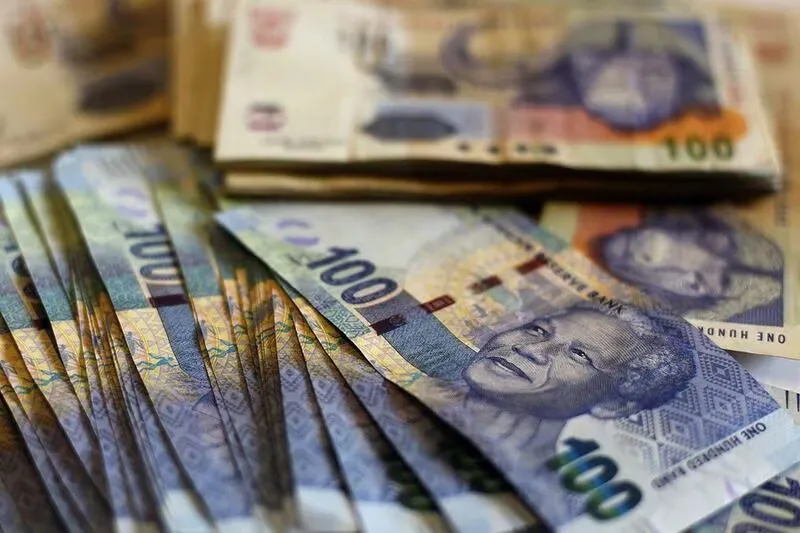
South Africa’s headline consumer inflation edged down to 3.5% year-on-year in January 2026, retreating from December’s 3.6% and landing back at its November 2025 level, according to data released by Statistics South Africa (Stats SA).
While the figure came in slightly above the median economist estimate of 3.4% — trimming forward-rate expectations for a March cut — it broadly affirmed the South African Reserve Bank’s (SARB) view that inflation has peaked and that the structural disinflationary trend remains intact.
The monthly change in the Consumer Price Index (CPI) was 0.2%, matching December’s pace, while core inflation — which strips out food, non-alcoholic beverages, fuel and energy — rose to a near one-year high of 3.4% from 3.3% in December, signalling that services-side pressures have not entirely dissipated.
The data paints a picture of a two-speed inflation landscape: goods prices are retreating convincingly, but services and food remain stubborn battlegrounds for policymakers.
The January reading carries additional significance because it is among the first CPI prints to be assessed against South Africa’s newly adopted 3% inflation target, which Finance Minister Enoch Godongwana announced in his Medium-Term Budget Policy Statement in November 2025, replacing the longstanding 3%–6% band that had been in place for a quarter of a century.
The revised target — set at 3% with a tolerance band of one percentage point either side — immediately changed the calculus for monetary policy, effectively signalling that South Africa is aiming for a structurally lower inflation regime comparable to its major trading partners.
The primary driver pulling headline inflation lower in January was transport — specifically, fuel prices. The fuel index fell 3.7% year-on-year in January, reversing the 0.6% increase recorded in December 2025 and more than offsetting the upward pressures emanating from the food basket. On a month-on-month basis, the transport category turned slightly negative — a meaningful swing factor when compared against December’s numbers, and one that reflects the combined benefit of the rand’s relative strength and lower global crude oil prices.
Stats SA Chief Director for Price Statistics Patrick Kelly confirmed that stable food inflation and lower fuel prices were the twin anchors of the lower headline rate, describing a January reading that returned comfortably to the territory last seen in November.
Goods inflation fell to 2.7% from 3.0%, continuing a clear deceleration that has been building over much of 2025. Services inflation, by contrast, remained sticky at 4.2%, unchanged from the prior month — a pattern consistent with the broader global experience, where the “last mile” of disinflation proves harder to close than the initial reduction in goods prices.
The Food Basket: Relief in Cereals, Alarm at the Meat Counter
Food and non-alcoholic beverages inflation held steady at 4.4% for a third consecutive month — a stable if elevated reading that masks significant divergences within the category. On the encouraging side, cereal inflation fell sharply to 0.6% from 2.1% in December, with white rice recording an 11th consecutive month of deflation at -11.0%. Maize meal inflation eased dramatically, dropping from 9.5% in December to 2.6% in January. Egg prices also offered relief: the average price for a tray of six eggs was R22.90 in January — down from R24.51 a year ago, and well below the peak of R25.85 in December 2023.
The troubling counterweight was the meat category. The annual rate for meat accelerated to 13.5% in January from 12.6% in December — the highest reading since December 2017 when the rate was 13.9%. Three beef products led the surge across all 391 products in the CPI basket: beef steak (31.2%), stewing beef (30.3%), and beef mince (28.0%). Pork prices also climbed sharply, rising 19.5% from 11.5% in December.
Housing, Insurance, and the Services Overhang
Beyond food and transport, the other major contributors to January’s headline CPI reading were housing and utilities, which rose 4.8% year-on-year and contributed 1.2 percentage points to the total. Within the category, electricity, gas and other fuels rose 7.5%. Insurance and financial services — a relatively new index added to the CPI basket from January 2025 — climbed 6.8% on an annual basis, continuing to exert upward pressure on the services component.
January also marked the beginning of the new school year, with Stats SA noting that school uniform items — introduced to the CPI basket in January 2025 recorded higher inflation than the overall clothing and footwear print of 1.2%. School jerseys rose 7.0%, school skirts or dresses 3.2%, and school shoes 4.1% year-on-year.
Food Inflation Outlook: Moderating, but Not Yet Tamed
Economists broadly agree that consumer food price inflation will moderate in 2026. South Africa’s 2025-26 summer grain and oilseed planting area has expanded by 2% to 4.54 million hectares, global rice and wheat supplies remain ample, and a stronger rand is reducing import costs.
For South African consumers, the near-term picture is a mixed one: declining fuel costs and cheaper cereals are providing genuine relief, even as meat, housing and services costs remain elevated. For investors and market participants, the direction of travel is clearer — barring a significant rand sell-off or an unexpected commodity shock, South Africa appears to be on track to deliver on its ambitious new 3% inflation mandate.