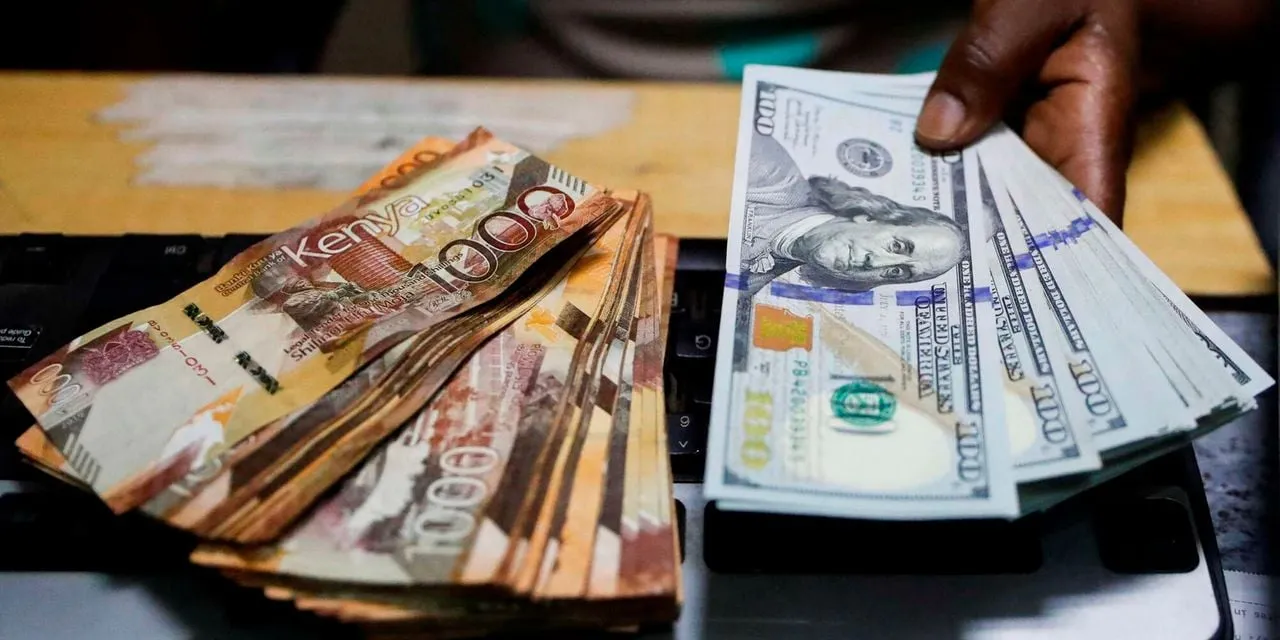
The Central Bank of Kenya's strategic monetary policies and surging diaspora remittances have anchored the shilling, signaling renewed economic resilience amidst global financial tightening.
The Kenyan shilling has found a robust footing, trading with striking stability as investor confidence rebounds on the back of resilient macroeconomic indicators.
According to the Central Bank's Weekly Bulletin released on February 27, 2026, the shilling maintained its value at Ksh129.02 per US dollar as of February 26, holding steady against major currencies, including the sterling pound and euro.
“The Kenya Shilling remained stable against major international and regional currencies during the week ending February 26, 2026. It exchanged at Ksh129.02 per U.S. dollar on February 26, unchanged from February 19.” CBK said.
The foundation of this newfound stability is largely attributed to a confluence of prudent fiscal management and aggressive monetary policy by the Central Bank of Kenya. High-yield infrastructure bonds and a decisive restructuring of external debt, notably the heavily oversubscribed Eurobond issuance, effectively eliminated the immediate risk of a sovereign default. This masterstroke catalyzed a resurgence in foreign investor sentiment.
Furthermore, Kenya has witnessed an unprecedented influx of foreign exchange, driven by the unwavering commitment of its citizens abroad. Diaspora remittances have surged significantly, forming a formidable defense line for the current account. These inflows, coupled with robust export performances in tea, coffee, and horticulture, have fundamentally realigned the supply and demand dynamics within the interbank forex market.
Foreign exchange reserves stood at Ksh1.617 trillion, equivalent to 5.4 months of import cover, comfortably above the statutory minimum of four months. This provides a buffer against external shocks and underpins currency stability.
For the everyday Kenyan and multinational corporations alike, this stabilization is not merely a statistical triumph but a lifeline. A steady shilling dictates the cost of imported fuel, dictates the pricing of basic household commodities, and determines the actual weight of the national debt burden. As global markets grapple with shifting geopolitical tides, Kenya's economic posture provides a critical anchor for East Africa's financial ecosystem.
Meanwhile, headline inflation held relatively stable at 4.3 percent in February, down slightly from 4.4 percent in January. Core inflation, which excludes volatile items, declined to 2.1 percent from 2.2 percent, driven mainly by lower processed food prices.
Non-core inflation eased to 10.1 percent from 10.3 percent, largely due to falling energy costs. The trends indicate sustained price stability, supported by moderated food and fuel prices amid global uncertainties.
The money market remained liquid, with commercial banks holding excess reserves averaging Ksh52.3 billion above the 3.25 percent Cash Reserve Ratio requirement.
This signals that the banking system remains well-capitalized, liquidity constraints are not binding and interbank funding stress is absent.
Liquidity stability plays a central role in FX market confidence. When domestic liquidity is adequate, banks are less likely to aggressively source foreign currency to cover short-term imbalances.
The Kenya Shilling Overnight Interbank Average Rate (KESONIA) stayed stable at 8.77 percent, though interbank transaction volumes saw slight declines during the week ending February 26.
KESONIA reflects overnight borrowing costs between banks and serves as a barometer of short-term liquidity conditions.
A stable KESONIA implies: Balanced liquidity supply and demand, Predictable funding costs and Effective monetary policy transmission.
In prior stress periods, interbank rates often spiked, signaling funding tightness. The current steady rate suggests that the central bank’s liquidity management framework is functioning efficiently.
Treasury bills dominated attention, with the February 26 auction attracting bids totalling Ksh58.5 billion against an advertised Ksh24 billion, a 243.9 percent oversubscription.
This level of demand indicates : Strong domestic liquidity, High investor appetite for government securities and Confidence in Kenya’s sovereign credit profile at the domestic level.
When investors prefer holding shilling-denominated government securities rather than converting into foreign currency, it reduces pressure on the exchange rate.
Oversubscription also suggests that investors view current yields as attractive relative to inflation and alternative investments.
Strong domestic demand for government debt helps the central bank maintain exchange rate stability without aggressive market intervention.
Yields on 91-day bills fell to 7.580 percent, while 364-day bills dropped to 8.789 percent, reflecting expectations of continued accommodative monetary conditions following a recent CBR reduction. The 182-day paper saw a marginal uptick.
While domestic conditions appear stable, global risks persist. Key external factors include U.S. Federal Reserve policy trajectory, Commodity price fluctuations, Geopolitical tensions and Global trade policy shifts.
Kenya, as a net importer of fuel and capital goods, remains sensitive to global price shocks. However, stable foreign exchange reserves and disciplined domestic liquidity management provide a buffer against external volatility.
Kenya’s exchange rate outlook depends on sustained macro alignment. Key supportive factors include the strong domestic demand for government securities, healthy banking sector liquidity, stabilized interbank rates and improved FX management frameworks.
If inflation remains contained and fiscal discipline holds, the shilling could maintain relative stability over the medium term. However, Kenya’s structural exposure to external shocks means that vigilance remains essential.
While the Kenya shilling’s stability at Ksh129.02 per U.S. dollar reflects improved monetary management and liquidity conditions, the durability of this equilibrium will depend on several interconnected macroeconomic variables over the coming quarters.
Currency stability in emerging markets is rarely accidental. It is typically the product of disciplined liquidity management, credible policy signaling, balanced capital flows, and supportive external conditions. The coming months will test whether Kenya’s current FX calm represents a transitional pause or a structurally anchored phase.