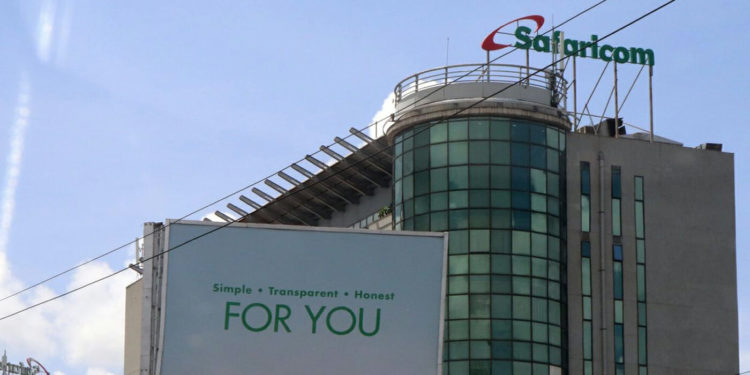
Kenya’s National Assembly has approved the government’s plan to sell a 15 percent stake in Safaricom Plc to South Africa’s Vodacom Group, paving the way for one of the country’s largest corporate transactions in recent years. The decision, passed on March 11, 2026, allows the government to proceed with a partial divestiture of its shares in the country’s leading telecommunications operator.
The sale is expected to raise Sh204.3 billion from the share transaction itself, with total government inflows across the broader three part deal reaching approximately Sh244.5 billion. The government plans to channel proceeds toward the National Infrastructure Fund, a financing vehicle designed to support large scale development projects in transport, energy and logistics. The approach reflects a shift toward alternative financing mechanisms at a time of tightening fiscal conditions, with private sector participation increasingly expected to meet the country’s development needs.
Treasury under pressure
The approval comes at a time when the government is grappling with severe budgetary constraints. The National Assembly’s Finance and National Planning Committee had warned that only Sh29.8 billion would remain for development expenditure in the 2025/26 financial year after meeting mandatory obligations.
Out of projected ordinary revenue of Sh3.321 trillion, Sh1.097 trillion will go toward servicing interest on Kenya’s ballooning public debt, while Sh960 billion will cover the public wage bill. According to the Parliamentary Budget Office, Kenya’s public debt has now reached Sh12 trillion.
Further allocations include Sh415 billion for county governments and Sh205.2 billion for pensions and Consolidated Fund Services. Civil service pensions alone will consume Sh34.4 billion, while the Equalisation Fund has been allocated Sh10.6 billion.
Finance and National Planning Committee Chairperson Kuria Kimani told public forums that the shrinking fiscal space made divestiture unavoidable. He also disclosed that the government held Sh83.236 billion in guaranteed debt in the 2024/25 financial year, including liabilities linked to Kenya Ports Authority, KenGen and Kenya Airways.
Details of the Safaricom deal
Under the approved plan, the government will sell a 15 per cent stake in Safaricom at Sh34 per share — a price set at a 23.6 per cent premium above the six-month volume-weighted average as of December 2, 2025. The transaction is expected to generate about Sh204.3 billion in gross proceeds.
Six million shares will be sold to Vodacom, which already owns 40 per cent of Safaricom.
As part of the arrangement, the State will also receive an advance payment of Sh40 billion against future dividends from the remaining 20 per cent stake. About Sh55 billion will later be repaid over six years using dividends from the retained shares, after which the government will resume receiving full dividend payouts.
Safeguards and oversight
Vodacom has committed that the acquisition will not trigger job losses for at least three years. Safaricom will retain a Kenyan chairperson and independent directors to preserve local oversight and governance standards.
The telecommunications firm’s corporate social investment arm, the Safaricom Foundation, will also continue receiving support, according to assurances given during the approval process.
What Next?
With Parliament’s green light, the transaction now moves to implementation, marking one of the most significant State divestitures in recent years as Kenya seeks to stabilise its finances while maintaining a stake in one of its most profitable companies.
The approval, followed a joint report from the Departmental Committee on Finance and the Public Debt and Privatisation Committee, which reviewed the proposal under Sessional Paper No. 3 of 2025. Presenting the report, committee co-chair Shurie told MPs:
“I beg to give notice of the motion that this House adopts the joint report of the departmental committees on Finance and Public Debt and Privatisation on the consideration of Sessional Paper No. 3 of 2025 on partial divestiture of Safaricom.”
The regulatory path is clearing. COMESA approved the deal on March 3, 2026, finding no harm to regional competition. Pending approvals from the Capital Markets Authority and the Communications Authority of Kenya remain outstanding before the transaction is executed through a block trade on the Nairobi Securities Exchange.