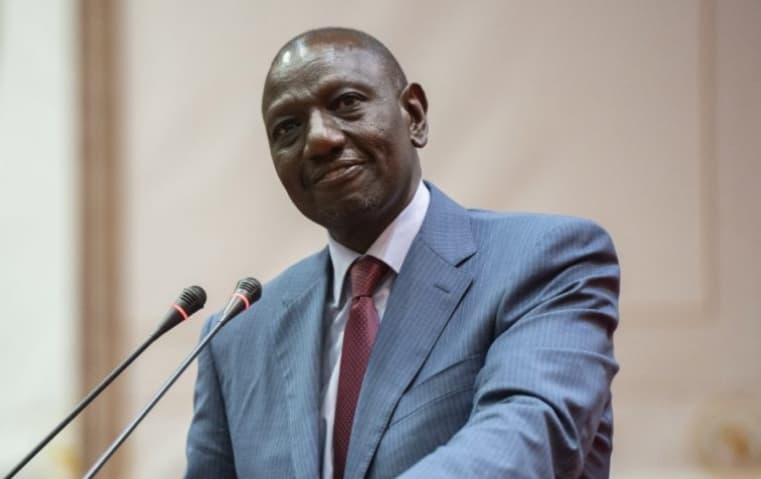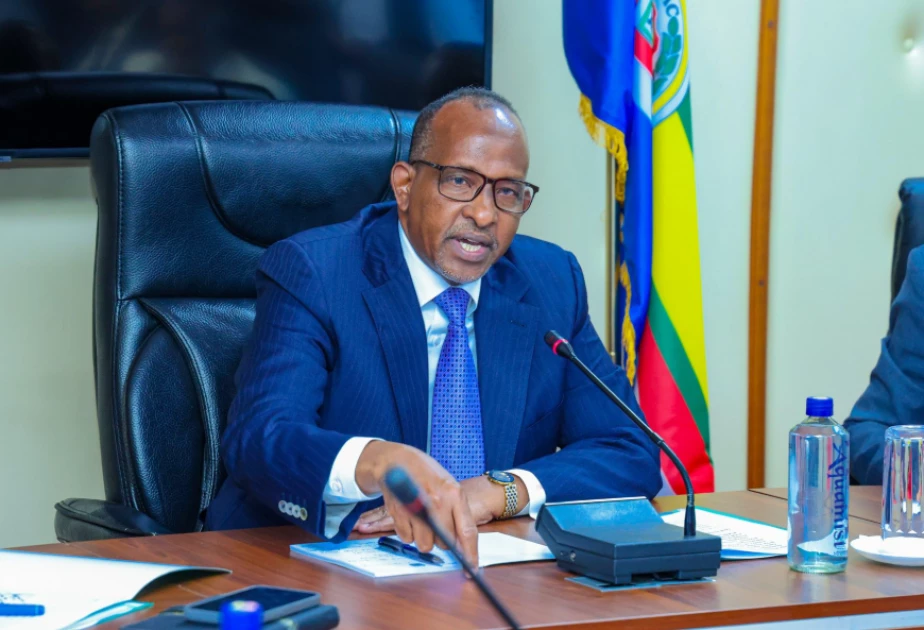
Kenya is sitting on a growing mountain of retirement savings — and according to Health Cabinet Secretary Aden Duale, the country is not making nearly enough use of it.
On March 9, 2026, Duale used his social media platform to call attention to a paradox at the heart of Kenya’s financial landscape: pension and collective investment funds have grown to an estimated Ksh2.81 trillion, yet the overwhelming majority of that capital sits parked in Treasury bills and government bonds — generating safe but modest returns while the country’s infrastructure, small businesses, and housing sectors cry out for long-term investment.
“Kenya’s domestic capital holds immense potential, with pension and other collective funds totalling Ksh2.81 trillion, patient capital that can support national development while securing the future of pensioners,” Duale wrote.
His remarks were brief, but they landed in the middle of a much larger policy conversation — one that now stretches from the Retirement Benefits Authority’s proposed structural reforms, to President William Ruto’s newly enacted pension laws, to a growing national debate about who gets to access retirement savings and when.
The scale of Kenya’s pension growth over the past decade is genuinely remarkable. According to the Retirement Benefits Authority (RBA), total pension fund assets surged to Ksh2.23 trillion in December 2024, up from Ksh1.84 trillion in 2023 — a 17.5% increase in a single year. The sector has since continued its climb, with AUM reaching Ksh2.531 trillion by June 2025, representing a further 12.22% growth over just six months.
Several forces have driven this expansion. The implementation of the National Social Security Fund (NSSF) Act of 2013 has progressively raised contribution limits, with the upper limit jumping from Ksh18,000 to Ksh36,000 during the second phase of implementation. Membership in pension schemes has also grown, reaching 7.53 million in 2024, driven by public awareness campaigns and targeted outreach. The pension sector now represents roughly 14.6% of Kenya’s GDP, making it the second-largest domestic savings pool after bank deposits.
But underneath this impressive growth story lies a structural problem that Duale and others have identified: the money is not working hard enough. As of mid-2025, government securities alone accounted for 52.53% of total pension assets. Quoted equities absorbed a further portion, while alternative asset classes — private equity, infrastructure bonds, REITs, and offshore investments — accounted for a thin and growing but still limited share. The top 5 fund managers controlled 91.9% of total externally managed assets, a concentration that further limits the diversity of investment strategy across the sector.
Duale’s concern is not that Treasury bills are bad investments — they are, by definition, among the safest. The problem is one of opportunity cost and economic purpose. When more than half of every pension shilling sits in risk-free government paper, it crowds out the kind of long-term, patient capital that could finance roads, hospitals, affordable housing, and growing businesses. It also means that pension funds are, in effect, lending money back to a government that already struggles with fiscal pressures — rather than channelling those funds into the productive economy.
The case for redirecting even a small portion of pension assets into alternative investments is compelling. Andersen Kenya, in a detailed analysis of Kenya’s pension sector, estimated that redirecting just five percentage points of total AUM — roughly Ksh115 billion — into growth-oriented assets could seed mid-market private equity funds capable of recapitalising 150 to 200 firms, infrastructure trusts capable of financing two or three PPP roads or renewable energy parks, and SME securitisation pools capable of extending an estimated 50,000 working-capital loans.
The Kenya Pension Funds Investment Consortium (KEPFIC) already exists as a vehicle for exactly this purpose. Over the next five years, KEPFIC aims to mobilise USD 250 million from Kenyan pension funds and offshore co-investors for investment in impactful infrastructure assets, with an explicit focus on pooling capital from smaller schemes to give them access to infrastructure deal flow that would otherwise be beyond their reach individually. The model is sound; the question is whether the regulatory, governance, and incentive environment makes it attractive enough for pension trustees — who are legally obligated to prioritise the safety of members’ funds — to commit capital at scale.
Under current RBA investment regulations, schemes are subject to explicit exposure ceilings: up to 90% in government bonds, 70% in quoted equities, 30% in immovable property, 15% in offshore markets, and 10% in private equity. These caps reflect a conservative, capital-preservation philosophy — reasonable given the regulator’s mandate to protect members. But critics argue that raising the alternative asset ceiling, particularly for well-governed schemes with independent custodial oversight, would allow pension capital to do more economic work without meaningfully increasing risk. The RBA has itself acknowledged this, noting in its statistical digests that the sector needs to move beyond its current overconcentration in fixed income.
There are promising early signals. Private equity investments grew by 23.82% to Ksh20.1 billion in the first half of 2025, and offshore investments surged by 30.22% to Ksh84 billion over the same period — suggesting that pension fund managers are already beginning to diversify, even if cautiously. Real estate investment trusts (REITs) and Shariah-compliant funds also recorded strong growth. The trend exists; Duale’s call is for policymakers and regulators to accelerate and formalise it.
The broader context for Duale’s call is Kenya’s growing political appetite for deploying domestic savings into national development. Whether Duale’s call translates into concrete policy action will depend on the RBA’s ability to advance reforms, the government’s willingness to adjust investment regulations, and pension trustees’ readiness to accept higher-returning but less liquid asset allocations for the members they serve.