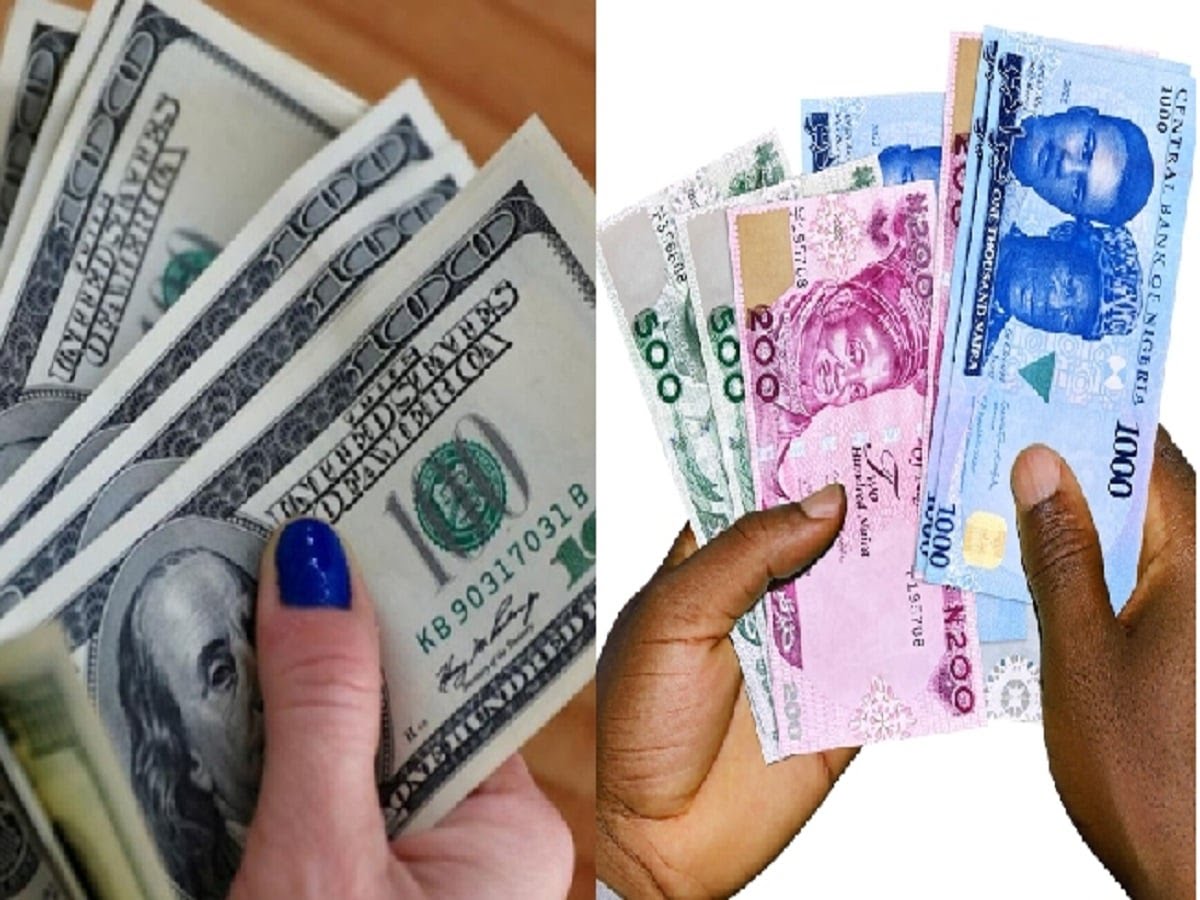
The Nigerian naira rebounded in the official foreign exchange (FX) market mid-week, snapping a week-long streak of losses as liquidity conditions improved and ended the month on a slightly higher note compared to March.
At the close of trading on April 30, the naira appreciated by N3.76 against the dollar at the Nigerian Foreign Exchange Market (NFEM), ending the month at N1,374.94 compared to N1,378.70 at the beginning of April, representing a gain of 0.27 percent.
In the parallel market, popularly known as the blackmarket, the local currency also strengthened, appreciating by N10 to close at N1,400 per dollar, a 0.7 percent gain from its opening level of N1,410.
The official Dollar to Naira exchange rate is determined within regulated trading systems overseen by the Central Bank of Nigeria. However, discrepancies between official and parallel market rates often reflect structural supply-demand imbalances within the forex market.
While policymakers continue to introduce reforms aimed at strengthening reserves and improving liquidity transparency, the black market typically responds more quickly to immediate demand and supply conditions. The gap between official and informal rates remains a key indicator of overall forex market stability.
Dollar to Naira: Key Factors Influencing Rate
Several economic dynamics are shaping the current Dollar to Naira black market exchange rate:
Improved Informal Supply : An increase in short-term dollar availability within the parallel market may have contributed to the slight easing in rates.
Persistent Import Demand : Nigeria’s heavy reliance on imported goods continues to generate steady demand for foreign currency among traders and manufacturers.
Inflationary Pressures: Persistent inflation weakens purchasing power and encourages some households and investors to hold dollars as a hedge against further naira depreciation.
Market Expectations : Expectations surrounding oil revenue performance, foreign reserve levels and broader macroeconomic policy direction continue to influence short-term exchange rate movements.
FX liquidity hits $10bn in April
Meanwhile, Nigeria’s foreign exchange (FX) market rose to about $10 billion, slightly above the level recorded in March, according to data published by the Central Bank of Nigeria (CBN).
CBN data showed that total FX turnover stood at $10 billion in April, compared to $9.92 billion in March, reflecting a modest increase of 0.8 percent month-on-month.
Trading activity strengthened significantly during the period, with total deals rising to 7,889 in April, representing a 28.61 percent increase from 6,134 trades recorded in March.
A breakdown of the figures indicates that the Nigerian Foreign Exchange Market (NFEM) accounted for the bulk of transactions, recording 5,795 deals valued at $8.14 billion. This represents a 28.18 percent rise in deal volume compared to 4,521 trades in March, although turnover declined slightly by 0.6 percent from $8.19 billion.
The interbank segment also recorded strong growth, with trade deals rising by 29.82 percent to 2,094 in April from 1,613 in March. Turnover in the segment increased by 7.5 percent to $1.86 billion, up from $1.73 billion in the previous month.
Despite the improved liquidity conditions, Nigeria’s external reserves declined during the period, falling by $810 million or 1.65 percent to $48.37 billion as of April 29, from $49.18 billion at the start of the month.
Speaking on the development, Olayemi Cardoso, governor of the CBN, said the decline in reserves is not a cause for concern, noting that it reflects normal market dynamics in a more liberalised FX system.
According to him, Nigeria’s reserve position remains strong, currently covering about 13 months of imports, well above international benchmarks. He added that fluctuations in reserves are expected in a market-driven system where investors are free to enter and exit.
He emphasised that the FX market has evolved from a system previously dominated by the central bank to one driven by liquidity and investor confidence, reducing the need to focus excessively on short-term movements in reserves.
Cardoso also highlighted ongoing efforts to boost diaspora remittances, noting that inflows are currently averaging about $600 million monthly, with a target of reaching $1 billion per month by the end of the year.
He explained that the CBN has focused on removing bottlenecks and improving access to the formal remittance channel, including enabling diaspora Nigerians to use the banking system more seamlessly through initiatives such as the Bank Verification Number (BVN) framework and closer collaboration with international money transfer operators.
The apex bank, he said, has created the enabling environment and is now encouraging commercial banks to develop products that will attract diaspora funds into the formal FX market.
Market analysts note that improved liquidity and growing investor confidence now allow the market to function more independently, providing a positive outlook for the Nigerian currency in the coming weeks.