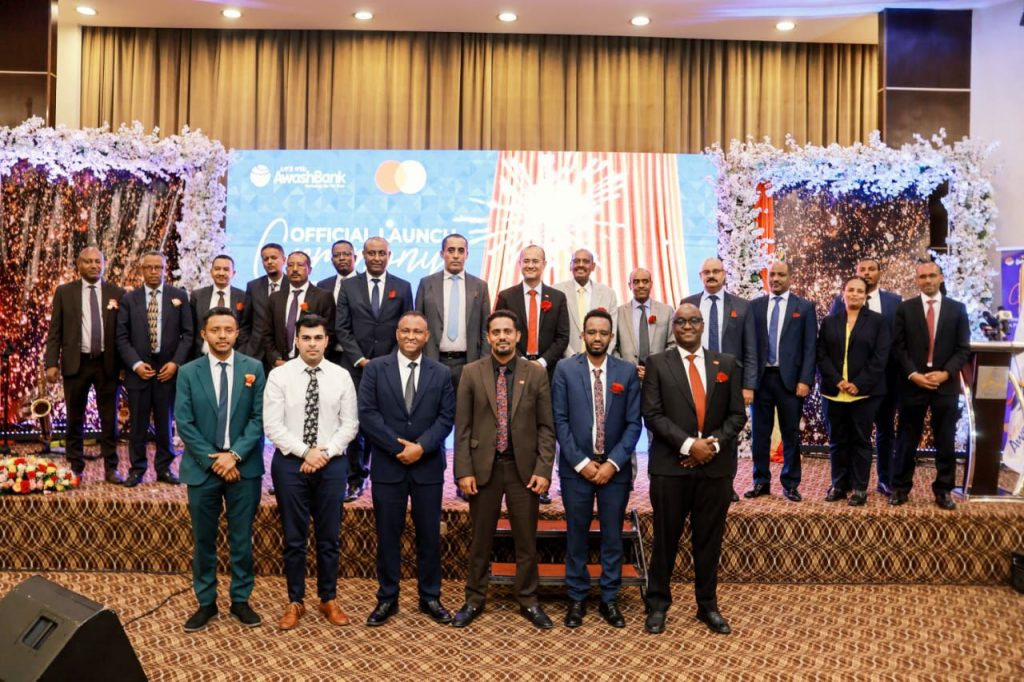
Ethiopia's largest private lender Awash Bank has unveiled a new portfolio of five Mastercard-branded international payment cards, after disclosing it processed more than US$60 million in foreign exchange through its existing cards last year, with over US$55 million in transactions successfully completed.
Held on October 8, 2026 at the bank's headquarters in Addis Ababa, the launch marks a major escalation in Ethiopia's fast-emerging international payments battle, driven by the liberalization of the foreign exchange market.
Awash Bank partnered with Mastercard to introduce the World Elite Debit Card, Platinum Prepaid Card, Gold Prepaid Card, Corporate Prepaid Card and Awash Plus domestic contactless debit card, plus a virtual prepaid card option for online and remote payments. The bank said four of the five cards are firsts for the Ethiopian market.
Chief Executive Officer Tsehay Shiferaw stated that the products were developed in response to changing customer needs and the government's foreign exchange reforms.
He revealed that in the last budget year alone, Awash Bank authorized over $60 million through its existing international prepaid cards, of which more than $55 million in transactions were completed by customers for travel, e-commerce, education and business.
"The figures earned the bank recognition from Mastercard and convinced management that demand warranted a wider range of cards. The three-year partnership with Mastercard has already served more than 20,000 customers with international prepaid cards," Tsehay said.
Awash Bank's network explains the ambition. The CEO said the bank now has more than 17 million customers, over 1,010 branches, 10 digital branches, more than 1,200 ATMs, over 3,200 point-of-sale terminals and over 20,000 agents.
He added that more than 4 million customers use its payment cards and more than 5 million use its Awash Birr Pro mobile app. Its digital platforms processed more than 1 trillion birr in transactions over a period of a few months.
The new portfolio is designed to segment the market. The World Elite Debit Card is linked to customers' foreign currency accounts and can be used without submitting travel documents, a major friction point previously. Other products cater to customers making online payments, travellers requiring prepaid foreign currency services and companies seeking better control over travel and operational expenses.
Tsehay described the corporate card as new to the Ethiopian market, saying it lets companies manage foreign expenses such as travel, accommodation and online payments from within Ethiopia.
Mastercard's Vice President for East Africa and the Indian Ocean Islands, Shahwel Sheikh, described the launch as a milestone for the company's partnership with the Ethiopian banking sector, saying it would widen digital payment choice and build trust in Ethiopia's payments ecosystem.
Both executives pointed to tokenization as the next frontier, which replaces card details with secure digital tokens so that phones, rings or other devices can be used to pay.
Tsehay said the Awash Plus card is ready for tokenization, while Sheikh said the technology could turn everyday items into payment tools.
Processing and technology implementation is being handled by Premier Switch Solutions (PSS), the bank's card processing partner.
The expansion comes eight months after the National Bank of Ethiopia (NBE) relaxed restrictions on international card issuance on February 11, 2026, allowing authorised banks to provide globally recognised payment cards to foreign currency account holders for overseas retail transactions, including e-commerce, provided they have sufficient foreign currency balances.
Under the revised framework, customers can use international payment cards subject to applicable foreign-exchange requirements and available funds. The changes form part of a broader reform programme that began in July 2024, when Ethiopia introduced a market-based foreign-exchange system.
That amendment marked another step in the government's efforts to liberalise Ethiopia's foreign exchange market following the introduction of a market-based exchange rate regime in July 2024.
Awash Bank was not alone. On the same day, Oromia Bank also launched three international cards under its Oroo brand - Oroo Visa Classic, Oroo Visa Gold and Oroo Visa Platinum - through a partnership with Visa and PSS, targeting overseas education, travel, employment and e-commerce payments.
These simultaneous launches reflect a shift in Ethiopia's banking industry, where international card services, once largely confined to a limited segment of customers, are emerging as a competitive battleground.
The new Mastercard rollout builds on Awash Bank's earlier 2024 launch of its first prepaid Mastercard and its Mastercard Payment Gateway Services (MPGS), which allows local merchants with websites and apps to accept international online payments. It also comes as the bank intensifies its digital push after being named Ethiopia's Best Bank for 2026 by Global Finance for the fifth consecutive year, posting $140 million in profits and a 57.3 percent return on equity, and listing on the Ethiopian Securities Exchange main market in April.