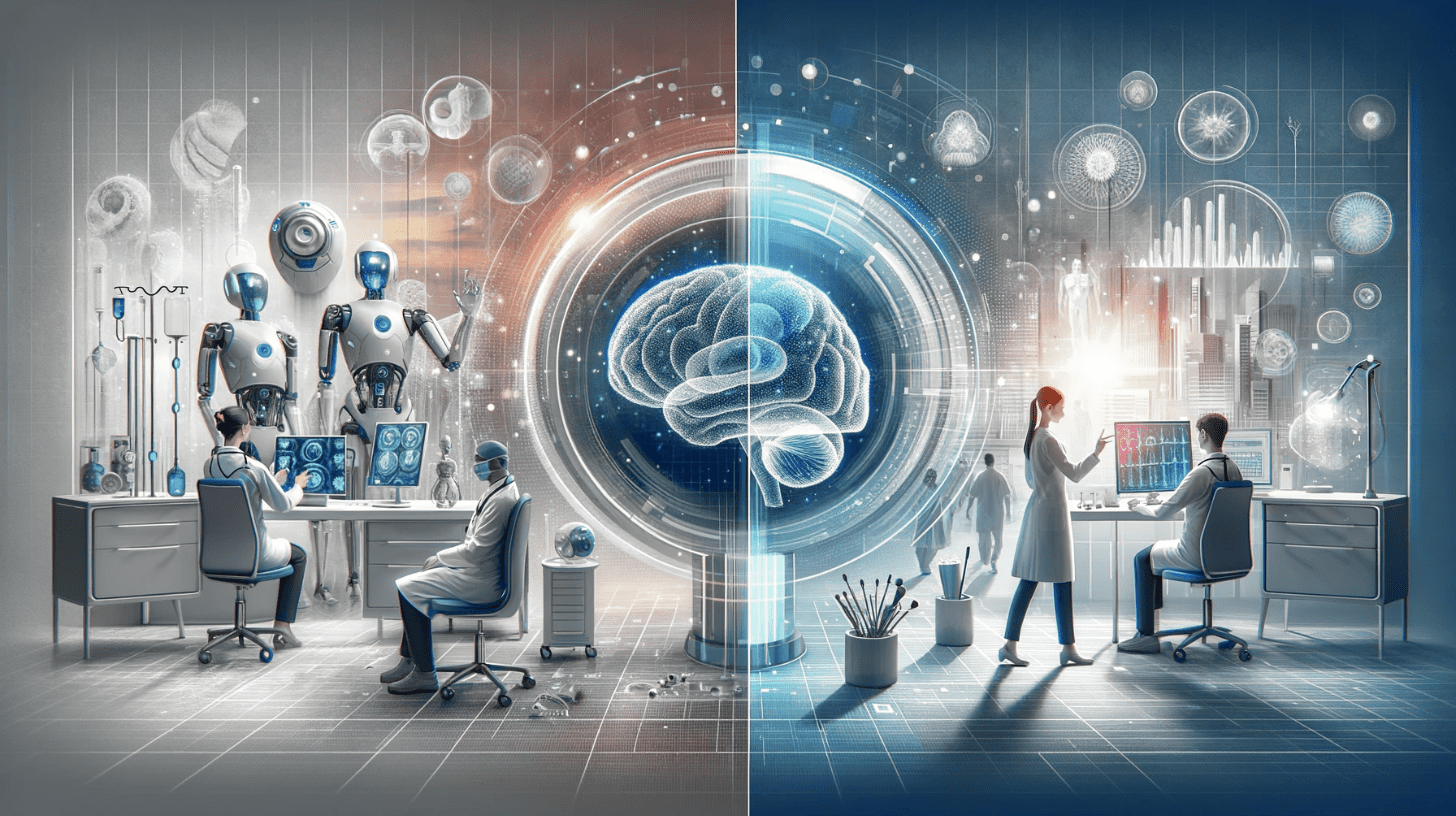
Artificial intelligence is changing how healthcare works. What was once experimental is now embedded in the daily routines of clinicians, shaping how conditions are diagnosed, how patients are supported, and how care is delivered.
As machine learning, natural language processing, and predictive analytics mature, AI is taking on a clearer role across the healthcare ecosystem. The technology is easing administrative load, strengthening clinical accuracy, and improving how systems coordinate care. Its potential to lift both outcomes and efficiency is becoming more visible with each new deployment.
What Is AI in Healthcare?
AI in healthcare refers to software and algorithms designed to interpret clinical information, recognise patterns, and support decisions that traditionally relied on human cognition. These systems draw from large datasets to help clinicians, researchers, and health organisations act with greater clarity and consistency.
Core AI Technologies in Healthcare
Machine Learning (ML): Algorithms that learn from data to make predictions or classifications.
Natural Language Processing (NLP): Enables interpretation of human language in clinical notes, patient records, and dialogue.
Computer Vision: Extracts clinically relevant information from medical images such as X‑rays and MRIs.
Robotics and Automation: Assists with surgeries, lab workflows, and patient care tasks..

AI Applications in Clinical Care
Diagnostic Accuracy and Imaging
AI models trained on large datasets have demonstrated remarkable proficiency in interpreting medical images, often outperforming traditional methods in detecting conditions such as cancers, fractures, and neurological abnormalities.
Radiology: AI systems can analyze imaging scans for early signs of disease.
Dermatology: Computer vision detects skin lesions with high sensitivity.
Pathology: Automated analysis speeds up slide interpretation and reduces human error.
Predictive Analytics and Risk Stratification
AI can assess vast amounts of patient data to predict the likelihood of disease progression, hospital readmissions, or adverse events. These predictive tools support preventive care and resource planning.
Personalized Treatment Planning
By analyzing genetic, environmental, and lifestyle data, AI can help tailor treatment plans to individual patients, making precision medicine a clinical reality.
AI’s Role in Administrative Efficiency
Beyond clinical applications, AI is dramatically improving administrative workflows that traditionally consume significant time and resources.
Automated Documentation – AI tools such as smart scribes and ambient systems capture clinical interactions automatically, reducing the need for manual charting and decreasing clinician burnout.
Scheduling and Resource Optimization – Predictive models improve appointment scheduling, reduce no‑shows, and optimize staff allocation.
Billing and Coding Assistance – Algorithms can suggest appropriate billing codes based on clinical documentation, minimizing errors and accelerating revenue cycles.

AI and Patient Engagement
AI is also enhancing how patients interact with healthcare systems.
Virtual Assistants and Chatbots – Patients can receive timely answers to questions, appointment reminders, and guidance through chatbots and voice assistants.
Remote Monitoring and Wearables – AI analyzes data from wearable devices to identify health trends, send alerts, and support chronic disease management.
Ethical and Regulatory Considerations
While the benefits of AI are substantial, ethical and regulatory challenges must be carefully navigated.
Data Privacy and Security – Protecting patient data is paramount. AI systems must comply with stringent data protection regulations and implement robust security measures.
Bias and Fairness – AI models trained on biased data sets can perpetuate disparities in care. Ensuring representational data and fairness testing is critical.
Transparency and Explainability – Clinicians and patients must understand how AI arrives at decisions. Transparent models with explainable outputs build trust and support clinical adoption.
Integration with Electronic Health Records
Effective AI solutions must integrate seamlessly with existing health IT systems, particularly EHRs. This ensures that insights are actionable at the point of care and that workflows remain efficient rather than fragmented.
Success Factors for Integration
Interoperability Standards
Real‑Time Data Access
User‑Friendly Interfaces
Training and Support for Clinicians
Challenges in AI Adoption
Despite its promise, adoption of AI in healthcare faces real‑world hurdles.
Cost and Infrastructure – Implementing AI systems requires investment in hardware, software, and staff training.
Talent and Skills Gap – Healthcare organizations must cultivate data science expertise and clinical informatics proficiency to support AI initiatives.
Clinician Skepticism and Change Management – Successful adoption hinges on clinician trust and willingness to integrate AI into care processes. Transparent evaluation and iterative feedback help build confidence.
Future Trends in AI Healthcare
The next frontier of AI in healthcare promises even greater innovation.
Genomic Medicine- AI’s ability to process complex genomic data will drive breakthroughs in rare disease diagnosis and targeted therapies.
Real‑Time Decision Support – AI assistants could soon offer real‑time clinical guidance based on evolving patient data.
Autonomous Clinical Systems – In some scenarios, AI may independently monitor patient status and recommend interventions, particularly in intensive care and chronic disease settings..

Conclusion
AI is shaping a future where healthcare becomes more precise, connected, and sustainable. Its impact is already clear in diagnostics, documentation, operational efficiency, and patient engagement. Ethical, regulatory, and integration challenges remain, but none outweigh the potential benefits when AI is introduced responsibly.