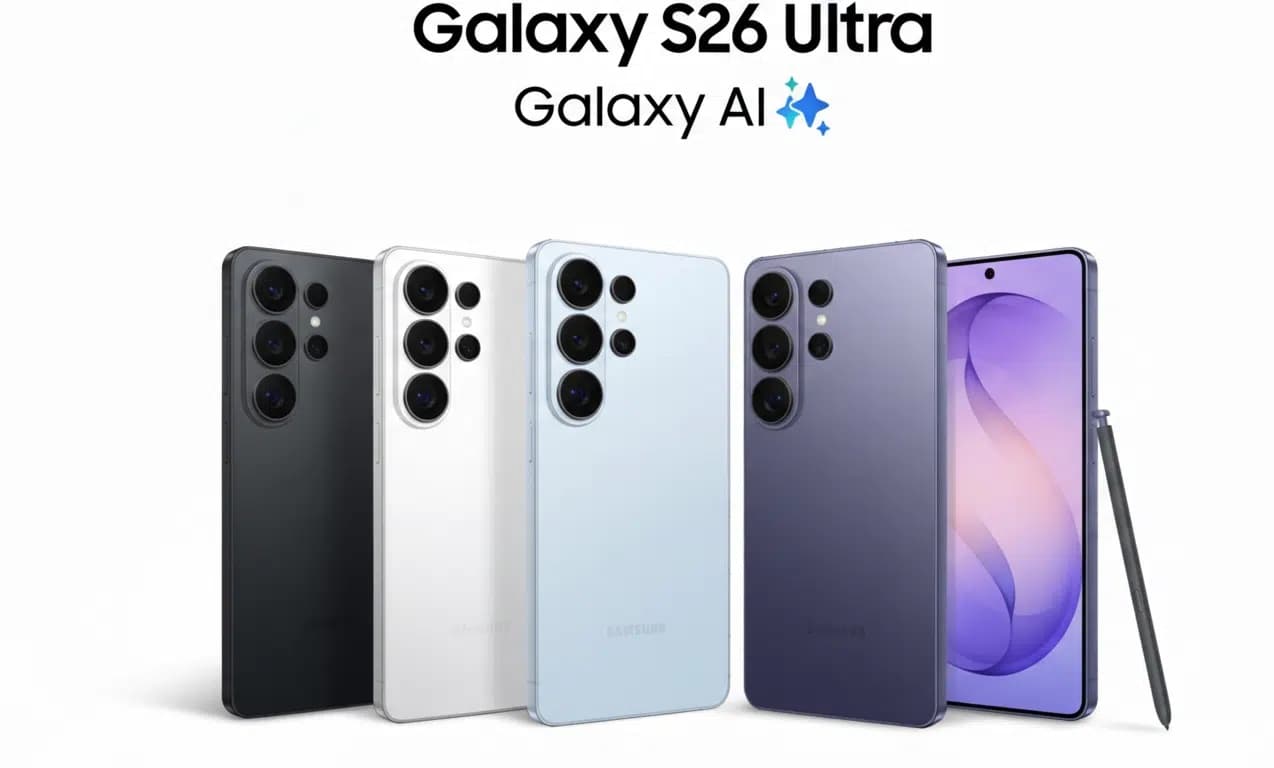
The Android flagship race just tightened. Samsung’s Galaxy S26 family arrives with aggressive hardware upgrades and a clever new display trick, while Google’s Pixel 10 line counters with lower entry prices and smarter software. On paper, this is the closest Samsung–Google duel in years—and it puts real pressure on buyers who usually default to one brand.
Pricing and value: how storage tiers change comparisons
Sticker math favors Google at first glance. Pixel 10 starts at $799, Pixel 10 Pro at $999, and Pixel 10 Pro XL at $1,119. Samsung begins higher: Galaxy S26 at $899.99, S26+ at $1,099.99, and S26 Ultra at $1,299.99. But storage flips the narrative—Samsung starts at 256GB across the board, while the base Pixel 10 and 10 Pro ship with 128GB. Bumping the Pixels to 256GB adds $100, bringing them neck and neck with S26 and S26+ on like-for-like storage.
At the top end, Samsung’s 1TB S26 Ultra hits $1,799.99, while Google’s 1TB Pixel 10 Pro and Pro XL come in lower at $1,449 and $1,549, respectively. If you need terabytes, Google undercuts Samsung by hundreds. If you want more storage at a lower tier, Samsung’s standard 256GB makes the base S26 a stealth value pick.
Design and durability: materials, weight, protection
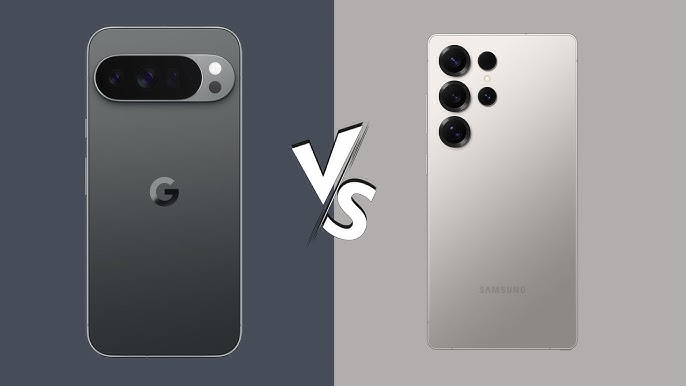
All six phones are IP68-rated with aluminum frames, but the in-hand feel diverges. Samsung’s trio is notably thinner and lighter than their Pixel counterparts, an everyday comfort you notice after an hour of doomscrolling. Samsung uses Corning’s Gorilla Glass Armor on S26 and S26+, and Gorilla Armor 2 on Ultra; Google opts for Gorilla Glass Victus 2 across the Pixel 10 series. The camera layouts remain instantly recognizable: Samsung’s vertical stack versus Google’s signature Camera Bar.
Displays and new tricks: refresh rates and privacy tech
Expect excellent panels either way. The S26 Ultra stretches to 6.9 inches and, like the S26 and S26+, supports up to 120Hz with adaptive refresh. The base Pixel 10 is the outlier, lacking the 1–120Hz LTPO sweep found elsewhere, which can affect both smoothness and idle power savings. Google counters with higher quoted peak brightness on Pixel 10 models—useful for summer sun and HDR.
Samsung’s curveball is Privacy Display on S26 Ultra. It narrows viewing angles to foil shoulder surfers and can be applied systemwide, per app, or even to notification zones. For commuters and frequent flyers, that’s a meaningful quality-of-life feature—not a gimmick. Display analysts have long noted that angle management and polarization can make or break usability in bright environments; this answers that pain point with a hardware-first approach.
Performance and AI: processors, RAM, and software focus
Under the hood, Samsung taps a customized Snapdragon 8 Elite Gen 5 for Galaxy across the lineup, with at least 12GB of RAM (the 1TB Ultra climbs to 16GB). Google sticks with its Tensor G5, tuned for on-device AI, pairing 12GB in Pixel 10 and 16GB in the Pro models. Expect the Snapdragon to lead in raw GPU throughput and sustained gaming, while Tensor leans into ML workloads, live transcription, and context-aware features.
Both run Android 16 with seven years of OS and security updates, a milestone that aligns with enterprise expectations reported by industry watchers like IDC. AI extras are the new battleground: Samsung’s enhanced Circle to Search can identify multiple items in one frame, while Google’s proactive assistant features—like Magic Cue-style suggestions—work quietly in the background. Pixels historically receive new Android features first; Samsung counters with deeper productivity tools in One UI.
Cameras in the real world: sensors, zoom, and video
Specs suggest different philosophies. S26 Ultra packs a 200MP main camera, 50MP ultra-wide, and dual telephotos (5x and 3x), with 8K video at 30fps. The S26 and S26+ carry a 50MP main, 12MP ultra-wide, and 10MP 3x tele. Pixel 10 loads a 48MP main, 13MP ultra-wide, and 10.8MP 5x tele; the Pro models add a 42MP front camera for sharper video calls and crops. Pixels top out at native 4K60, though the Pro models can output 8K via post-processing pipelines.
Historically, blind camera tests run by prominent reviewers have often favored Pixels for point‑and‑shoot consistency and skin tones, while Samsung tends to win at long zoom and video flexibility. Expect more of that: Ultra’s dual-tele setup should deliver cleaner reach beyond 5x, and Google’s computational HDR and face unblur remain trusted tools for everyday shots.
Battery and charging: real-world endurance and speeds
Baselines are close: every phone supports at least 25W wired and 15W wireless charging. Pixels add magnetic alignment via PixelSnap across the board; Samsung lacks built-in magnets, so you’ll need a case to replicate the experience. Real endurance will hinge on display efficiency—adaptive 1–120Hz panels typically save power in static use—and on silicon thermals. Early adopters should keep an eye on sustained battery tests once units are broadly available.
Connectivity and extras: SIM choices and 5G capabilities
The fine print matters. Pixel 10 is eSIM-only, simplifying travel for some and complicating it for others; Samsung keeps both physical SIM and eSIM. For 5G, S26+, S26 Ultra, and all Pixel 10 models support sub‑6GHz and mmWave, while the base S26 is sub‑6 only—a consideration if you frequent stadiums or dense city cores where mmWave pops up, as noted by carrier coverage maps and field tests from network analysts.
Samsung’s extras tilt pro: DeX turns the phone into a desktop with a monitor and keyboard, and the S26 Ultra remains the only model here with a built‑in stylus for annotation and creative work. Those two features alone can change how a power user travels.
Verdict: which flagship better fits your priorities today
If you value price-to-performance, clean software, and magnetic charging, the Pixel 10 line is the smarter buy—especially at 1TB, where Google undercuts Samsung by a wide margin. If you want the thinnest, lightest hardware, the most versatile telephoto system, desktop-mode productivity, and that Privacy Display, Samsung’s S26—particularly the Ultra—earns its premium.