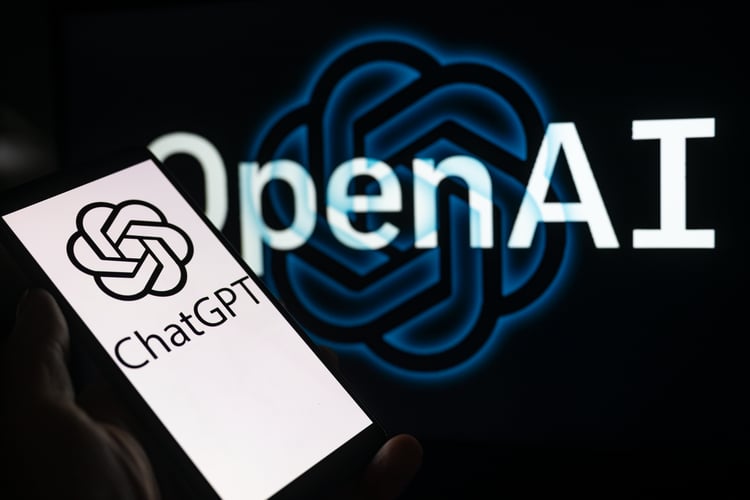
OpenAI said its flagship chatbot has surged to 900 million weekly active users, a milestone that puts ChatGPT within sight of the 1 billion mark and cements its status as one of the most widely used consumer technologies on the planet.
The company also disclosed 50 million paying subscribers and noted that new sign-ups accelerated sharply at the start of the year. The latest figure represents a jump of 100 million from the 800 million weekly actives OpenAI reported in October 2025, underscoring continued mainstream adoption.
What a Near-Billion-User Service Means for ChatGPT
Weekly active users are a demanding bar—far more indicative of habitual use than monthly tallies—so reaching 900 million suggests ChatGPT is no longer just a novelty. It’s becoming a daily utility for work, school, and personal tasks across geographies and age groups. The ascent has been unusually fast: an early 2023 analysis by UBS found ChatGPT was the fastest consumer app to hit 100 million monthly users, and growth since then has remained exceptional.
OpenAI framed the scale as a feedback loop: more usage yields faster responses, higher reliability, stronger safety, and more consistent performance. In practice, that means better model fine-tuning from diverse queries, improved guardrails, and ongoing latency gains—changes regular users can feel when they write, plan, learn, or code with the tool.
The subscription base is noteworthy in its own right. While weekly active users and subscribers are not the same denominator, 50 million paying customers imply strong willingness to pay for premium features like higher-capacity models and enterprise-grade controls. Even with a blended average revenue per user below the consumer Plus tier, that base points to a multibillion-dollar annual run rate.
A Funding Jolt to Match the Scale of Growth
OpenAI’s user surge arrived alongside one of the largest private financings in tech history: a $110 billion round at a $730 billion pre-money valuation, with marquee checks from Amazon ($50 billion), Nvidia ($30 billion), and SoftBank ($30 billion). The round remains open, signaling continued appetite among strategic investors to secure compute access, distribution, and influence in the AI stack.
At this scale, product reliability is inseparable from infrastructure. Serving hundreds of millions of weekly users requires vast GPU fleets, custom inference optimizations, request routing, and aggressive caching to keep costs in check while preserving speed. Hardware leaders have emphasized steady efficiency gains per watt and per dollar; those advances, coupled with model-side improvements, are what make mass-market AI economically viable.
Rising Pressure on AI Rivals and Major Platforms
The milestone intensifies competition among AI assistants and foundational models. Google is pushing Gemini across Search and Workspace. Anthropic’s Claude continues to win fans for reasoning and safety posture. Meta’s Llama-based assistants are broadening reach through social apps. Meanwhile, productivity suites are weaving assistants into daily workflows, from documents to email to code editors. In that context, ChatGPT’s weekly actives become a de facto scoreboard for consumer mindshare.
The ripple effects extend to the broader ecosystem. Publishers and retailers are testing conversational experiences to capture high-intent traffic that might otherwise flow to generic search. Developers are rethinking onboarding and support with chat-first interfaces that deflect tickets and personalize help. For many, ChatGPT functions as both a channel and a tool—an unusual combination that raises the stakes for brand visibility and discoverability.
Finding Signal Amid the Hype and Uncertainty
Rapid adoption does not erase open questions. Regulators are still shaping rules for data usage, transparency, and liability, and enterprise buyers remain vigilant about compliance, provenance, and model risk. OpenAI has said safety is improving alongside performance, but real-world governance—especially for education, healthcare, and finance—will hinge on auditable controls and consistent behavior under edge cases.
Still, the momentum is hard to overstate. OpenAI has previously said a large share of Fortune 500 companies have experimented with its tools, and independent surveys show generative AI seeping into daily workflows across roles. If the company can continue trimming latency and inference costs while expanding capabilities—more languages, stronger multimodal features, and enterprise-grade reliability—1 billion weekly active users is no longer a theoretical ceiling. It’s the next checkpoint.