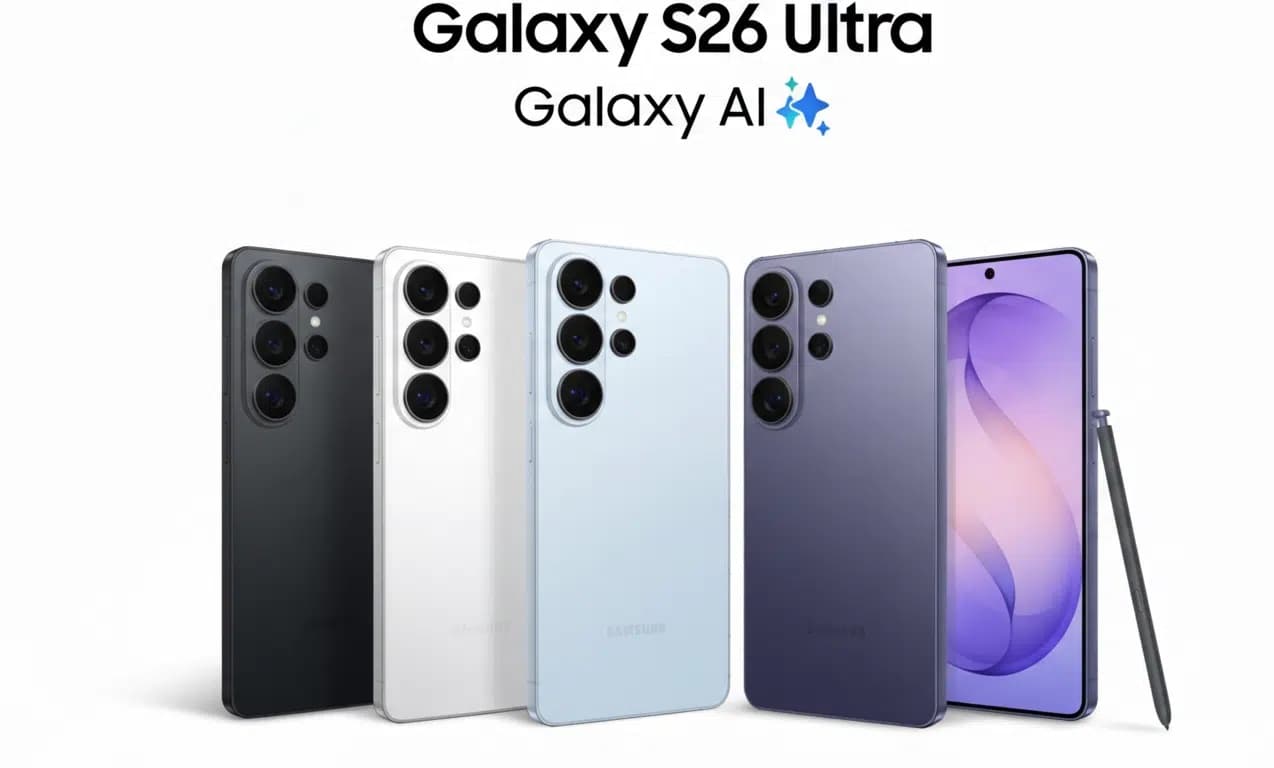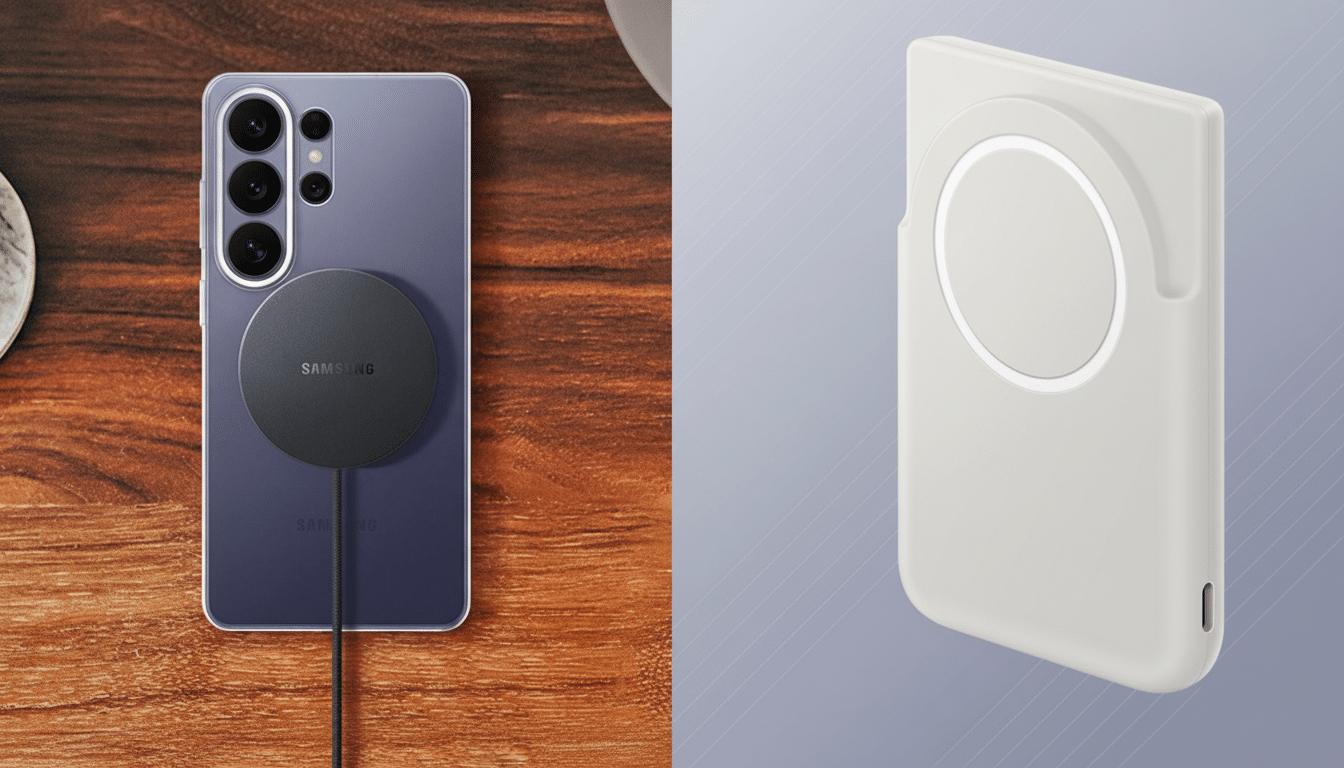
Samsung has started selling its Qi2 Magnetic Wireless Battery Pack tailored for the Galaxy S26 lineup, bringing magnetic snap-on charging to phones that lack built-in magnets. The compact 5,000mAh power bank supports up to 15W wireless charging through the Qi2 standard and up to 25W wired charging via USB-C, landing at roughly $65 with availability rolling out regionally.
The headliner here is Qi2, the next-generation wireless charging spec from the Wireless Power Consortium that adds a standardized magnetic alignment system and a baseline 15W profile. That means more reliable positioning and fewer false starts—common pain points with older Qi pads. When you need a faster boost, plugging into USB-C unlocks up to 25W, which is well suited for a quick refill before heading out.
With 5,000mAh on board, expect meaningful top-ups rather than multiple full recharges. Real-world wireless efficiency typically ranges around 60–75% depending on conditions, so the delivered capacity in magnetic mode will be lower than the rated figure. Wired output is more efficient, giving you more of the advertised capacity when speed and uptime matter.
Unlike generic bricks with slapped-on magnets, Samsung’s pack is shaped to the S26 family’s hardware. A distinct cutout around the magnetic ring clears the tall vertical camera module, helping the pack sit flat and stay centered—an area where many third-party magnetic accessories can wobble or break alignment. A built-in foldable kickstand lets you prop the phone in portrait for video calls or in landscape for streaming while it charges.
The attention to alignment isn’t just aesthetic. Proper coil placement improves charging stability and reduces heat buildup. Qi2’s magnetic system further nudges the coils into the sweet spot, a design philosophy the consortium says reduces wasted power and improves user experience compared to free-placement pads.
Magnets Missing on the Phone: What You Need to Use It
Samsung added Qi2 support to the S26 series but stopped short of embedding magnets in the phones themselves. That places the magnetic component on the accessory side. To snap the new battery pack onto an S26, you’ll need a Qi2-compatible magnetic case—think of it as bringing the ring to the phone rather than the other way around. The approach keeps the phones lighter and slimmer while still enabling a growing ecosystem of magnetic gear.
Owners of other recent Galaxy devices that support Qi2 can also use the battery pack, provided they pair it with a compatible magnetic case. Color options start with gray, and Samsung says regional shipping will phase in gradually.
How It Stacks Up in the Market Against Qi2 Rivals
Qi2 is maturing quickly, with certification listings from the Wireless Power Consortium showing a steady uptick in chargers, stands, and power banks from major brands. Third-party options like Anker’s and Belkin’s Qi2 battery packs typically sit in the 5,000–10,000mAh range and span roughly $40–$80, depending on features like displays or dual outputs. Samsung’s roughly $65 price lands in the middle, trading spec-sheet flash for tight fit, clean styling, and proven Galaxy integration.
The 15W wireless ceiling aligns with the Qi2 Magnetic Power Profile developed with input from Apple, which helped bring MagSafe-style alignment into the open standard. For Galaxy users, that means cross-brand magnetic accessories are increasingly viable, while wired 25W on this pack provides a safety valve for those moments when every minute matters.
Who Should Consider It and Who Should Look Elsewhere
If you rely on your Galaxy S26 for navigation, photography, and a steady stream of messages, this pack is a streamlined way to extend battery life without juggling cables. The kickstand adds real utility on flights and video calls, and the S26-specific cutout addresses a common pain point with bulky camera bumps. Heavy travelers or power users who need multiple full recharges may still prefer a higher-capacity brick, but for day-to-day confidence with minimal bulk, Samsung’s Qi2 magnetic option hits a smart balance.