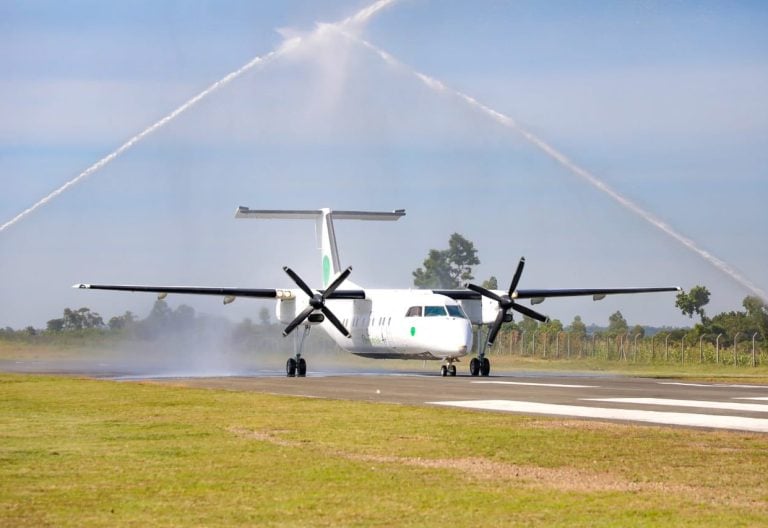
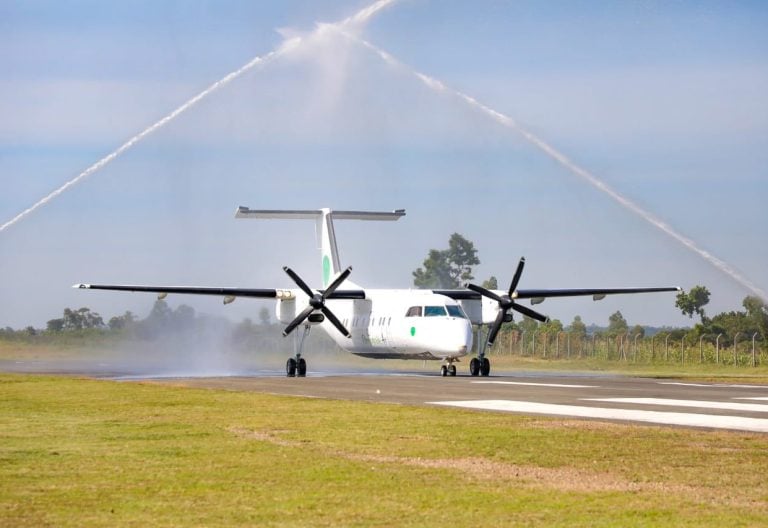
The rhythmic roar of a turboprop engine returned to Homa Bay on Thursday, April 2, 2026, marking the long-awaited conclusion of an eight-month operational silence at Kabunde Airstrip. For residents, business leaders, and travelers, the return of commercial aviation signifies more than just a convenient travel route it represents the unlocking of a critical regional artery.
The resumption of flights by Renegade Air serves as a pivotal recovery for Western Kenya’s connectivity, ending an eight-month hiatus necessitated by extensive infrastructure upgrades. As local stakeholders emphasize, this airstrip is not merely a transport hub but a vital economic engine designed to link the Lake Victoria basin directly to the capital, effectively slashing travel times that have historically hindered trade, tourism, and rapid service delivery in Homa Bay County.
A Strategic Infrastructure Overhaul
The eight-month closure was a calculated strategic move by the Kenya Airports Authority (KAA) and the County Government of Homa Bay to modernize the facility for increased safety and capacity. Initial operational challenges, including runway length and pavement quality, had limited the airstrip’s ability to serve larger passenger volumes safely. The recent refurbishment has addressed these foundational deficits.
Engineers have overseen a comprehensive rehabilitation of the runway, which now provides a safer, more resilient surface capable of accommodating larger regional aircraft. These improvements include the extension of the runway and the installation of modern turning loops, which are critical for increasing daily flight frequency and cargo handling capacity. The upgrades are part of a broader vision to transform Homa Bay into a premier gateway for the Lake Victoria region, reducing dependence on Kisumu International Airport—which sits over 110 kilometers away—for regional air travel.
Route: Nairobi (Wilson Airport) to Homa Bay (Kabunde Airstrip).
Carrier: Renegade Air, utilizing the Dash 8-Q300 (37-seater aircraft).
Schedule: Initially three times weekly (Monday, Friday, Sunday), with plans to introduce a Thursday flight.
Travel Time: Approximately 45 minutes, compared to several hours of road travel.
Economic Ripples and Tourism Potential
The absence of air travel during the renovation period created a notable void for the regional business community and the hospitality sector. For entrepreneurs and government officials who frequently shuttle between Nairobi and Homa Bay, the reliance on road transport was not just time-consuming but a bottleneck for productivity. The restoration of air connectivity is expected to provide an immediate injection of confidence into the local economy.
Tourism stakeholders are particularly optimistic. Homa Bay acts as a primary gateway to several of Western Kenya’s most significant ecological and cultural assets, most notably Ruma National Park—the last remaining sanctuary for the endangered roan antelope in Kenya. Improved accessibility allows tour operators to package Homa Bay more competitively against established circuits, potentially increasing visitor numbers to the lakefront region. Local hotelier George Agak noted that the revitalization of the airstrip is a key that will unlock new frontiers for the entire Lake Victoria basin, making it a premier destination for both leisure and investment.
A Sustainable Future for Regional Aviation
The success of the Kabunde Airstrip will ultimately depend on the consistent patronage of the route and the continued maintenance of the high-grade infrastructure installed during the hiatus. Unlike past operational disruptions that were often plagued by administrative or land-related disputes, the current roadmap appears focused on long-term sustainability and regional integration. The partnership between the national government and the county leadership signals a collaborative approach to infrastructure management that seeks to mitigate previous bottlenecks.
As the first flights touch down on the upgraded tarmac, the focus shifts to the reliability of the schedule. For the people of Homa Bay, the tangible benefits of this connectivity—faster movement of goods, more frequent engagement between business leaders, and the easing of long-distance travel stress—are finally within reach. The challenge for the months ahead will be maintaining this momentum to ensure that Kabunde continues to serve as a reliable beacon of progress for the region.
Whether this resumption catalyzes the desired surge in foreign and domestic investment remains the ultimate litmus test for the facility. For now, however, the silence over Kabunde has been broken, and the county is once again connected to the heartbeat of Kenya’s commercial capital.