At 2 a.m. in Pumwani Maternity Hospital, a baby born two months early would once have fought two battles. One to breathe. Another to stay warm. For years, hypothermia was the quiet killer in Kenya’s busiest maternity ward. Nurses called it “the invisible enemy” because you couldn’t see it, but it stole newborn lives every night.
That changed this year as Pumwani marks 100 years of delivering Kenya. A new newborn unit with central heating and modern equipment opened its doors, and the first numbers are already saving lives.
Pumwani is not a small facility. It delivers 80 to 90 babies every single day. That’s about one in every ten births in Kenya. With that volume, even a small improvement in care means hundreds of babies survive. For a long time the biggest threat after birth was not infection or breathing problems. It was cold. Newborns, especially preemies, can’t regulate their body temperature. A few degrees drop can trigger breathing trouble, low blood sugar and brain damage.
Dr Chris Mugambi, the hospital’s Medical Superintendent and a consultant obstetrician, said hypothermia had been their hardest fight. “It’s an invisible enemy,” he explained. “You deliver a baby successfully, then lose them to cold.”
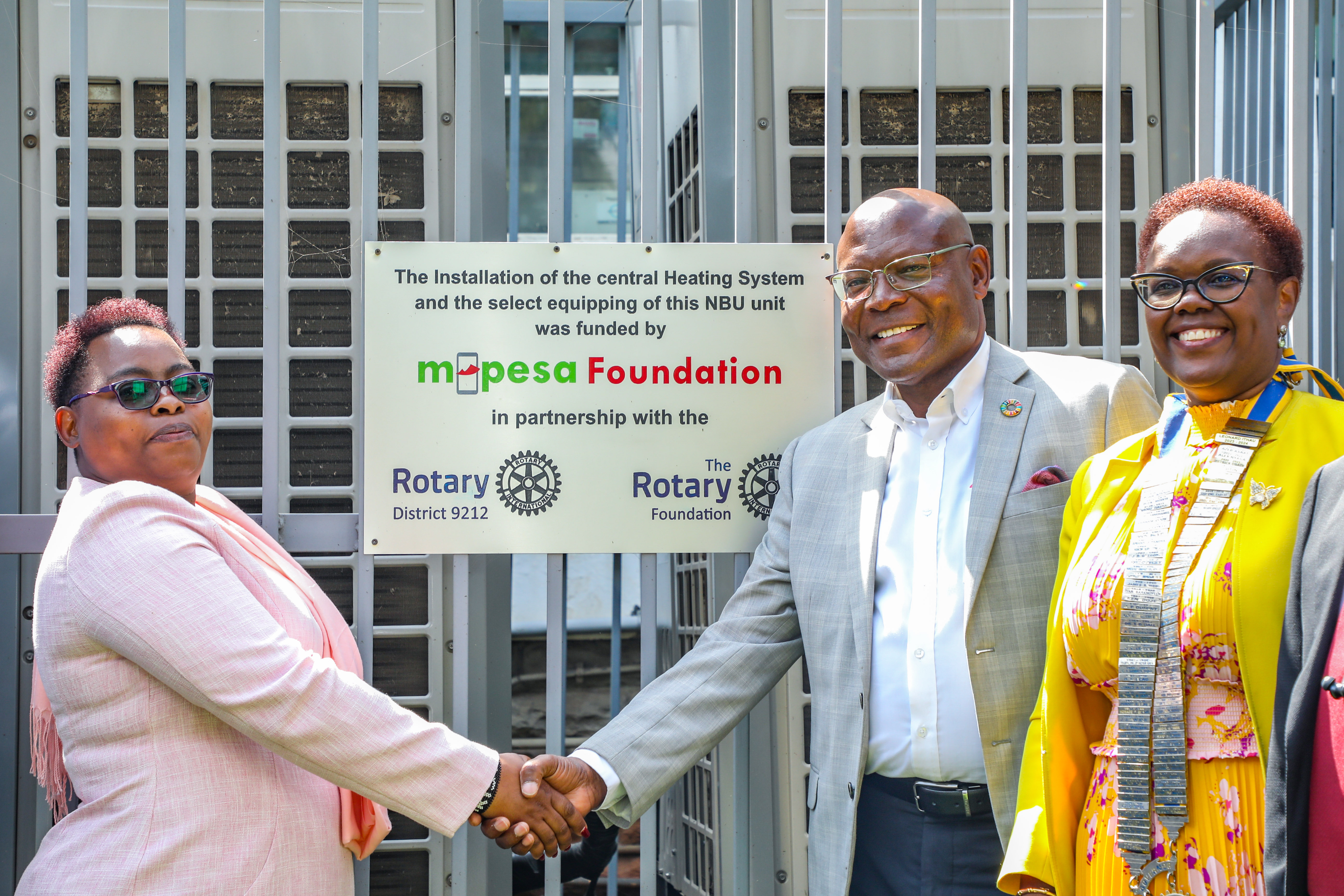
The new unit tackles that directly. M-Pesa Foundation invested Ksh 13 million to install a central heating system through its Uzazi Salama programme. The system keeps the entire newborn ward at a stable temperature instead of relying on individual warmers and blankets.
Since it went live, Dr Mugambi says thermal regulation outcomes improved by more than 75%.
“The central heating component has enabled us to achieve above 75 per cent improvement in thermal regulation outcomes, saving infant lives on the backdrop of stretched demand,” he said.
In a ward that never sleeps, that means fewer emergency interventions and more babies going home healthy.
The timing matters. Pumwani turns 100 this year. For a century it has been the first stop for mothers from Nairobi’s estates and beyond. The pressure is constant. Beds fill fast, incubators run non-stop, and nurses work in shifts that barely end. Adding modern infrastructure was not just about new machines. It was about reducing the load on staff and giving them tools that work. When a baby’s temperature stays stable, nurses spend less time on crisis care and more time on feeding, monitoring and supporting mothers. Better newborn outcomes also improve maternal outcomes. A mother who sees her baby survive is more likely to recover and bond quickly.
Safaricom Foundation Chairman Joseph Ogutu said the project is part of a bigger push to cut maternal and infant deaths nationwide. Uzazi Salama aligns with WHO’s Every Woman, Every Newborn, Everywhere action plan.
“We are absolutely delighted at the impact of this partnership with the Nairobi County Government and Pumwani Maternity Hospital, enabling us to improve the health and well-being of women and children in our country by ending preventable deaths as we journey towards the realisation of the Sustainable Development Goals,” Ogutu said.
The Ksh 13 million for heating is one piece of M-Pesa Foundation’s health work. Since 2010 the foundation has reached over 3 million Kenyans through health, education and conservation projects. Under health, Uzazi Salama focuses on mothers and newborns, while Daktari Smart uses telemedicine to link children in six hard-to-reach counties to specialists.
Nairobi County is treating Pumwani’s upgrade as a model. Mariam Dahir, the County Chief Officer for Medical Services, said the hospital handles roughly 10% of all births in Kenya.
“This means we are responsible for approximately one in every ten maternal cases in Kenya,” she noted.
That responsibility is heavy, but the new unit lightens it. She added that partners like M-Pesa Foundation are helping the county strengthen health systems where it matters most.
“As a county, we receive this with great gratitude and we look forward to continued partnership, and where possible, cascading similar support to other facilities within the city,” she said.
The goal is to take what works at Pumwani and replicate it in Mama Lucy, Mbagathi and other county hospitals.
The project also advances Sustainable Development Goal 3, Good Health and Well-being, by improving referral care. When Pumwani can stabilize newborns better, fewer babies need emergency transfers to KNH. That frees ambulances and ICU beds for other cases. It’s a ripple effect that starts with one warm room.
M-Pesa Foundation’s work goes beyond hospitals. In education it funds the M-Pesa Foundation Academy for bright students from poor backgrounds. In conservation it supports Mau Eburu Forest fencing to stop human-wildlife conflict, Reteti Elephant Sanctuary for orphaned calves, and Ruma National Park’s Roan Antelope population. Under livelihoods, it partnered with Kenya Red Cross to rehabilitate Nyalani Dam in Kwale to boost food security. But at Pumwani the impact is immediate and human. A baby born today doesn’t have to fight the cold to survive the night.