Nigeria’s headline inflation rate in May 2026 rose to 15.93% from 15.69% in April, as the pressure from the Iran war continued to affect the global economy, the National Bureau of Statistics revealed Monday.
In its latest Consumer Price Index report, the statistical office showed that the headline inflation rate for May on a month-on-month basis was 1.75%. That was 0.39 percentage points lower than the 2.13% recorded in April 2026, signaling a slower pace of monthly price increases even as the annual rate ticked up.
On an annualised basis, the print was down sharply from 26.06% in the same month of the preceding year, May 2025. The NBS noted this was due to the rebasing of the calculation year from 2009 to 2024, which reset the index base and changed weightings to better reflect current consumption patterns.
The rise in prices, which stemmed from the continued conflict in the Middle East, continued to stoke food prices and energy costs, which account for a huge chunk of average spending.
Global crude benchmarks have stayed volatile since hostilities escalated in early 2026, pushing up diesel, petrol, and transport costs. Nigeria, despite being an oil producer, imports refined petroleum products and is exposed to global price swings. Freight and insurance premiums for cargo passing near the Gulf have also risen, feeding into landed costs for wheat, rice, and other staples.
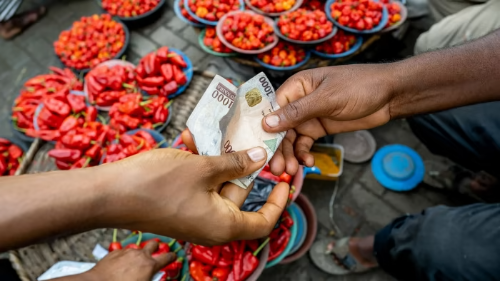
According to the NBS, the monthly increase can be attributed to the rate of change in the average prices of the following products: Millet whole grain, yam flour, ginger (Fresh), beef, garri, yam tuber, pepper (Fresh), cray fish, cassava tuber, beans, Irish potatoes, tomatoes (fresh), wheat grain (Sold loose), soya beans, guinea corn, plantain, carrots (Fresh) etc.
The list captures core items in Nigerian households. Staples like garri, yam, beans, and tomatoes saw renewed pressure in May as transport costs rose and planting season disruptions in the North Central region limited supply. Wheat and soya beans, heavily import-dependent, tracked global prices higher.
The Food inflation rate in May 2026 on a month-on-month basis was 2.98%, down by 0.65 percentage points from April 2026 at 3.63%. While the monthly slowdown offers some relief, food costs remain the biggest driver of headline inflation.
On a year-on-year basis, food inflation was 16.96% in May 2026. That compares with 24.55% in the same month of the preceding year, May 2025. The sharp annual drop reflects the CPI rebasing, which reduced the statistical weight of food in the new basket and shifted the base year to 2024 when prices were already high.
Still, at 16.96%, food inflation is outpacing headline inflation and squeezing household budgets. With food accounting for over 50% of spending for low-income families, the Central Bank of Nigeria faces a dilemma: inflation is high, but growth is fragile and 27 million Nigerians faced food insecurity in 2025, according to the IMF.
The NBS rebased the CPI from 2009 to 2024 to capture changes in consumption patterns, new products, and urbanisation. The update lowered the year-on-year inflation print compared to the old series because 2024 prices form the new base.
That explains why May 2026 headline inflation is 15.93% versus 26.06% in May 2025, even though prices are still rising month to month.
Analysts say the rebased numbers give a more accurate picture but make historical comparisons tricky. The key watchpoint now is the month-on-month trend, which slowed to 1.75% in May from 2.13% in April.