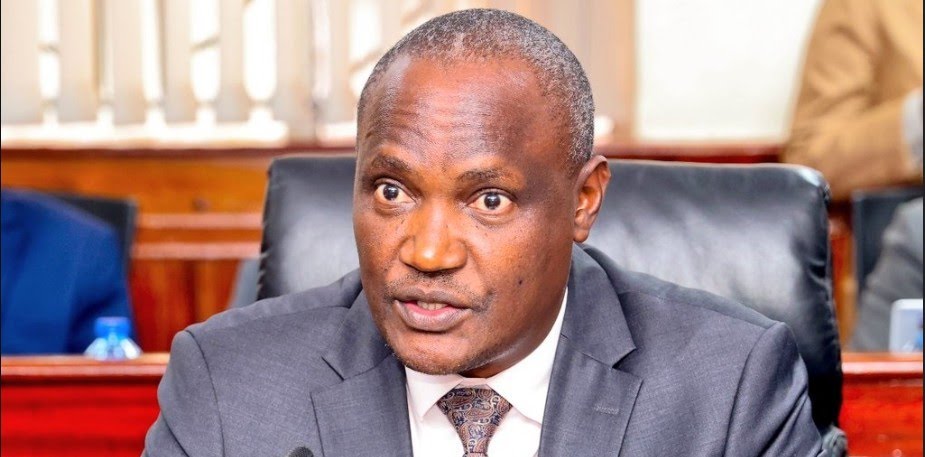
More than 1,500 public entities have been brought onto the government’s Electronic Government Procurement (e-GP) system since it went live in April 2025, Treasury Cabinet Secretary John Mbadi told the Senate on Wednesday.
By May 2026, a total of 1,543 public procuring entities had been registered and onboarded to the e-GP platform. The move marks a key step in the state’s drive to boost transparency and accountability in public spending.
Mbadi said 679 of those entities have already published their consolidated annual procurement plans in the system.
He added that the platform had, by May 2026, posted 9,772 tenders and 2,604 contracts valued at about Sh9 billion. Only 20 of the 47 counties had at least one active contract on the platform at that point.
Kisumu County topped the list with 467 contracts worth Sh1.39 billion captured in the system. Siaya followed with 163 contracts valued at Sh851 million. Murang’a, Baringo, Vihiga, Busia, Nandi, Bomet, Samburu, Migori, Homa Bay, Trans Nzoia, Lamu, Elgeyo Marakwet, Kakamega, Tharaka Nithi, West Pokot, Machakos and Kajiado made up the rest of the 20 counties with active contracts.
“Those are the only counties out of 47 which, at the time of preparing this report in May, had at least contracts on the system. The rest, which are not here, don't have any contract in the system,” Mbadi said.
Use of the platform has climbed as the financial year winds down. Mbadi noted that not less than Sh12 billion had been processed through e-GP so far, with the system recording at least 3,010 transactions daily. Because procurement is an ongoing process, he expects the numbers to rise further by the end of the financial year.
On savings, the CS said no verified figures are available yet. The system is still in its early phase, and numbers in public circulation remain projections rather than confirmed audit findings.
Still, he pointed to early gains. These include shorter procurement cycles, better transparency, tighter links with financial and tax systems, and clearer audit trails.
To tackle hurdles such as resistance from procurement officers, capacity gaps, and weak ICT infrastructure, Treasury has rolled out large-scale training. Over 2,000 procurement officers have received hands-on training. Another 40,554 public finance management officers from national and county governments have taken virtual training through webinars.
A technical support center has also been set up at the Kenya Institute of Supplies Management Towers along Ngong Road in Nairobi to help users.
Treasury is working with the Kenya School of Government to run nationwide training. Weekly registration and training webinars are being held for suppliers, contractors, and other stakeholders. User manuals are now on the e-GP portal, and support desks have been opened at Huduma Centres countrywide to help suppliers and contractors register.
The system is being linked with other government platforms, including KRA iTax, the Business Registration Service, and population registries. The goal is to improve user verification and tie procurement more closely to wider government digital infrastructure.
To avoid disruptions during the shift, especially in schools, health facilities, and other essential institutions, Treasury issued public notices ahead of the rollout. Suppliers, contractors, and consultants were told they must register and use the platform.
“In that notice, the National Treasury emphasised that only procurement processed through e-GP will be sanctioned and paid for going forward, which signalled a firm push to have entities comply rather than revert to the manual systems,” Mbadi said.
Help desks, webinars, manuals, and in-person support at Huduma Centres have been put in place to smooth the transition.
On transparency and access for youth, women, and persons living with disabilities, Mbadi said Treasury and the Public Procurement Regulatory Authority have introduced several measures through the e-GP platform to open up opportunities.
He asked Senators to back the reform, saying it could deliver major savings once fully in place.
“I call upon this house to support this critical PFM reform, which upon maturity is expected to give value for money and secure savings of up to Sh85 billion,” he said.
The National Treasury officially launched the e-GP system on April 7, 2025. It directed all public procuring entities to run procurement through the platform starting July 1, 2025.