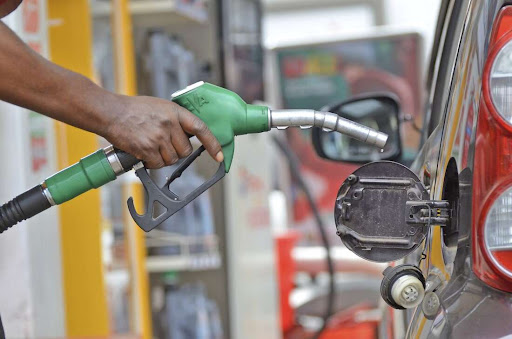
Kenya has announced an extension of the 8 per cent Value Added Tax (VAT) rate on petroleum products, in a bid to cushion motorists and businesses from rising global oil prices.
In a statement on Tuesday, July 14, 2026, the Ministry of Energy and Petroleum said the relief will continue for another three months, until October 14.
"As part of the Government’s commitment to cushioning households and businesses from international market volatility, in consultation with the National Treasury, we have extended the application period for 8% of Value Added Tax (VAT) on petroleum products for a further three months, until 14th October 2026." read the press release in part.
The Ministry also announced that it will deploy KSh945 million from the Petroleum Development Levy (PDL) to support the July-August 2026 fuel pricing cycle and help maintain current pump prices.
"In the July-August 2026 pricing cycle, the Government will deploy a subsidy from the Petroleum Development Levy to the tune of Kshs. 945 Million to sustain the current price levels,” stated the ministry.
The extension of the reduced VAT rate, together with the fuel price stabilization subsidy, is intended to shield consumers from volatility in the international oil market while ensuring petroleum products remain affordable.
According to the Ministry, despite heightened tensions in the Middle East and recent movements in global crude oil prices, the country’s fuel supply remains stable.
Cabinet Secretary for Energy and Petroleum Opiyo Wandayi said the government has put in place systems and partnerships over the past few years that have strengthened Kenya’s ability to withstand international oil market volatility and maintain a reliable fuel supply.
International benchmark prices have started to ease following a recent spike, with the government continuing to work with the industry to secure consistent and uninterrupted fuel supplies under the Government-to-Government (G-to-G) fuel import arrangement, the Ministry said.
It added that fuel remains readily available across the country, supported by adequate national stocks, resilient fuel distribution networks and the continued success of the G-to-G procurement framework, which has helped reduce pressure on foreign exchange demand while improving predictability in petroleum supply.
Meanwhile, the move occurs just hours ahead of Kenya’s next fuel price review. The Energy and Petroleum Regulatory Authority (EPRA) is set to review fuel prices today for the July-August pricing circle.
In its last review, EPRA reduced diesel prices by Sh10 per litre and petrol prices by Sh0.22 per litre, while leaving kerosene prices unchanged for the period between June 15 and July 14, 2026.
In Nairobi, diesel has been retailing at Sh222.86, super petrol at Sh214.03 and kerosene at Sh191.38.
Motorists are paying Sh219.58 for diesel, Sh210.87 for super petrol and Sh188.09 for kerosene in Mombasa.
In Nakuru, the cost of diesel is Sh222.27, super petrol Sh212.92 and kerosene Sh190.81.
Diesel was set at Sh223.09, super petrol at Sh213.69 and kerosene at Sh191.63 in Eldoret, for the month.
EPRA is expected to announce new fuel prices for the next cycle anytime from now.