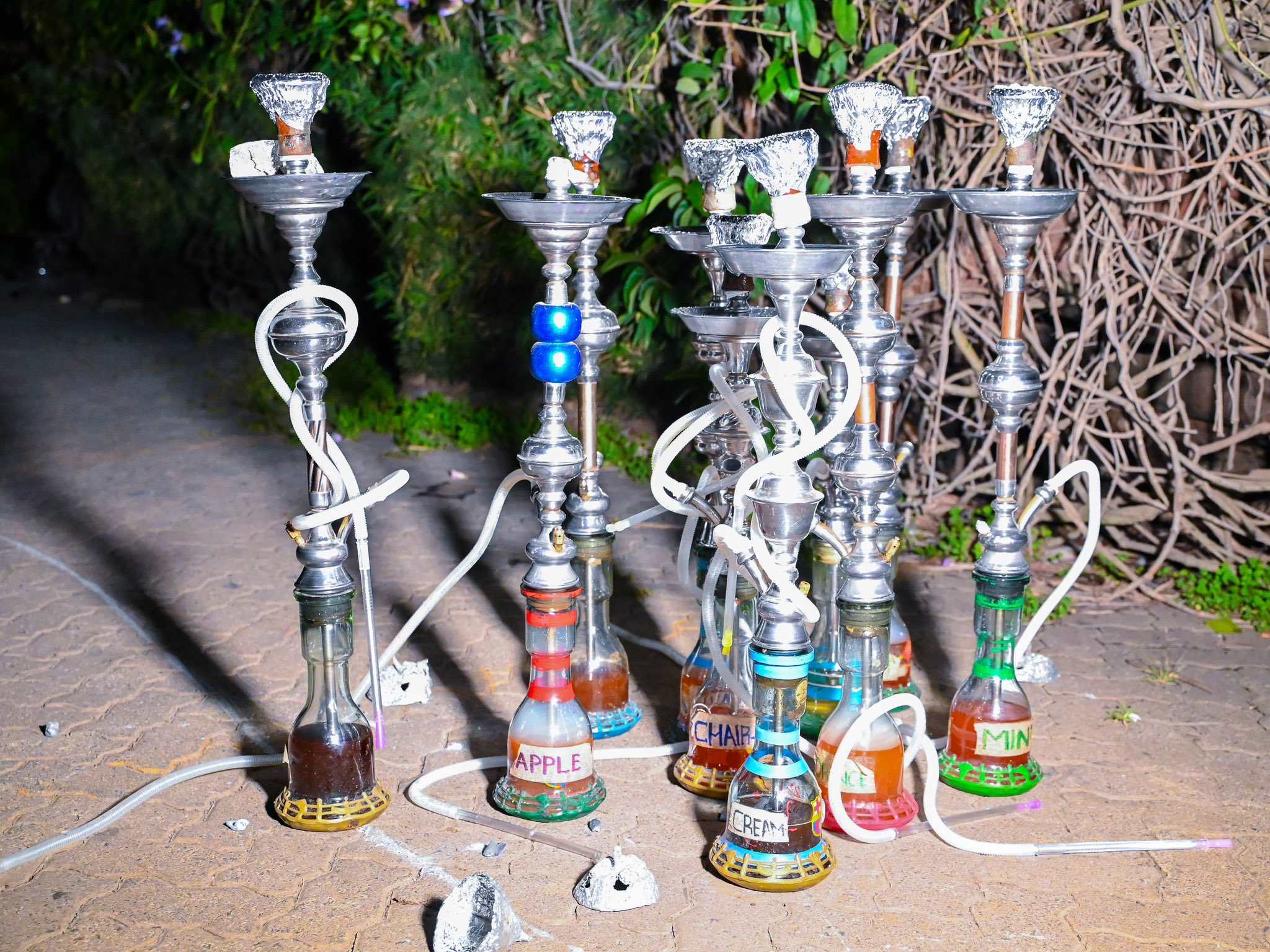
Kenya’s High Court has struck down the country’s years-long prohibition on shisha, declaring the ban unlawful and unconstitutional, effectively ending enforcement actions against bars, lounges and hotels.
In a landmark ruling delivered on Tuesday, July 28, 2026, Justice Bahati Mwamuye found that the Public Health (Control of Shisha Smoking) Rules, 2017 lapsed after the State failed to regularize them within a nine-month period granted by the court back in 2018.
Justice Mwamuye held that once the nine-month window for regularization passed, the 2017 rules lost all legal effect. Despite this, government agencies continued to raid establishments, confiscate equipment and prosecute operators.
"The Public Health (Control of Shisha Smoking) Rules, 2017 ceased to have legal effect after the lapse of the nine-month period granted by the court for regularisation," the judge ruled.
The court also nullified a February 3, 2025 press statement and an April 14, 2025 order that launched a nationwide crackdown on shisha outlets. The judge said both were based on regulations that were no longer valid.
"The respondents cannot continue enforcing regulations that no longer have legal force. Such enforcement is unlawful and unconstitutional," Justice Mwamuye stated.
The court further ruled that the continued crackdown violated constitutional rights to fair administrative action, equal treatment before the law, and protection of business property.
As a result, the judge issued orders barring the State from enforcing the expired 2017 rules, and from acting on the 2025 statements and directives, against members of the Novel Tobacco Products Association (NTPA).
The case was brought by the NTPA, which represents licensed manufacturers, importers and hospitality operators.
NTPA argued that police operations carried out under subsidiary legislation that had expired were arbitrary and infringed on constitutional guarantees. The association told the court that businesses had invested in compliant, licensed venues only to face raids and seizures with no valid legal basis.
The ruling directly addresses a long-standing complaint from Kenya’s tourism sector. Operators have argued for years that an outright ban put Kenya out of step with global norms and cost the country visitors who expect regulated hookah lounges as part of nightlife and resort offerings.
The judgment comes despite persistent opposition from the National Authority for the Campaign Against Alcohol and Drug Abuse (NACADA). The agency has led multi-agency operations for years, treating waterpipe tobacco as a major public health risk.
NACADA teams have raided nightclubs across Nairobi, Mombasa, Diani and Malindi, seizing shisha pots and arresting patrons and managers.
During one operation, NACADA CEO Anthony Omerikwa defended the approach, "Shisha was declared illegal in 2017. The sale and use was banned."
"This is about safeguarding our community, our children, and our future. In line with the presidential directive on the renewed fight against drug abuse in this country, we are taking this war to every doorstep. No corner will be left untouched. We shall pursue traffickers relentlessly until Kenya is free of this scourge." he added.
With the court’s decision, however, NACADA and other agencies are now prohibited from relying on the 2017 rules to carry out such operations.
Industry players say the judgment aligns Kenya with international practice. An estimated 96% of countries worldwide regulate shisha rather than ban it outright, requiring licenses, age restrictions and health warnings.
For Kenya’s coastal circuit, the ruling opens the door for beachfront hookah lounges to return in Diani, Mombasa and Malindi, venues popular with tourists from the Gulf, South Asia and Europe.
In Nairobi, rooftop bars in Westlands and Kilimani are expected to reintroduce regulated shisha services alongside fine dining, cocktails and live music, catering to both domestic and international clientele.
NTPA welcomed the decision, saying it provides clarity and legal certainty for businesses that have operated in limbo for nearly a decade. The association said it supports regulation, including age limits, product standards and designated smoking areas, as an alternative to prohibition.
The decision restores a popular leisure activity for both locals and international visitors and is expected to give a significant boost to Kenya’s tourism and hospitality industry.