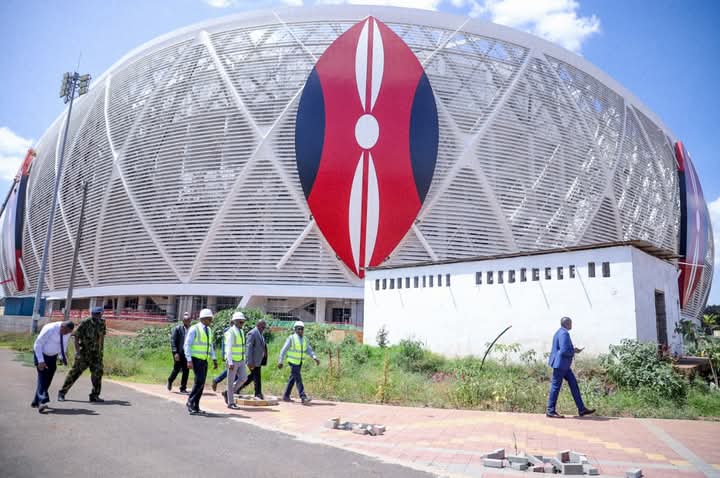
The Raila Odinga International Sports Complex is nearing completion, with the national steering committee overseeing the project confirming that the stadium is now 80 per cent complete as Kenya prepares to host the 2027 Africa Cup of Nations (AFCON).
Designated as one of Kenya’s primary venues for AFCON 2027, the stadium is being developed through a multisectoral approach involving the State Departments of Sports, Defence, Internal Security and National Administration, Broadcasting and Telecommunications, ICT, Roads, Transport, Environment and Climate Change, Energy, Water and Sanitation, Lands and Physical Planning, the Office of the Attorney General, and the National Police Service.
This integrated approach brings together construction, media, communications, and security infrastructure to ensure timely delivery and compliance with international standards, as well as seamless tournament operations.
Speaking during an inspection tour of the facility, Principal Secretary for Sports Elijah Mwangi affirmed Kenya’s readiness to host the continental tournament.
“We recently travelled to Morocco, where we officially received the AFCON flag. This confirms that Kenya, together with Tanzania and Uganda, will jointly host the Africa Cup of Nations in 2027.
"The Raila Odinga International Sports Complex is a flagship project for Kenya’s sporting infrastructure, and we are closely monitoring progress to ensure it meets international standards and is ready for AFCON 2027,” Mwangi said.
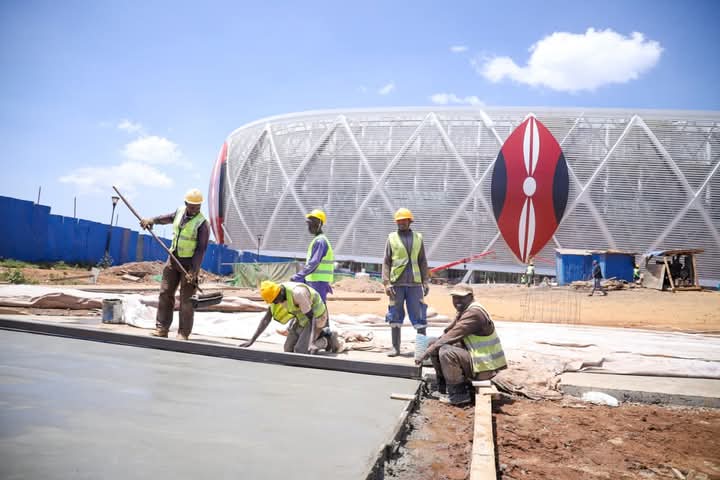
Mwangi added that other key facilities are also progressing, noting that Nyayo National Stadium is scheduled for installation of a new playing surface, Kirigiti Stadium is nearing completion, and at least 21 additional stadiums are under construction to support training, competitions, and AFCON matches.
“These investments support multiple sporting disciplines and long-term sports development. Kenya is ready and fully committed to hosting AFCON 2027,” he said.
Principal Secretary for Defence Dr. Patrick Mariru underscored the importance of coordinated oversight in keeping the project on track.
“The stadium is more than 80 per cent complete, having passed through the most complex and demanding phase of construction. Main structural works are complete; key systems have been installed, and the remaining works involve fittings, installations, and finishing, which can be completed within short timelines. The project is progressing steadily, with mechanisms in place to address any emerging challenges,” Dr. Mariru said.
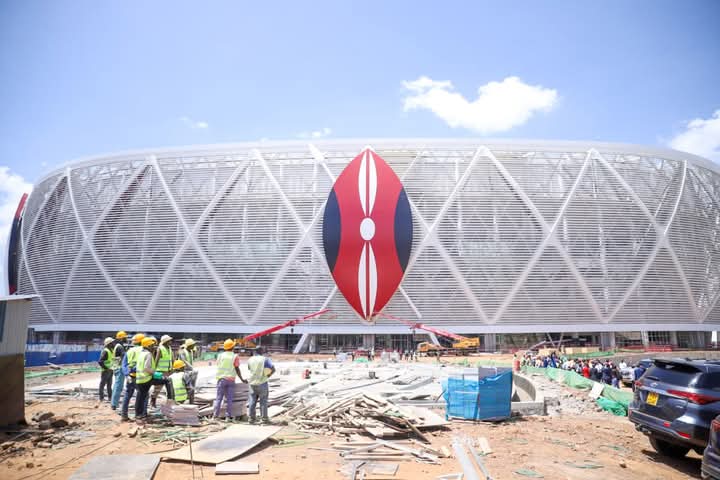
He added that the integrated development of the facility—including access roads, water supply, and security infrastructure—ensures sustainability and long-term functionality.
Principal Secretary for Broadcasting and Telecommunications Stephen Isaboke emphasized the role of modern media and communications systems in the project.
“This is one of the government’s key projects. Advanced broadcast and communications systems are being fully integrated to support operations, media coverage, and logistics. Modern sporting events rely heavily on robust communications infrastructure, and we are ensuring adequate facilities for media coverage and related services to guarantee seamless operations during AFCON 2027,” Isaboke said.
Principal Secretary for Internal Security Raymond Omollo noted that the steady progress reflects Kenya’s broader commitment to sports development.
“The works are proceeding according to schedule, with core infrastructure substantially complete. This facility forms part of a broader, multi-phase, multi-sports programme. Kenya is positioning itself to host major continental competitions using infrastructure that meets international standards. What once seemed like a mirage is now real and tangible,” Omollo said.
During the visit, members of the supervisory committee conducted a site inspection to assess completed milestones and outstanding works. Infrastructure Secretary Washington Okumu assured that digital systems and internet connectivity will meet international standards.
“The committee is ensuring all agencies remain aligned on timelines, coordination, and delivery targets. Connectivity will be world-class to support both operational and broadcast requirements,” Okumu said.
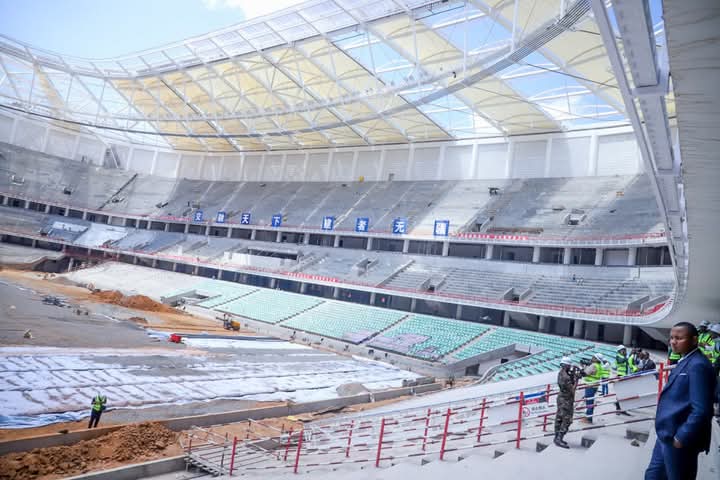
The Raila Odinga International Sports Complex is expected to play a central role in Kenya’s AFCON 2027 hosting plans, alongside supporting infrastructure, as the government emphasizes timely delivery, inter-agency collaboration, and integration of modern broadcast and ICT systems.