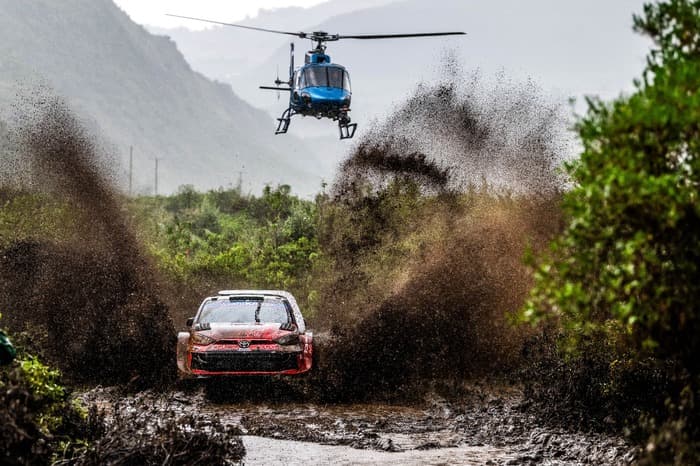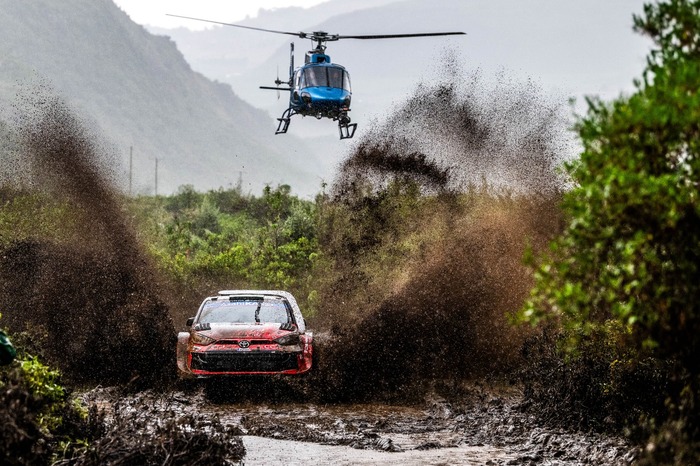
Severe weather conditions continued to disrupt the Safari Rally on Saturday after organisers were forced to halt and modify one of the day’s key stages following heavy deterioration of the road surface.
According to officials from the Fédération Internationale de l'Automobile (FIA) and the World Rally Championship, Special Stage 13 (SS13) Sleeping Warrior was stopped after the leading Rally1 cars had completed the section.
The decision was taken after extreme mud conditions developed over the opening 1.5 kilometres of the stage, raising concerns that several vehicles could become stuck.
“Following significant deterioration in conditions over the opening 1.5km of SS13 ‘Sleeping Warrior’, the Clerk of the Course halted the running of the special stage for further cars due to concerns that cars could become stranded in dense mud,” the FIA said in a statement.
While the top-tier Rally1 machines passed through the section earlier, all remaining competitors were prevented from attempting the stage.
Instead, rally officials directed the affected crews to take an alternative route back to the service park, prioritising safety and preventing potential delays that could have been caused by stranded vehicles.
The difficult terrain once again highlighted the unpredictable nature of the Safari Rally, widely regarded as one of the toughest events on the WRC calendar.
The challenging weather also forced further adjustments to the rally schedule.
Organisers confirmed that SS16 – Sleeping Warrior 2 had been shortened by 4.52 kilometres from the start due to the deteriorating road conditions.
A bulletin issued by the Clerk of the Course instructed crews to follow a revised route in the road book to access the relocated time control and start point of the stage.
Despite the reduction in distance, officials confirmed that the target time for Time Control 16 (TC16) would remain unchanged.
The latest disruption follows persistent rain throughout the weekend, which turned several sections of the rally route into deep mud traps, making driving extremely difficult even for experienced crews.
Earlier stages had already been heavily affected by similar conditions, with drivers battling slippery surfaces, flooded corners and thick mud that clogged radiators and reduced visibility.
The Safari Rally, famous for its brutal terrain and unpredictable weather, has once again lived up to its reputation as one of the most demanding rounds in the championship.
With several stages remaining, teams and drivers will continue to brace for more difficult conditions as the rally pushes deeper into Kenya’s rugged terrain.