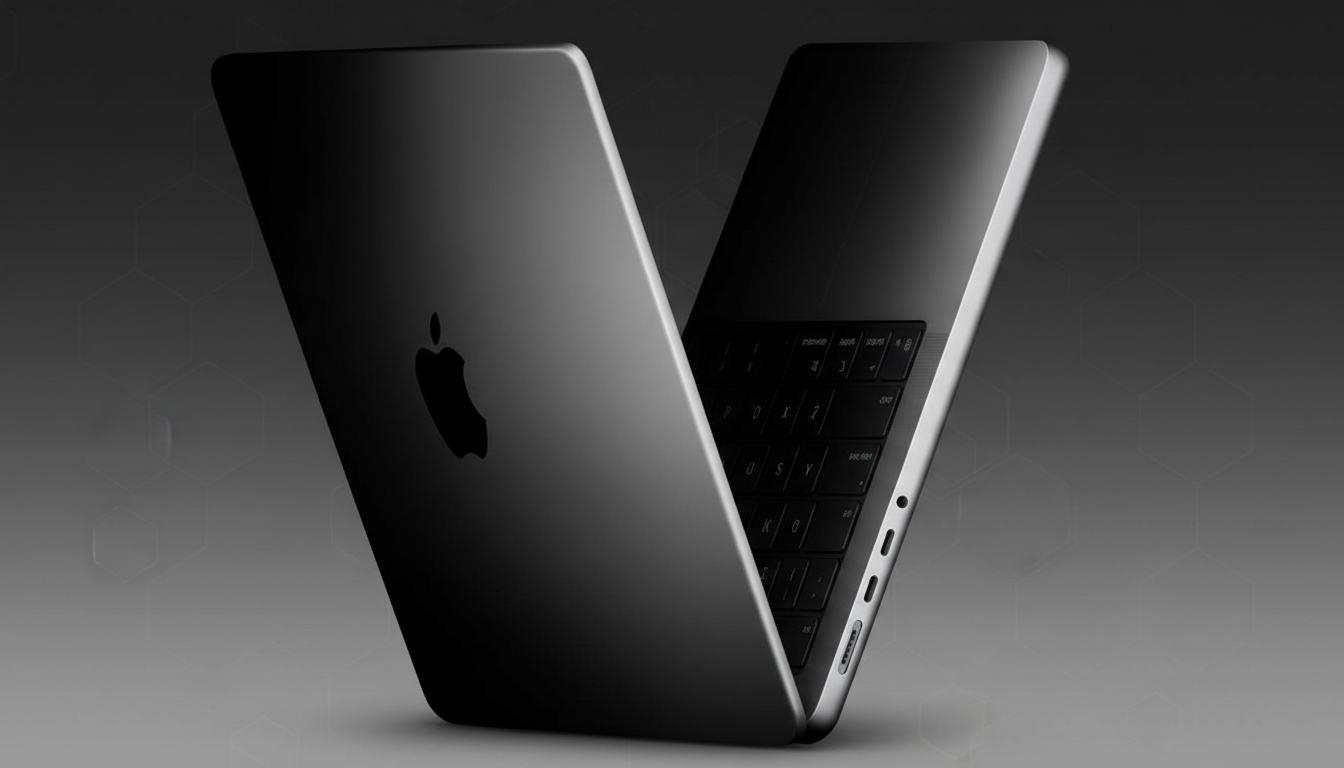
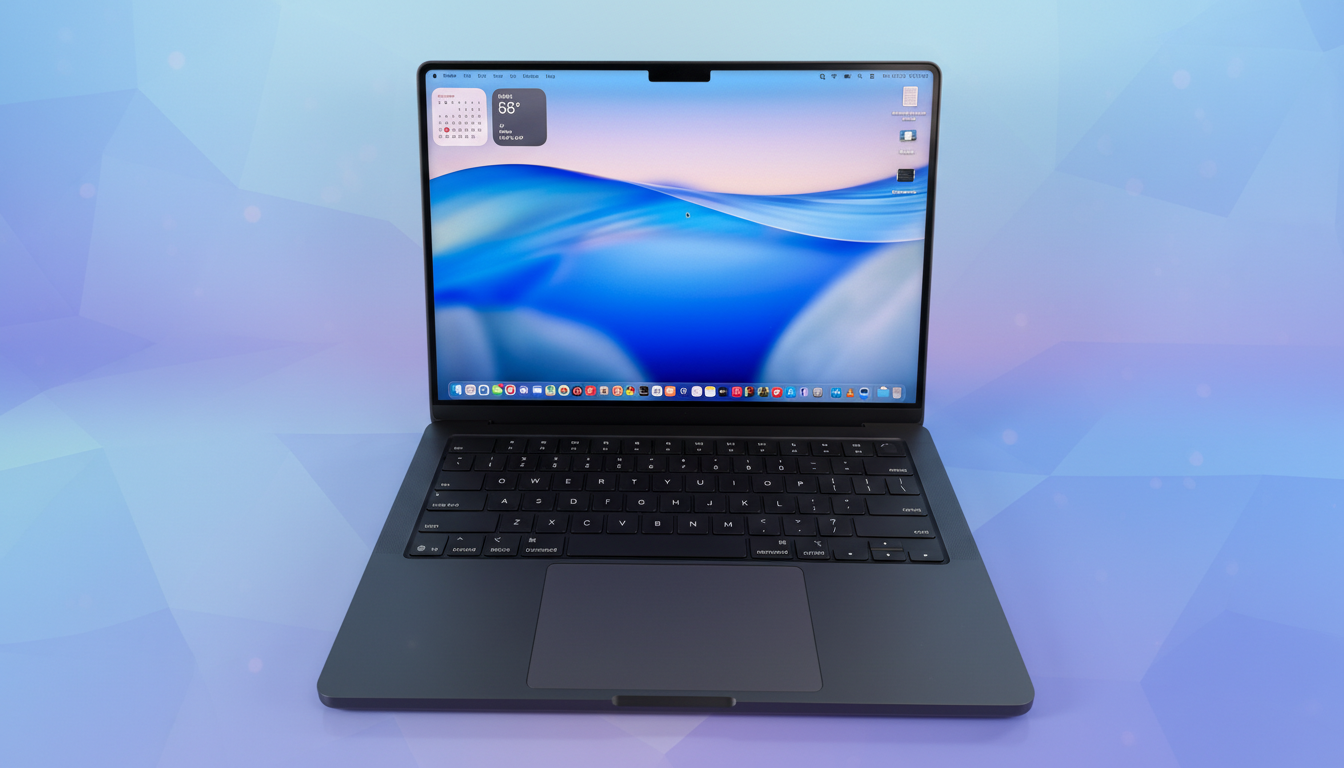
Apple has taken another big swing at high‑end laptop performance, unveiling the M5 Pro and M5 Max with a new Fusion Architecture that fuses two dies into a single, high‑bandwidth system on a chip. The chips bring 18‑core CPUs, up to a 40‑core GPU, a revamped Media Engine, a dedicated Neural Engine, and Thunderbolt 5 support to the newest MacBook Pro lineup.
Inside Fusion Architecture Powering Apple’s M5 Chips
Fusion Architecture is Apple’s latest answer to the scaling problem in modern silicon. By tightly coupling two dies into one logical SoC, the design aims to preserve unified memory semantics while expanding compute and bandwidth headroom. It resembles broader industry moves toward advanced multi‑die packaging—think TSMC’s chip‑on‑wafer and Intel’s Foveros—yet Apple’s approach keeps the “single‑chip” experience developers expect from macOS and Metal.
Apple previously hinted at the benefits of ultra‑low‑latency die‑to‑die links in its desktop‑class silicon. Bringing a fusion strategy to Pro and Max tiers suggests the company is using packaging not just to chase core counts, but to sustain cache coherency and memory throughput without fragmenting the software model that underpins unified memory.
CPU And GPU Gains For Pro Workloads And Creators
Both M5 Pro and M5 Max move to an 18‑core CPU configuration, with six “super” cores (Apple’s highest‑performance cores) alongside twelve new performance cores. Apple claims up to a 30% lift on pro workloads versus the prior generation, a delta that should show up in compiles, science and engineering simulations, and heavy audio sessions where core scaling and cache behavior dominate.
On graphics, Apple scales the new GPU architecture to as many as 40 cores, now with a Neural Accelerator embedded in each GPU core and higher unified memory bandwidth feeding them. The company is claiming up to 4x peak GPU compute for AI versus the previous generation, up to 20% overall graphics gains, and as much as 35% faster ray tracing. Expect practical wins in Blender and Octane X path tracing, Unreal Engine scenes with hardware RT effects, and color work in DaVinci Resolve where denoisers and depth‑aware tools lean on GPU compute.
Apple did not publish SPEC or MLPerf numbers at launch, but the architectural signals are clear: more headroom per watt for mixed CPU‑GPU pipelines and better utilization on kernels common to on‑device AI, from attention operations to image synthesis. Developers targeting Metal Performance Shaders and Core ML should see faster inference without rewriting models.
Unified Memory And I/O Headroom For Demanding Tasks
M5 Pro now supports up to 64GB of unified memory with 307GB/s of bandwidth, while M5 Max reaches 128GB with 614GB/s. For creators, that means longer 8K multicam timelines and heavier node graphs before proxies are necessary. For AI practitioners, it widens the envelope for local inference—larger vision‑language models and 7B–13B parameter LLMs at higher precision or with room for context windows—without paging.
Thunderbolt 5 arrives as well, delivering up to 80 Gbps of bi‑directional bandwidth with bursts up to 120 Gbps for displays, according to the spec stewarded by Intel. In practical terms, that enables multiple high‑resolution external displays, high‑speed NVMe RAID enclosures, and pro capture devices with less compromise on bandwidth contention.
Who Each Chip Targets In The New MacBook Pro Lineup
Apple positions M5 Pro for users who balance CPU‑heavy tasks with moderate GPU demands—data modelers, post‑production sound designers, and STEM workloads that prize thread count and memory bandwidth. A Logic session laden with hundreds of tracks and plug‑ins or a large matrix factorization in a Jupyter notebook should both benefit from the 18‑core topology and faster memory.
M5 Max, by contrast, is aimed at GPU‑bound pipelines. Think 3D animators running complex rigs, app developers stress‑testing shader permutations, and AI researchers spinning up diffusion models or transformer inference on‑device. The expanded GPU, higher bandwidth, and per‑core Neural Accelerators are designed to keep those kernels saturated without spilling to slower paths.
Why It Matters For Pros, AI, And Graphics Workflows
The shift to Fusion Architecture indicates Apple is prioritizing scalable, multi‑die designs while holding the line on the unified memory model that differentiates Mac silicon. That combination matters as workloads blur—video timelines now include AI‑based denoisers, coders run local LLMs, and 3D artists depend on hardware RT—and as software ecosystems like Adobe, Blackmagic Design, and Autodesk push more GPU‑accelerated features to the edge.
Industry‑wide, the move aligns with a broader push toward on‑device AI and power‑efficient compute. While Apple did not detail process technology, the company has historically partnered with TSMC at advanced nodes, and the presence of Thunderbolt 5 places the new MacBook Pro squarely in the lane for external, high‑bandwidth workflows. The net result is a portable workstation that leans into AI and graphics without abandoning the CPU throughput pros still need.
Apple says the new MacBook Pro models ship with M5 Pro or M5 Max and are aimed squarely at professionals who outgrow mainstream laptops. If the company’s claims hold in independent testing from labs and reviewers, these systems will set a new performance baseline for mobile creative and AI development work—while keeping the familiar macOS stack intact.