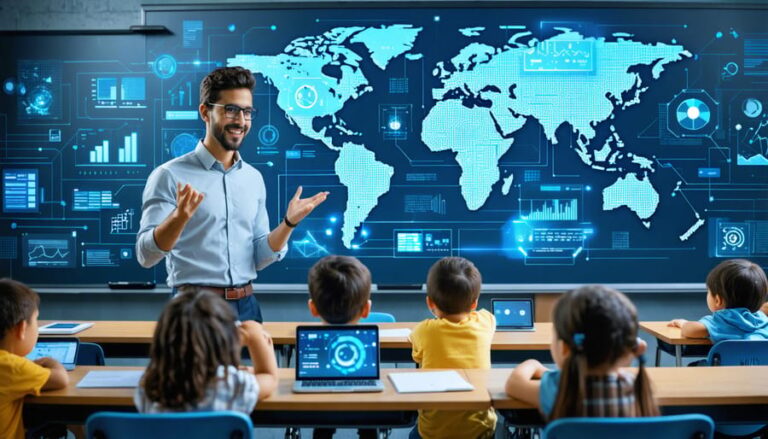
Artificial intelligence is transforming the modes of learning and holds numerous potential possibilities for teaching and learning. Education has come a long way from chalkboards and paper textbooks. Technological advancements have redefined the tools and methods used in the classroom, shifting the focus from traditional, one-size-fits-all teaching to more adaptable learning environments.
The rise of digital classrooms has allowed the integration of interactive experiences through smartboards and cloud-based platforms. Blended learning models are now standard, allowing educators to combine online resources with in-person instruction for greater flexibility.
Perhaps the most transformative shift is personalized learning, where data analytics help teachers tailor instruction to the strengths and challenges of individual students. This shift boosts engagement and enables students to learn at their own pace, reshaping education to meet learning needs more effectively than ever before.
Benefits of AI in the Classroom
AI has several benefits for educators and students alike. From helping teachers prioritize their time to bolstering student participation, AI technology increases the effectiveness of each hour in the classroom in several ways:
Streamlined administrative processes: From attendance tracking to scheduling, AI-powered tools automate time-consuming processes, freeing educators to focus on instruction and student interaction.
Personalized learning experiences: AI adapts content delivery to fit individual learning styles and paces.
Real-time analytics: AI provides actionable insights into student progress, allowing educators to identify learning gaps and intervene early.
Improved engagement: Interactive, data-driven tools including gamification and personalized learning paths, make lessons more engaging and meaningful.
Enhanced access and agency: AI can foster student independence, enabling learners to take greater ownership of their education as they become more proficient in using AI-driven resources.
Best AI Tools for Teachers for Everyday Classroom Success
Socrative : Is an advanced assessment AI tool that facilitates evaluation and feedback of students during the class in real-time. Socrative AI is currently in Beta version. This AI tool is a resource that helps in overseeing and facilitating the teaching and learning process in a way that relieves educators of this burden and, at the same time, affords the learners pleasurable activities. Its best for creating quizzes and exams and getting immediate feedback on student learning.
MagicSchool : This Ai tool makes it easier, cleaner, and faster to create lesson plans thanks to content generation and customization by AI. This inspiring technology enables teachers to design educational materials in a few minutes. MagicSchool is a versatile AI education tool that has been designed with schools and teachers in mind. Such tasks include developing lesson plans, writing tests, building rubrics, and offering assistance to educators in particular classes. More than 60 tools are incorporated within the tool. In the MagicSchool AI application, people can modify their designs according to the class and level of understanding of the students.
Otter.ai : is an indispensable classroom and educational AI tool that offers transcription services and note-taking functionalities that support the learning process. It enables teachers and students to make audio recordings of classes, meetings, and conversations, converting them into legible, easy-to-find, and shareable text. This AI-powered writing assistant helps students remain attentive while lessons are ongoing and also assists them in revising and working together, thus, making it a significant technology in today’s learning institutions.
Quizgecko : The process of generating and assessing quizzes is made easier with the assistance of Quizgecko. This AI teaching assistant makes use of advanced AI tech to develop and implement tests and quizzes for businesses and educational institutions. Users can transform any document whether it is in DOC, PDF, or PPT format, into engaging quizzes or flashcards with ease. This teaching assistant AI tool supports many languages and is used by customers and institutions globally.
The AI tools considered in this article are at the cutting edge of technology, providing compelling responses to the demands of today’s education. These systems have proven their worth by enhanced student engagement, minimal paperwork, and better learning results. Paid AI learning aids are usually more beneficial to most users, especially to institutions and instructors with growth requirements or data protection concerns. Although effective for first use, free educational resources tend to be less developed compared to the full versions.
Challenges for Implementing AI in the Classroom
Data Privacy : Protecting student data is a big challenge to overcome for AI in learning. Schools must develop strong privacy policies and ensure that these AI tools comply with data protection laws to guard against the misuse of sensitive information. AI systems collect extensive amounts of data to personalize the learning experience. However, without proper safeguards, this information could be at risk. Institutions need to think about cybersecurity measures like encryption and access control to gain trust and provide security to students.
Technology Capabilities : Old devices, limited AI access, and compatibility issues can all impede the full realization of classroom AI implementation. Technology and infrastructural upgrades must be part of the plan to address these limitations. Most schools, particularly those in impoverished areas, lack the resources required to understand how to use AI effectively in education. The solution involves collaboration by governments, tech companies, and educational organizations to create affordability and scalability.
Integrating AI in the classroom presents its challenges and ethical concerns that educators must navigate thoughtfully. Rather than viewing AI with fear or skepticism, educators should seek to understand its capabilities and limitations. With proper knowledge, AI can complement rather than compete with teachers to build a thriving learning ecosystem.
Safeguarding ethical principles in AI integration is essential. Educators should prioritize data privacy and security when selecting and implementing AI tools. Ensuring that student information remains confidential is not just a legal responsibility but a critical aspect of maintaining trust between schools and families. Additionally, educators should research the origins and guidelines of AI technologies to maintain ethical teaching practices.
Another common concern is algorithmic bias. Educators must remain the ultimate decision-makers in the classroom, using AI as a supportive tool rather than a replacement for their professional judgment. Maintaining a balance between technological innovation and ethical responsibility will allow educators to harness AI to develop a more impactful and trustworthy learning experience.
Future Scope of AI Integration in Classrooms
AI-Powered Tutors : AI tutors provide students with on-demand availability of academic facilitation by dicing big, difficult topics into small, comprehensible portions and promoting independent learning beyond classroom hours.
Enhanced Student Engagement : AI-enabled platforms such as gamified learning and simulations effectively keep students engaged and motivated and make learning enjoyable and more efficient. Gamified learning encourages healthy competition and rewards achievements, which will create a positive learning atmosphere.
Data-Driven Decision-Making : AI analytical models present data on a student’s performance, attendance, and learning trends to administrators and educators when needed. They assist in delivering well-informed decisions for an entire educational experience.
Teacher Professional Development : AI will help teachers in their personal and professional development, provided they receive the appropriate training and resources. They will be able to equip themselves well for the upcoming technology-infused classroom teaching that is constantly evolving.
Conclusion
Integrating AI into the classroom has the potential to completely revolutionize the learning experience. AI provides personalized learning, time saving, and advanced tools that empower both learners and instructors.
The question is not whether but how rapidly and responsibly AI will reshape learning. Technological forces and market demands signal that transformation is inevitable. Educators have an opportunity to influence this change while managing trade-offs. Inclusive development of AI fused with pedagogical and ethical expertise is needed to put human interests first. Done right in partnership with educators, AI could make the classroom of the future radically more student-centred, engaging, accessible, and effective for all.