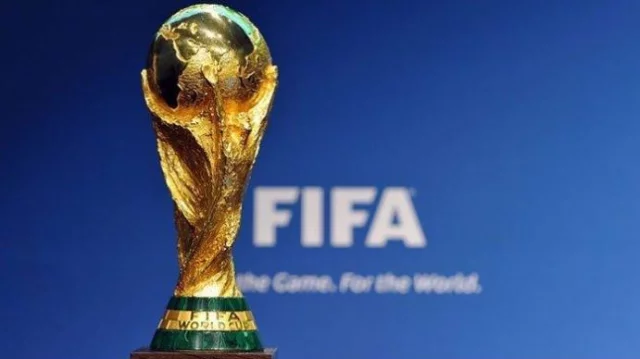
The FIFA World Cup has always been the grandest stage in football, a tournament where legends are made, and nations unite behind a common dream. Yet, as the 2026 edition in the United States, Mexico, and Canada approaches, a striking reality has emerged: several traditional football powerhouses will not be part of the spectacle.
For decades, teams like Italy, Denmark, Poland, and Nigeria have played significant roles in shaping World Cup history. Their absence is not just surprising but signals a shift in the global football landscape.
Italy’s fall is perhaps the most shocking of all. A four-time world champion, Italy once embodied defensive mastery and tactical brilliance. From the glory of 2006 to the heartbreak of missing three consecutive tournaments (2018, 2022, and now 2026), the Azzurri’s decline has been dramatic. Once feared, they now find themselves struggling with identity, consistency, and long-term planning. Their absence is no longer a shock, it is a worrying pattern.
Then there is Denmark, a team that has steadily built a reputation as one of Europe’s most organized and resilient sides. From their unforgettable Euro 1992 triumph to consistent World Cup appearances, Denmark have often punched above their weight. However, failure to navigate a competitive qualification route means they will be watching from home, a reminder of how unforgiving modern football has become.
Poland’s absence also raises questions. With world-class talent flowing through their ranks over the years, they have often been seen as a team capable of making deep runs in tournaments. Yet inconsistency and tactical limitations have held them back. Despite boasting some of Europe’s most recognizable attacking players in recent history, Poland has once again fallen short when it mattered most.
On the African continent, Nigeria's absence is deeply felt. Nigeria was once the pride of Africa on the world stage, famously qualifying for multiple World Cups, including quarter-final runs in 1994 and 1998, captivating fans with stars like Jay-Jay Okocha. Their decline has been gradual but evident, marked by transitional struggles and an inability to secure qualification in recent tournaments, dimming the dominance that once made them a continental powerhouse.
Beyond these nations, other historically competitive sides have also missed out, reinforcing the idea that reputation alone no longer guarantees success. Modern football has evolved. Tactical innovation, youth development, and organizational structure now play a greater role than ever before. Nations that fail to adapt are quickly left behind.
What makes this shift even more interesting is the rise of new challengers. Smaller or previously overlooked footballing nations are now better organized, more fearless, and tactically astute. The gap between traditional giants and emerging teams is closing rapidly, making qualification more competitive than ever.
The absence of these giants creates a bittersweet feeling for football fans. While the tournament promises fresh narratives and new heroes, it also lacks some of the history, rivalries, and prestige that these nations bring. The World Cup without Italy, Denmark, Poland, or Nigeria, and some other countries feels incomplete, but it also reflects the evolving nature of the game.
As the world gathers in 2026, these nations will be watching, reflecting, and perhaps planning their return. Because in football, as history has shown, even the greatest can fall, but the truly great always find a way to rise again.