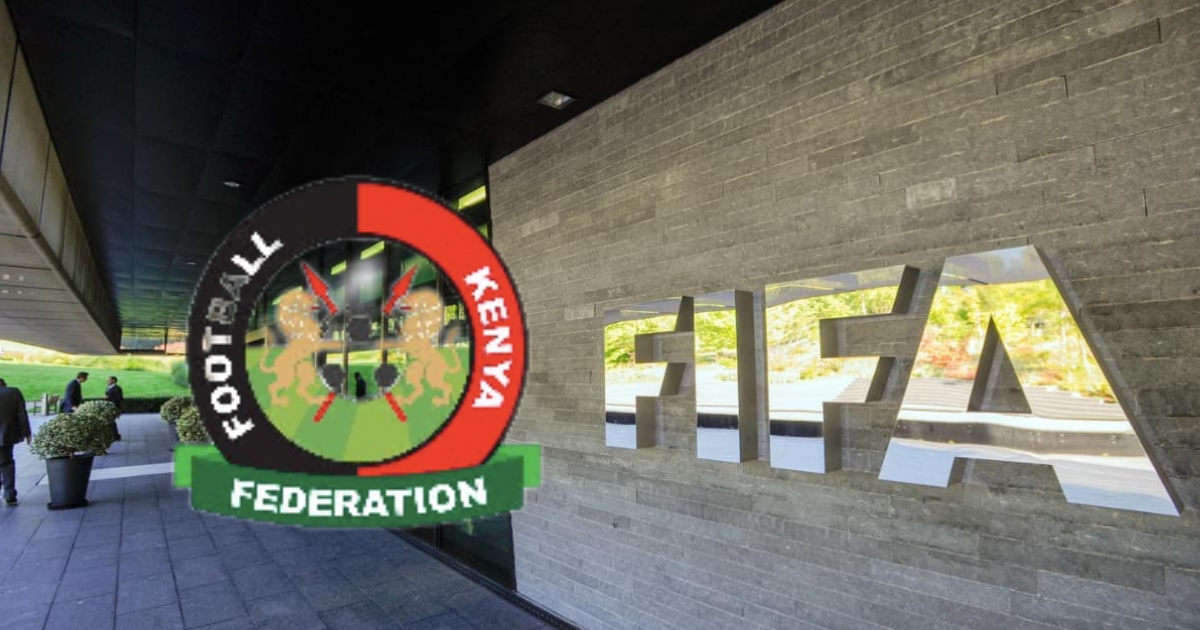
Kenyan football is once again on the precipice of a global crisis as FIFA and the Confederation of African Football (CAF) have officially demanded "comprehensive clarification" from the Football Kenya Federation (FKF) regarding the recent suspension of top officials.
The world governing body’s intervention follows a series of internal upheavals at Kandanda House, where several executive committee members were ousted under circumstances that FIFA suggests may violate the principle of "non-interference" by third parties and the federation's own statutes.
The crisis began on April 24, 2026, when FKF’s National Executive Committee (NEC) passed a resolution requiring three senior officials to step aside:
President Hussein Rashid Mohammed
Acting General Secretary Dennis Gicheru
NEC member Abdullahi Yussuf Ibrahim
The decision was reportedly supported by a majority of NEC members and was aimed at paving the way for investigations into alleged financial mismanagement, including claims surrounding approximately KSh 42 million linked to the African Nations Championship (CHAN).
The resolution effectively removed the trio from their duties on a provisional basis, triggering a major governance crisis within Kenyan football.
In response, FIFA, working alongside the Confederation of African Football (CAF), has launched an official assessment into the circumstances surrounding the decision.
In a formal letter addressed to FKF, FIFA made it clear that its primary concern is whether due process and the federation’s own statutes were followed in adopting the resolution.
The global body emphasized that it is seeking a “clear and accurate understanding” of both the decision-making process and its legal compliance under FKF rules.
FIFA has set a strict deadline of May 1, 2026, for FKF to submit detailed explanations and supporting documentation.
Among the critical issues raised are:
1. Right to a Fair Hearing
FIFA wants confirmation on whether the affected officials were given an opportunity to defend themselves before the resolution was passed.
This touches on fundamental governance principles such as fairness, transparency, and due process.
2. Legitimacy of the NEC Process
The world governing body is scrutinizing whether:
The NEC meeting was properly convened
Required quorum and voting procedures were met
The decision aligned with FKF statutes (notably Articles 38, 40, and 41)
3. Agenda and Motion Procedure
FIFA has specifically requested:
Evidence of any formal proposal submitted to include the motion for provisional dismissal on the agenda
Documentation showing how the resolution was introduced and approved.
4. Supporting Documentation
FKF must also provide:
Meeting notices and attendance records
Voting outcomes
Correspondence and materials used in making the decision.
FIFA’s involvement signals serious concern over governance standards within Kenyan football. Historically, FIFA has taken strict action against member associations that violate statutes or political and administrative independence rules.
If the FKF process is found to have breached regulations, possible consequences could include:
Reversal of the NEC decision
Disciplinary action against officials involved
In extreme cases, sanctions or suspension of the federation
This is particularly sensitive given Kenya’s past issues with football governance, including previous suspensions that disrupted international participation.
With the May 1 deadline looming, FKF faces intense pressure to justify its actions and demonstrate compliance with its constitution. The outcome of FIFA’s review will likely determine:
Whether the suspended officials are reinstated or formally removed
The credibility of FKF’s leadership structures
The future stability of football administration in Kenya
The FKF crisis has quickly evolved from an internal dispute into a high-stakes governance issue under global scrutiny. FIFA’s demand for accountability highlights the importance of procedural integrity in football administration.
The stakes could not be higher. Kenya’s previous suspension by FIFA in 2022 lasted nearly nine months, costing the country millions in lost grants and barring the national team, Harambee Stars, from international competition.
A second ban in less than five years would be catastrophic for the KES 2.5 billion local football economy, potentially leading to the withdrawal of major sponsors like Betika and Safaricom. FIFA Article 14 remains the sword of Damocles hanging over the federation, stipulating that all member associations must manage their affairs independently.
The Ministry of Sports has so far maintained a "wait-and-see" approach, aware that any direct government intervention would trigger an immediate FIFA ban. However, with the Harambee Stars scheduled to play crucial 2027 AFCON qualifiers in June, the pressure for a swift resolution is mounting. As the clock ticks, the future of the nation’s most popular sport hangs in the balance, caught between the rules of Zurich and the politics of Nairobi.