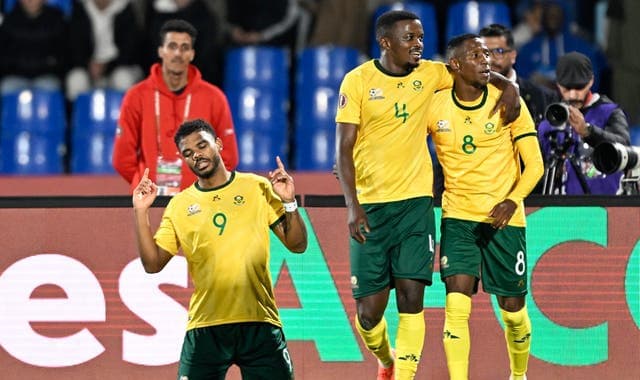
East Africa is gearing to host a continent fete, the Africa Cup of Nations, in what is expected to be a thrilling phenomenon combining football, culture and entertainment.
The journey to the CAF Africa Cup of Nations PAMOJA 2027 is officially underway, with the Confédération Africaine de Football (CAF) setting out the qualification pathway and overall tournament structure for what is set to be a landmark edition of the continental showpiece.
For the first time in history, the Africa Cup of Nations will be jointly hosted by three countries—Kenya, Tanzania and Uganda—marking a major milestone for regional cooperation in African football. The tournament will run from 19 June to 17 July 2027, with CAF set to confirm at a later date which nation will host the opening match and which will stage the final.
With the preliminary round already completed, attention now turns to the qualifiers draw scheduled for 19 May 2026. A total of 48 teams, including the three co-hosts, will compete for places at the final tournament.
The qualification phase will feature 48 nations drawn into 12 groups of four teams each. Only the top two sides from each group will secure progression to the finals. Matches will be played across three FIFA international windows: 21 September to 6 October 2026, 9 to 17 November 2026, and 22 to 30 March 2027.
Beyond its structure, AFCON PAMOJA 2027 carries major historic significance. It will mark the return of Africa’s premier football tournament to East Africa for the first time since Ethiopia hosted it in 1976. More than five decades later, the region is set to once again take centre stage in continental football.
CAF expects the tri-nation hosting model to significantly expand the tournament’s reach across East Africa, a region with a combined population of more than 400 million people. The edition is also projected to deepen football’s impact while strengthening economic, infrastructural, and sporting cooperation among the co-hosts.
The 2027 tournament will also build on the commercial and global momentum of recent editions. The 2023 competition in Côte d’Ivoire and the upcoming 2025 tournament in Morocco have both recorded strong commercial growth, expanded sponsorship portfolios, and rising global broadcast audiences—reflecting the continued rise of African football on the world stage.
The narrative of East African football has too long been defined by unrealized potential. The Pamoja AFCON 2027 is the opportunity to rewrite that story. It is a moment where political will, private investment, and on-field ambition must converge.
As the hosting nations finalize their preparations, the eyes of the footballing world will remain fixed on Dar es Salaam, Nairobi, and Kampala. The pressure is undoubtedly immense, but so is the reward. If the hosts rise to the occasion, the 2027 tournament will be remembered not just as a sporting event, but as the moment East Africa staked its claim as a permanent, credible, and vibrant force in the global football landscape.
The stakes are clear: a successful tournament could usher in a new golden age for the region, while failure would represent a significant setback for the Confederation of African Football’s (CAF) strategy to expand the game’s footprint in East Africa.