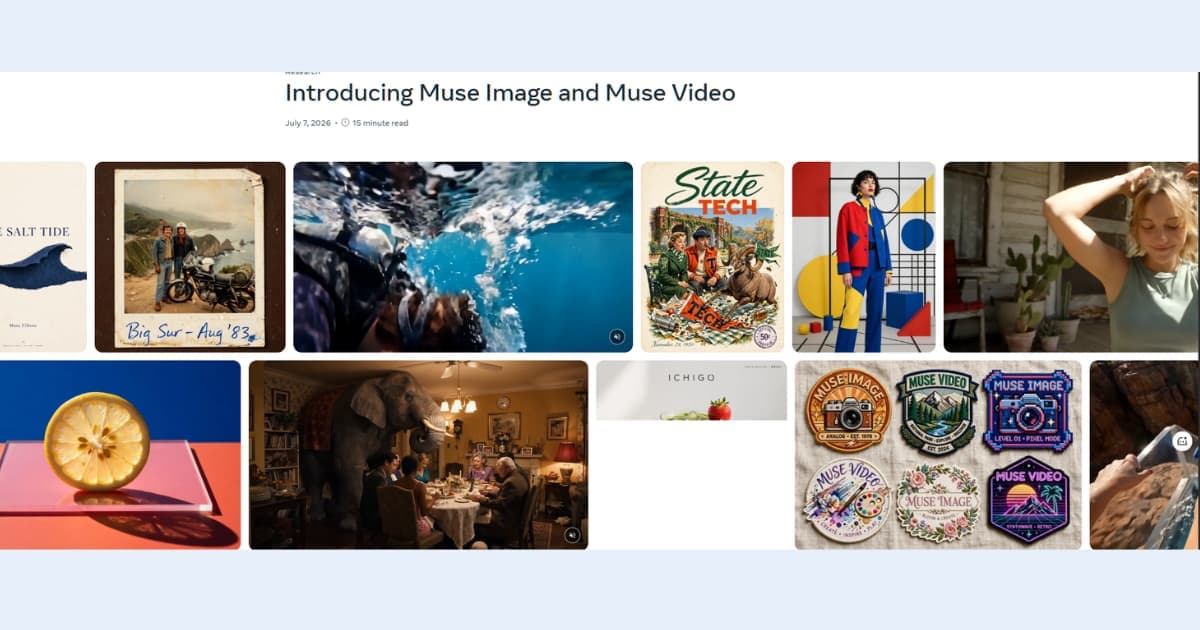
Meta has launched Muse Image, its first AI-powered image generation model built by its AI unit, Superintelligence Labs, as the technology giant seeks to expand capabilities across its platforms.
The Muse Image model is part of a new family of Muse models that Meta plans to adopt instead of its Llama series, as part of its strategy to develop a new generation of AI technologies.
Muse Image is an AI-powered image generation and editing model capable of creating high-quality visuals from natural language prompts.
Unlike traditional image generators that rely solely on text descriptions, Meta says Muse Image is designed to better understand complex instructions, multiple reference images, and conversational edits.
The company says the model can generate original images from text prompts, edit existing photos using written instructions, blend multiple images into a single composition, add or remove objects from images, generate readable text within images, create functional QR codes embedded in the generated artwork and accept sketches or annotations to guide image edits.
Meta describes Muse Image as an "agentic" model that works alongside the Muse Spark reasoning model to interpret user intent before generating content, aiming to produce more accurate results on the first attempt.
Users can access image generation directly through the Meta AI app, while Instagram users will see more than 30 new AI-powered Story effects driven by the new model.
WhatsApp users can also generate images within conversations with Meta AI, making creative image generation part of everyday messaging.
Meta says Facebook and Messenger integration will arrive in a later phase of the rollout as the technology expands globally.
Basic features will remain free, while advanced image-generation capabilities will be included as part of Meta's subscription offerings.
One of Muse Image's standout capabilities is interactive editing. Instead of starting over with every prompt, users can refine images through multiple conversations. They can also draw directly onto a picture to indicate where changes should be made, allowing more precise editing.
For example, users can remove unwanted objects, redesign rooms, change backgrounds, or create personalised artwork using a combination of uploaded images and written instructions.
Meta says the model can also pull inspiration from online resources, such as furniture listings, when redesigning interior spaces.
Perhaps the most talked-about feature is Muse Image's ability to incorporate Instagram users into AI-generated images.
According to Meta, users can reference public Instagram accounts by using an @mention in prompts, allowing the AI to generate images featuring those individuals based on their publicly shared photos.
The company says existing Instagram sharing and reuse settings determine whether someone's content can be used in this way. However, privacy advocates have expressed concerns that many users may not realise their public content can be incorporated into AI-generated images by default unless they opt out through Instagram's settings.
Critics argue the feature highlights ongoing debates around user consent, AI-generated likenesses, and the reuse of publicly available content.
Meta has historically relied on third-party AI models for some image-generation capabilities. By launching its own proprietary model, the company gains greater control over costs, performance, and integration across its platforms. The company also plans to bring Muse Image into its advertising products, enabling businesses to generate creative variations for digital campaigns more efficiently.